

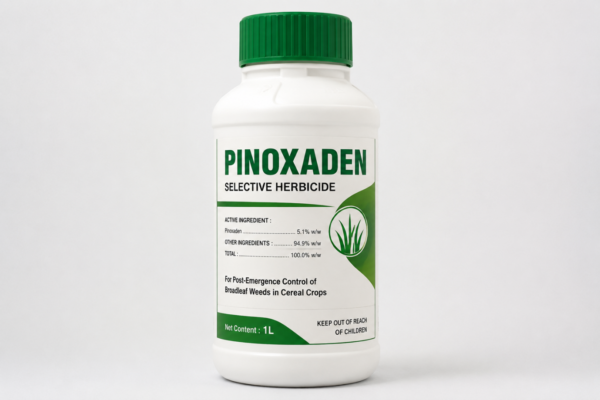
The market for pinoxaden, one of the most commercially important selective herbicides in global cereal farming, is entering a pivotal transition as patent protection on the molecule lapses in key markets. Originally developed and commercialized by Syngenta, pinoxaden has spent nearly two decades as a go-to solution for controlling monocotyledonous grass weeds — including wild oats, ryegrass, and blackgrass — in winter and spring wheat and barley crops across temperate growing regions.
With the innovator’s exclusivity period ending, industry watchers expect a wave of generic entrants to reshape supply, pricing, and accessibility across this segment of the crop protection market.
A Herbicide Built Around a Persistent Farming Problem
Grass weeds remain one of the toughest challenges cereal growers face. Left uncontrolled, species like wild oats and blackgrass compete aggressively with wheat and barley for nutrients, light, and water, often cutting yields significantly. Pinoxaden was developed specifically to address this problem through a systemic mode of action that targets grass weeds while leaving the cereal crop unharmed — a selectivity profile that made it a mainstay product for growers in Europe, North America, and parts of Asia.
According to Research Intelo, the global generic pinoxaden selective herbicide market was valued at $523.4 million in 2025 and is projected to reach $812.6 million by 2034, expanding at a compound annual growth rate (CAGR) of 5.0% over the forecast period 2026-2034.
Why the Patent Expiry Matters
Every major crop protection molecule follows a similar arc: a period of exclusive commercialization by its inventor, followed by generic competition once patent protection lapses. Pinoxaden is now moving into that second phase, joining a broader cohort of agrochemical active ingredients — including several fungicides and insecticides — scheduled to lose patent protection in the same window.
For the generic agrochemical industry, this is a meaningful opportunity. Countries with strong technical manufacturing capabilities, particularly India, are positioning themselves to scale up production of pinoxaden technical and formulated products. Generic manufacturers bring several advantages to a maturing molecule like this one:
- Lower-cost production through optimized synthesis routes and established manufacturing infrastructure
- Broader formulation options, including emulsifiable concentrates and dispersible oil suspensions tailored to regional farming needs
- Improved affordability for small and mid-sized cereal growers who previously had limited access to the branded product
- Expanded distribution reach into price-sensitive markets across Asia, Latin America, and parts of Eastern Europe
What This Means for Farmers
For growers, the entry of generic pinoxaden products is expected to translate into more competitive pricing without sacrificing the herbicide’s proven efficacy against resistant grass weed populations — a growing concern as weeds increasingly develop resistance to older chemistries like clodinafop and fenoxaprop. Wider access to an effective, selective option could be particularly valuable for smallholder wheat and barley farmers in developing agricultural economies.
At the same time, agronomists caution that off-patent status is not a guarantee of universal adoption. Historically, only a portion of molecules that lose patent protection see strong generic uptake, since manufacturing complexity, intermediate availability, and market size all influence whether producers invest in scaling up. Herbicides, in particular, have tended to see somewhat slower generic adoption than fungicides and insecticides coming off patent in the same period.
Competitive Landscape Shifting
As patent protection recedes, the competitive dynamics around pinoxaden are expected to shift from a single-supplier model to a more fragmented, multi-manufacturer landscape. Established generic agrochemical producers — many based in India and China, alongside regional formulators in Europe and Latin America — are likely to introduce technical-grade pinoxaden and branded generic formulations aimed at cereal-growing markets.
This shift mirrors patterns seen with other major agrochemical molecules after patent expiry: an initial wave of technical-grade suppliers, followed by branded generic formulations tailored to specific regional crop protection needs and regulatory requirements.
Looking Ahead
The transition of pinoxaden to generic status arrives at a moment when global wheat and barley producers are under sustained pressure to manage input costs while contending with evolving weed resistance patterns. A more competitive, multi-supplier market for this herbicide could support both goals — provided generic manufacturers can navigate the regulatory approvals and manufacturing scale-up needed to bring compliant products to market across different geographies.
Industry stakeholders, from technical manufacturers to formulators and distributors, are expected to watch this transition closely over the coming seasons as registration filings, product launches, and pricing strategies take shape across major cereal-producing regions.
Source: https://researchintelo.com/report/generic-pinoxaden-selective-herbicide-market