


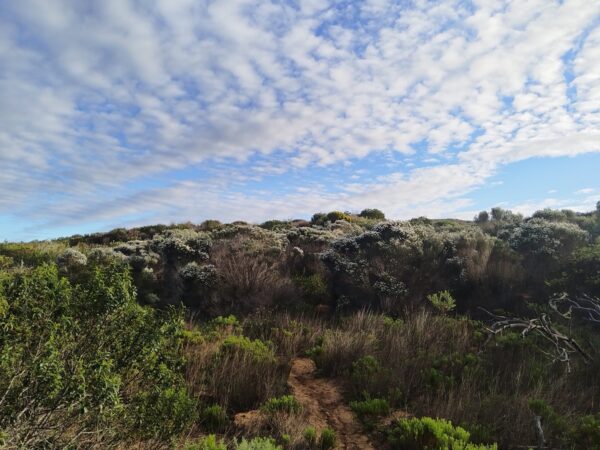
Time in nature is time invested in people.
Employee Wellness Week is observed annually by the Heart and Stroke foundation South Africa [HFSFA] from July 1 to 7 with a focus on workplace wellness and reducing the risks of cardiovascular disease [CVD]. Globally, the leading cause of death in the workplace is long working hours with cardiovascular diseases, fatal strokes and cerebrovascular diseases acting as the primary drivers. It is estimated that almost 2 million people die globally from work-related diseases every year, with cardiovascular diseases claiming around 20 million lives worldwide. The extreme psychological demands and burnout associated with today’s rat-race have tragically resulted in 10-13 percent of all suicides. Our boardrooms need triage, and our office spaces need rehabilitation. But business as usual doesn’t need to mean working ourselves to death: incorporating fresh air and green spaces can be just what the doctor ordered.
Wellbeing is a foundation for productive and resilient workplaces – but wellness is about more than medical screenings, gym memberships and ‘salad bar Wednesdays’. Human beings evolved in natural environments, and our minds and bodies still respond positively to time spent outdoors. A walk through a forest, a visit to a fynbos reserve, or a morning on the beach can provide benefits that extend far beyond simple recreation. The biophilia hypothesis argues that because our evolutionary history entails proximity to forests, grasslands and natural resources for our survival; we retain a need for close contact with nature – and that this has left us ill at ease with the straight lines and the uniformity of urbanisation and office cubicles and spreadsheets and TPS reports. Exposure to nature can lower our blood pressure, reduce the risk of diabetes, improve our mental health and treat Attention Deficit Disorders. Likewise, earthly sounds like birdsong, the chirping of insects and crashing waves can help us perform better in cognitive tests compared to the cacophony of traffic.
Screens, in many ways, do the opposite of nature: they can erode our attention spans and raise our anxiety levels. In Japan, however, people practice shinrin-yoku, or “forest bathing,” immersing themselves in nature to improve their well-being while breaking from technology and the suffocating crush of city life. For some people, the benefits of nature could stem from the exercise they get when taking a stroll, or it could simply be the refreshing change of scenery from the monotony of the indoors. Or perhaps the visual appeal of curved shapes and fractals in nature are soothing. Regardless of the cause, the benefits of nature have become evident enough that doctors in countries including the U.K., Finland and Canada have started to prescribe exposure to nature to patients to improve their mental and physical health. In Canada, you can be given a script for free access to the country’s national parks.
In one study people took a test challenging their attention and working memory and then went for a walk through a park. Afterward, upon taking the test again, they improved their scores by an average of nearly 20 percent. This shows that even simple and brief interactions with nature can produce marked increases in cognitive control and demonstrates the restorative value of nature as a vehicle to improve cognitive functioning. A growing body of scientific studies has confirmed nature’s restorative advantages, revealing how hiking through landscapes or even gazing at them through a window can provide benefits such as lower blood pressure, quickened healing times and improved moods. In a world of constant notifications, meetings, deadlines, and screens; natural spaces provide a valuable opportunity for recovery.
Additionally, studies show that holding office meetings and workshops in nature significantly reduces cortisol levels, minimises attention fatigue, and boosts team collaboration and morale – and that spending at least 120 minutes a week in nature is associated with good health and wellbeing. Moving employees away from traditional desks into green or blue spaces fosters psychological safety, allowing organic communication that softens workplace hierarchies.
Workplace wellness initiatives are often most effective when they create meaningful experiences rather than simply adding another item to a People & Culture checklist. South Africans are fortunate to live in one of the most biodiverse countries on earth. For employers, facilitating outdoor activities can be a practical and affordable component of workplace wellness programmes. Walking meetings, outdoor team-building activities, volunteer conservation days and flexible opportunities for employees to spend time outdoors can all contribute to healthier workplace cultures.
Says Gill Simpson, executive director of the Wild Rescue nature reserve, “One particularly rewarding approach is combining employee wellness with environmental stewardship through conservation volunteering. Activities such as alien vegetation clearing, beach clean-ups, indigenous tree planting, habitat restoration and citizen science projects offer benefits for both participants and ecosystems. Conservation volunteering encourages physical activity, social connection, teamwork and a sense of purpose. It allows employees to contribute to something larger than themselves while developing stronger relationships with colleagues and local communities. Conservation volunteering also changes how we experience nature. Instead of being visitors, we become participants. Spending a morning removing invasive plants from a fynbos reserve, helping monitor biodiversity, collecting litter along a coastline, or restoring degraded habitat can create a different kind of fulfilment from conventional wellness activities.
Productivity and wellbeing are often treated as competing priorities, but they are deeply connected and not a zero sum trade-off. People perform better when they are healthy, able to recover from stress and not needing to take excessive sick leave. Time spent in nature is not time lost; it is an investment in attention, creativity and long-term performance. The most effective wellness intervention is not another screen, another app, or another meeting. Nature has always supported human wellbeing. The more we reconnect with it, the more we may discover that caring for ourselves and caring for the environment are not separate goals, but part of the same journey toward a healthier and more sustainable future.
Nature does more than support wellness – it can also teach us something about leadership.
Many workplaces still imagine leadership as individual achievement: moving faster, competing harder, and carrying more responsibility than everyone else. Yet healthy natural systems tell a different story. Ecosystems thrive not because one species dominates, but because many species interact, adapt and support conditions that allow each other to thrive. In nature, resilience often emerges through collaboration. Forests exchange nutrients and information through underground fungal networks. Coastal ecosystems depend on countless relationships between species, both on and off shore. In fynbos landscapes, plants, pollinators, soil organisms, fire regimes, and climate all contribute to maintaining ecological balance. No single element succeeds alone.
Nature reminds us that leadership is not always about being the loudest voice occupying the highest position. Effective leadership often means creating conditions where others can succeed, responding to change, building healthy relationships and understanding how individual actions affect the broader system. Natural environments encourage people to slow down, notice patterns, and become comfortable with complexity rather than seeking immediate control. Time spent outdoors can strengthen healthy leadership qualities: observation, patience, adaptability and humility. Leadership in nature is rarely about domination. No ecosystem is controlled by a single species, and no healthy workplace depends on a single individual. Employees often discover that leadership emerges naturally through listening, encouraging others, solving problems together, and recognising shared goals.
For employers, encouraging outdoor wellness does not need to mean large budgets or elaborate programmes. Small changes can make a difference: walking meetings, flexible time for outdoor breaks, team volunteer days, partnerships with local conservation groups, outdoor wellness challenges, or encouraging employees to explore nearby natural areas. This Employee Wellness Week, one of the healthiest things we can do is remember that humans are not separate from the natural world. We are part of it, and sometimes the most productive thing we can do is step outside among the flora and breathe.
Clean Beaches Week – an awareness campaign that encourages people to protect coastal environments – also runs from 1 – 7 July, coinciding with Plastic Free July – a global movement inspiring people, communities, and organisations to reduce single-use plastics and adopt more sustainable habits. This is an ideal opportunity for Employee Wellness programmes to participate in beach clean-ups particularly. Coastal stewardship belongs to everyone. In our South African context, clean beaches are especially important because pollution, plastic waste, stormwater runoff, and habitat disturbance can affect coastal species and sensitive marine environments. Plastic Free July is not about perfection or eliminating all plastic overnight; it is about making practical changes -carrying reusable bags and bottles, choosing products with less packaging, supporting refill and recycling initiatives and thinking more carefully about consumption. Small changes at household and workplace level can collectively reduce waste and help protect our natural heritage.
The Wild Rescue fynbos reserve near Still Bay in the Western Cape will host a Mandela Day event on Saturday 18 July, inviting members of the public and companies to spend their 67 minutes giving back to the environment by joining a guided conservation trail-clearing effort on the critically endangered Renosterveld. Wild Rescue has recently started hosting weekend fynbos and animal sanctuary tours, running two weekends per month