



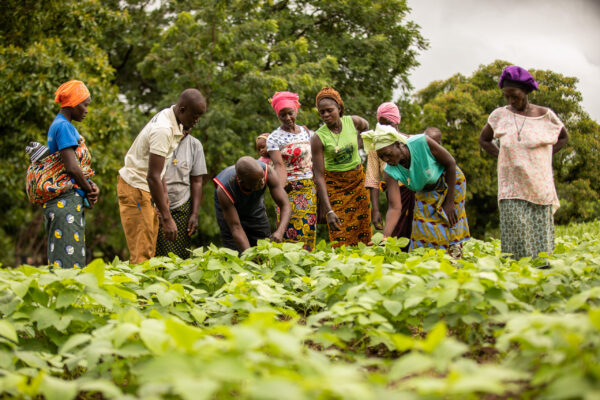
For many rural communities across West Africa, poverty, climate shocks, insecurity and economic isolation have combined to create a cycle of vulnerability that is difficult to escape.
Yet a new initiative by Nuru, backed by a $7.5 million grant from the Leona M. and Harry B. Helmsley Charitable Trust, aims to demonstrate that economic opportunity can become a powerful pathway to stability and resilience.
The cross-border programme, spanning Burkina Faso’s Nahouri Province and the western half of Ghana’s Upper East Region, seeks to strengthen cooperative agribusinesses, improve market access and create sustainable livelihoods for some of the region’s most marginalized populations.
According to Nuru Chief Executive Officer Aerie Changala, the initiative was designed in response to a growing convergence of challenges affecting rural communities across West Africa.
“West Africa is facing overlapping pressures from climate change, insecurity, demographic growth, and economic fragility,” Changala said. “These dynamics are increasingly isolating already marginalized rural communities, creating a regional challenge that requires a regional response.”
Up to 99,000 people are targeted
The programme will directly support approximately 99,000 people and 85 primary cooperative agribusinesses over the next three years. It focuses on climate-smart and nutrition-sensitive agriculture, digital financial inclusion, hyper-local weather forecasting through ignitia, cooperative business development training and crop commercialization.
At the heart of the strategy is Nuru’s vision of creating what Changala describes as a “resilience corridor” across the Burkina Faso-Ghana border.
“The idea is simple: connect communities through shared economic opportunity and professionalized agribusiness systems so that vulnerability can gradually be transformed into resilience, stability, and long-term peace,” he explained.
The initiative builds on a long-standing partnership between Nuru and Helmsley that has already reached more than 456,000 people across Kenya, Ethiopia, Nigeria, Benin, Niger, Ghana, and Burkina Faso during Nuru’s 18-year history.
Their collaboration in Ethiopia produced remarkable results, including a 162% increase in average net household income and a 130% increase in crop yields among participating farming households.
Those outcomes have provided important lessons for the new West African programme.
“The biggest lever for change was the professionalization of cooperative union systems,” Changala said. By organizing primary cooperatives into larger unions, farmers gained stronger market leverage, better access to buyers and lower transaction costs.
Value addition
Nuru also learned that increasing agricultural production alone is not sufficient.
“Pairing production gains with value addition and local processing capacity allows communities to retain more value locally and significantly improve household incomes,” Changala noted.
Another lesson that will shape implementation is the organization’s commitment to a women-first approach. Across multiple countries, Nuru has observed that championing women in livelihoods and leadership positions delivers substantial benefits for food security, household resilience and business performance.
The economic need for such interventions is significant. According to Changala, roughly 40% of the combined population in the target regions—around 23 million people—live on less than $3 per day.
Many communities are trapped in what he describes as a reinforcing cycle of conflict, demographic pressure, climate stress and economic shocks. Weak infrastructure and fragmented markets further limit opportunities, while insecurity often discourages private investment and development support.
For Helmsley, these conditions underscore the importance of philanthropy as a catalyst for long-term development.
“Core to Helmsley’s work in sub-Saharan Africa is our effort towards helping rural communities build resilience,” said Walter Panzirer, Trustee at the Helmsley Charitable Trust. “Sustainable livelihoods can help usher in prosperity, but when communities face conflict or instability, outside investment can be hard to come by.”
He believes philanthropic organizations are uniquely positioned to take calculated risks where traditional investors may hesitate.
“Throughout our partnership with Nuru, we’ve seen their success in identifying communities at a tipping point,” he said. “Helmsley sees the potential of this program to simultaneously strengthen livelihoods and connect local communities to regional and national markets, while also building common economic interests through a cross-border resilience corridor.”
Social and economic impacts
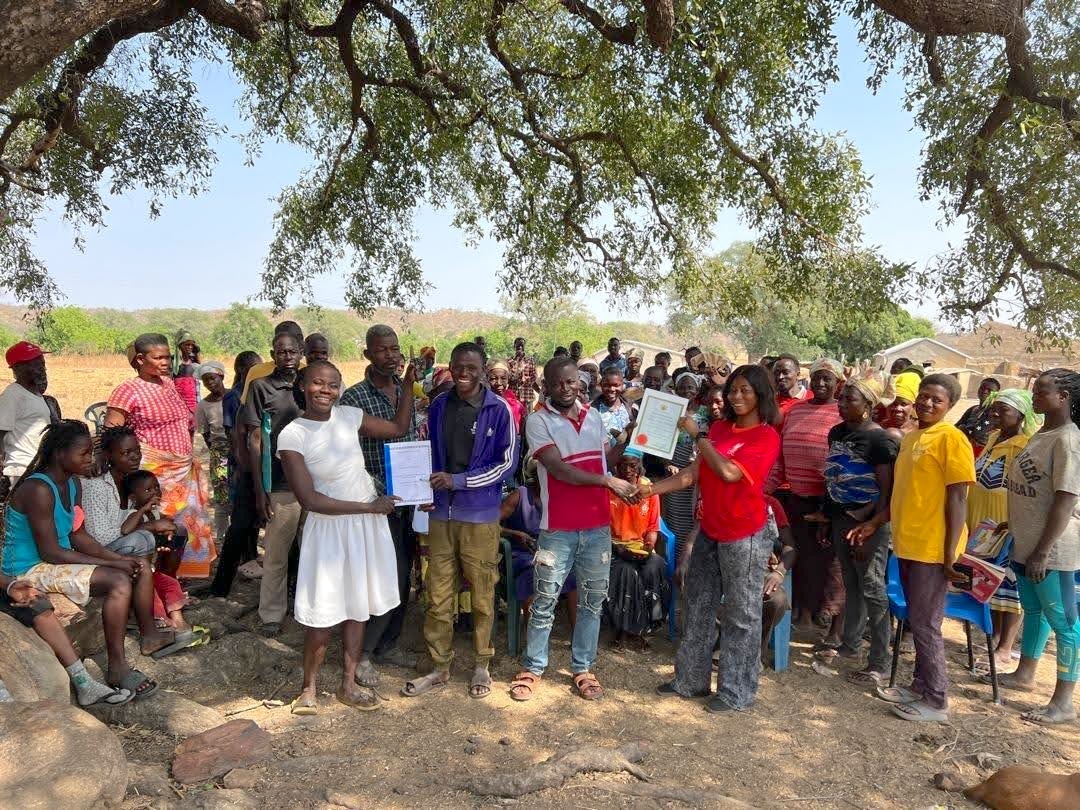
Beyond improving agricultural productivity, the initiative seeks to generate broader social and economic impacts. Nuru hopes to create employment opportunities for young people through digital agriculture services, cooperative development and localized agribusiness systems.
The organization also aims to position communities to benefit from future investments, including blended finance, climate finance and voluntary carbon markets.
Success, however, will depend heavily on local ownership given Nuru Ghana and Nuru Burkina Faso are working closely with traditional leaders, government ministries and community stakeholders to shape interventions and ensure they remain relevant and sustainable.
“Local leadership sits at the center of Nuru’s collective model,” Changala said. “We believe local expertise is essential for building interventions that are both effective and durable.”
By the end of the three-year programme, Nuru aims to establish 85 cooperative agribusinesses, increase crop yields by 32%, raise household incomes by 30% and help at least 60% of supported cooperatives achieve full profitability.
For Changala, the ultimate measure of success extends beyond economic indicators.
“Resilience is demonstrated when communities are no longer isolated from economic systems, but are active participants in agricultural supply chains, regional markets, and emerging climate finance opportunities,” he said.
As Nuru and Helmsley deepen their partnership in West Africa, they are betting that shared prosperity can become a foundation for lasting stability—creating opportunities that extend far beyond national borders and helping vulnerable communities chart a more secure future.






[…] Credit: Source link […]
Comments are closed.