


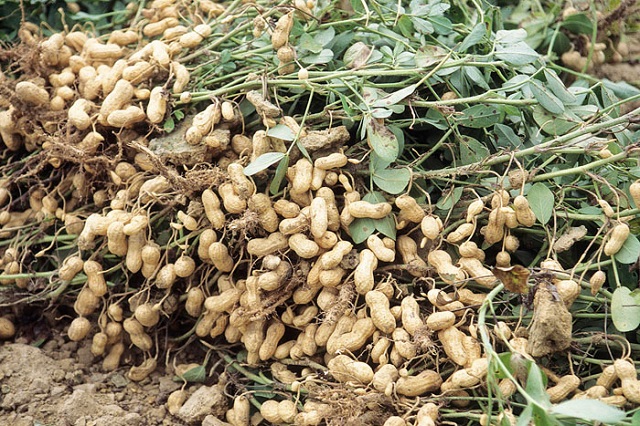
Nigeria has approved the release of SAMNUT 30 (ICGV 206228), a high-performing groundnut variety developed by the International Crops Research Institute for the Semi-Arid Tropics (ICRISAT), in a move expected to boost productivity, resilience, and food and nutrition security among smallholder farmers.
The newly released variety stands out for its high grain yield, stability across diverse environments, and combined tolerance to major groundnut diseases, including rosette disease, early leaf spot, and late leaf spot. These attributes position SAMNUT 30 as a significant improvement over existing varieties widely grown in the country.
Field evaluations showed that SAMNUT 30 recorded the highest grain yield of 2,766 kilograms per hectare, outperforming other candidate lines and exceeding farmer-preferred varieties in Nigeria by 14 per cent.
In addition to its grain performance, the variety also delivers strong haulm yield — the total weight of above-ground vegetative biomass such as stems and leaves — making it a dual-purpose crop suitable for both food and livestock fodder.
The variety was identified through a rigorous multi-stage selection process. Initially, ten medium-duration groundnut lines, along with the benchmark variety SAMNUT 29, were shortlisted from on-station trials conducted in 2022. These lines were then evaluated in replicated, multi-location trials across six sites in the Northern Guinea and Sudano-Sahelian savanna zones during the 2024 and 2025 growing seasons.
Following these trials, three top-performing lines advanced to on-farm testing in 2025, involving 11 farmers across five locations in Kano, Jigawa, and Bauchi states. The farmer-participatory trials confirmed the superior performance of ICGV 206228, which consistently delivered the highest yields and demonstrated strong adaptability across varied agro-ecological conditions.
SAMNUT 30 was officially cleared for release by the National Variety Release Committee during its 36th meeting held in Ibadan on March 26, 2026.
Welcoming the development, Himanshu Pathak, Director General of ICRISAT, praised the collaborative effort behind the achievement. He highlighted the role of key partners, including Nigeria’s national agricultural research system (NARS), Bayero University Kano, and the Institute for Agricultural Research, as well as financial support from the Dryland Crops Program (DCP), formerly known as the Accelerated Varietal Improvement and Seed Systems in Africa (AVISA) project.
“This milestone underscores our strong and growing partnership with Nigeria’s agricultural research system to deliver impact where it matters,” said Pathak. “Building on ICRISAT’s experience in strengthening value chains across countries such as Malawi, India, and Bangladesh, we are confident SAMNUT 30 will strengthen food and nutrition security while creating new market opportunities for smallholder farmers in Nigeria.”
Groundnut remains one of Nigeria’s most important legume crops, serving both as a staple food and a cash crop. The country ranks fourth globally and first in Africa in groundnut production, with an annual output estimated at between 1.55 and 1.65 million metric tonnes.
ICRISAT’s Country Representative for Nigeria, Angarawai, emphasized the crop’s economic importance, noting that groundnut provides income for millions of smallholder farmers while also serving as a key commodity in domestic and regional markets.
“Through close collaboration with national partners, ICRISAT supports the development and adaptation of improved groundnut varieties across Nigeria’s diverse agro-ecologies,” he said. “The SAMNUT series reflects this effort to deliver high-performing varieties that respond to both farmer needs and evolving market demand.”
Victor Afari-Sefa, Director of the Global Research Program on Transforming Agrifood Systems at ICRISAT, underscored the broader impact of the new variety on farming systems.
“SAMNUT 30 offers a strong opportunity to raise yields, reduce losses from major diseases, and support improved incomes for smallholder farmers across Nigeria’s key groundnut-producing areas,” he said.
With the official release now secured, stakeholders are turning their focus to large-scale seed production and dissemination to ensure that SAMNUT 30 reaches farmers’ fields in a timely and efficient manner, unlocking its full potential to transform groundnut production in Nigeria.