

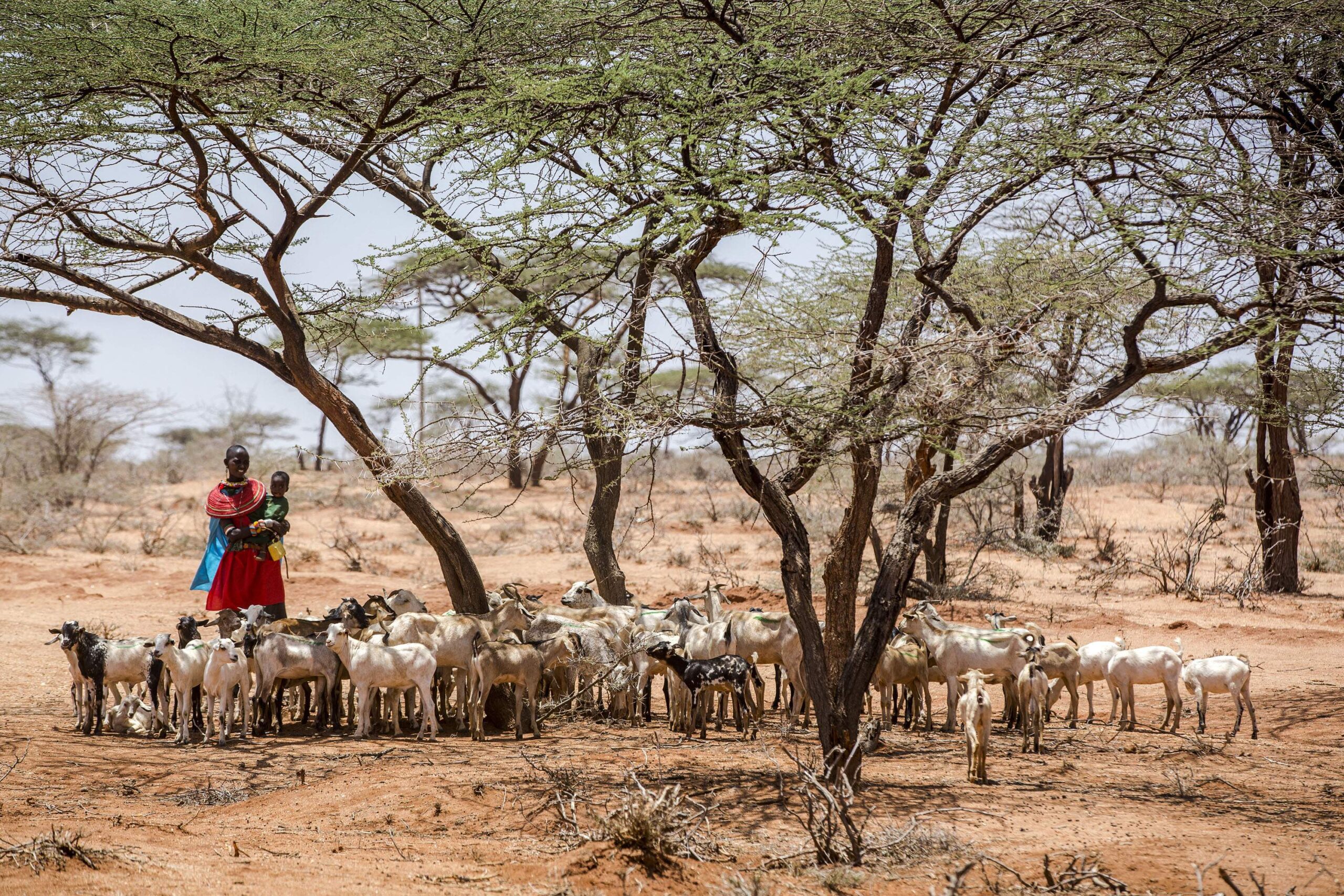
A new global report has called for greater investment in the world’s rangelands, arguing that the landscapes cover more than half of the planet’s land surface, support around 500 million pastoralists and generate economic and environmental benefits worth an estimated US$21 trillion to US$47 trillion annually.
The report, Rangelands Rising: Investing in Sustainable Management and Restoration, was launched on August 24 at the 17th session of the Conference of the Parties to the United Nations Convention to Combat Desertification (UNCCD COP17) in Ulaanbaatar, Mongolia.
It was published by the International Livestock Research Institute (ILRI), GIZ, the Economics of Land Degradation Initiative, UNCCD and the International Union for Conservation of Nature (IUCN).
Rangelands account for more than half of the world’s land surface and contain about one-third of its key biodiversity areas. Yet the report says these landscapes remain largely overlooked by the institutions responsible for financing and managing natural resources.
The report also challenges the long-held assumption that mobile livestock herding is a major driver of land degradation. Research increasingly shows that many rangelands have developed alongside grazing and that well-managed pastoral systems have helped maintain highly biodiverse landscapes.
However, these systems face increasing pressure from drought, agricultural expansion, urban development and fragmentation.
“For too long, the world has looked at rangelands and seen empty, degraded land,” said Prof. Appolinaire Djikeng, Director General of ILRI. He argued that the evidence points instead to landscapes of significant value and pastoralists who should be recognised as their frontline investors.
Importance of rangelands
Beyond their ecological importance, rangelands play a major role in food production. They support livestock production in areas that may be unsuitable for crops without expensive inputs. In Sub-Saharan Africa, pastoralism is estimated to contribute between 5% and 10% of national GDP and between 15% and 40% of agricultural value added.
The report argues, however, that the wider value of rangelands is poorly reflected in markets. Benefits linked to water, carbon storage, biodiversity and drought protection often remain outside conventional economic calculations.
That creates a significant investment opportunity. The report estimates that restoring rangelands typically produces returns of US$4 to US$6 for every dollar invested. When wider public benefits such as water supply are included, returns can reach as much as US$36 for every dollar invested.
A case study from Jordan illustrates the difference between private and public returns. Restoring a traditional practice of resting grazing land produced only US$0.80 for every dollar spent by herders, but generated an estimated return of 18 to one for Jordanian society, largely because of improved groundwater recharge.
Jonathan Davies, a co-author of the report and independent rangelands researcher, said, “We are not asking for rangelands to be treated as a special case. We are asking for them to be counted.”
The report therefore calls for public investment that can recognise pastoralists’ contributions while creating conditions for additional private finance. Pastoralists already invest labour, livestock, knowledge and generations of experience in maintaining rangelands, but often capture only a fraction of the value generated by those efforts.
Drought financing
Drought financing is another area highlighted by the report. Governments frequently respond after a crisis has already caused livestock losses and threatened household incomes. In Niger, drought relief during the 2021 crisis was estimated to have reached 7% of national GDP.
By contrast, an evaluation cited in the report found that every US$1 spent on timely support could generate an estimated US$3 in later humanitarian savings.
The report also recommends directing restoration finance towards lightly and moderately degraded rangelands, where interventions can be considerably cheaper. Restoration in such areas can cost as little as US$20 per hectare, compared with more than US$70,000 per hectare for severely degraded land.
It warns against inappropriate environmental interventions, including planting trees on naturally open grasslands or converting drylands into cropland. In many cases, the report argues, the most effective approach is to strengthen existing pastoral systems rather than replace them.
Secure land rights and inclusive governance are also identified as essential to successful investment. Funding alone may fail where pastoralists lack secure tenure or are excluded from decisions over land management.
Dr. Barron Joseph Orr, UNCCD Chief Scientist, said rangelands are “not marginal landscapes” and stressed their importance to food security, biodiversity, water security and drought resilience.
Climate policy
The report identifies climate policy as another major gap. Rangelands are mentioned in the national climate plans of only 24 countries under the Paris Agreement, compared with 181 countries that mention forests.
The authors argue that this represents a missed opportunity because rangelands can provide climate mitigation, adaptation and resilience benefits at the same time. Greater recognition in national climate plans and increased access to climate finance could therefore make rangelands a larger part of global efforts to address climate change.
Launched during the International Year of Rangelands and Pastoralists, the report arrives as governments meet in Mongolia to discuss land restoration, drought resilience and sustainable land management.
Its central message is that rangelands should be recognised not as marginal or degraded spaces, but as valuable natural assets capable of generating substantial economic, environmental and social returns when sustainably managed.