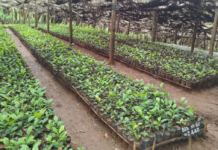
Rooibos has earned international recognition for its distinctive flavour, health benefits and uniquely South African origins. As new export markets open and demand grows, safeguarding Rooibos’ origin is becoming increasingly important to the industry’s future.
Recent trade developments, including expanded market access and the removal of tariffs on South African exports to China, are expected to create new opportunities for Rooibos producers and exporters. At the same time, they bring renewed focus to protecting one of the industry’s most valuable assets – the right to call a product “Rooibos”.
A name rooted in place
Unlike many herbal infusions, Rooibos benefits from formal Geographical Indication (GI) protection and is recognised as a Protected Designation of Origin (PDO) under the EU system. This means the name “Rooibos” is legally reserved for beverages made from Aspalathus linearis grown within a defined production area in South Africa, primarily the Cederberg and surrounding parts of the Western and Northern Cape, in jurisdictions that recognise the designation.
This protection links the name directly to its place of origin, meaning it may only be used for products originating from the designated production area. Rooibos is therefore in the same category of origin-protected products as Champagne, Parmigiano Reggiano and Darjeeling tea, where only products from the designated region may legally carry the name.
Dawie de Villiers, Director of the South African Rooibos Council (SARC), says protecting the name has become increasingly important as international demand grows.
“As Rooibos becomes more widely recognised around the world, protecting its origin helps preserve the integrity of the product and the reputation South African producers have built over generations. Consumers want confidence that when they buy Rooibos, they’re getting the genuine product from its natural home.”
It also safeguards the economic value of an industry that supports thousands of jobs in the Western Cape and Northern Cape and exports Rooibos to more than 60 countries.
Protecting authenticity in global markets
While Rooibos enjoys strong origin protection in several key markets, equivalent protection does not automatically extend to every export destination. As international demand grows, broader intellectual property strategies are becoming increasingly important to help safeguard its origin across different legal jurisdictions.
While legal protection provides an important foundation, maintaining consumer trust requires more than just legislation.
Once Rooibos enters international supply chains, it may be blended into flavoured teas, functional beverages, food products or cosmetic formulations. The industry’s long-term success depends on ensuring its South African origin remains clearly identified throughout the value chain.
As global food supply chains become more complex, provenance has become a key differentiator. Consumers increasingly want products that are authentic, traceable and sustainably produced, particularly in premium food and wellness markets.
“Origin has become part of the value proposition,” says De Villiers. “Our objective isn’t simply to increase export volumes. It’s to grow demand while maintaining the premium quality, authenticity and provenance that distinguish Rooibos in international markets. That requires more than legal protection – it also depends on strong supply chain traceability, credible certification systems and ongoing brand stewardship.”
Safeguarding long-term value
The industry continues to pursue measured growth rather than rapid expansion.
The SARC has repeatedly noted that production is carefully managed to maintain quality and sustainability, recognising that Rooibos can only be cultivated within a relatively small geographic area where the unique combination of climate, soil and biodiversity gives the plant its distinctive characteristics.
That exclusivity is precisely what makes GI protection so valuable.
Unlike products that can be grown almost anywhere in the world, authentic Rooibos cannot simply be replicated elsewhere. Protecting the name therefore helps ensure that the economic benefits associated with growing global demand continue to flow back to the communities and producers responsible for cultivating the indigenous crop.