According to our Growth Market Report, the global blockchain in agriculture market size reached USD 0.56 billion in 2025, demonstrating significant traction due to rising demand for transparency and traceability in food supply chains. The market is projected to grow at a remarkable CAGR of 46.2% during the forecast period 2026-2034, with the market size expected to reach approximately USD 11.4 billion by 2034. This exponential growth is primarily driven by increasing adoption of digital technologies in agriculture, the need for efficient supply chain management, and stringent food safety regulations worldwide.
Introduction
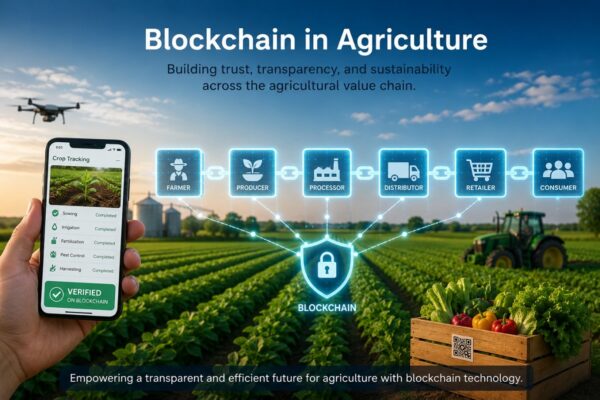
The agriculture industry is undergoing one of the most significant technological transformations in its history, and blockchain is emerging as a foundational innovation driving this evolution. While agriculture has traditionally relied on fragmented record-keeping, paper-based documentation, and multiple intermediaries, blockchain technology introduces a secure, transparent, and decentralized system capable of connecting every participant across the agricultural value chain. From farmers and cooperatives to food processors, logistics providers, retailers, financial institutions, and consumers, blockchain is creating an ecosystem where trust is built through verified data rather than assumptions.
The Blockchain in Agriculture Market is expanding as governments, agribusinesses, technology providers, and food manufacturers seek better traceability, improved food safety, enhanced sustainability reporting, and greater operational efficiency. As global food systems become increasingly interconnected, blockchain offers an innovative approach to solving longstanding challenges such as counterfeit products, supply chain fraud, inefficient documentation, delayed payments, and limited visibility into production practices.
What Is Blockchain in Agriculture?
Blockchain in agriculture refers to the application of distributed ledger technology to record, validate, and securely share agricultural information throughout the farming lifecycle and food supply chain. Every transaction—from seed sourcing and crop cultivation to harvesting, transportation, processing, distribution, and retail—is stored as an immutable digital record accessible only to authorized participants.
Unlike conventional databases controlled by a single organization, blockchain distributes information across multiple nodes, making records highly resistant to unauthorized modification. This creates a trusted digital history for agricultural products while enabling stakeholders to verify authenticity, origin, certifications, and quality in real time.
Why Is Blockchain Becoming Essential in Modern Agriculture?
Global agricultural supply chains have grown increasingly complex. Fresh produce may cross multiple countries before reaching consumers, making it difficult to verify origin, handling conditions, or compliance with food safety standards.
Blockchain addresses these concerns by introducing complete traceability and digital accountability. Instead of relying solely on manual documentation, every movement of agricultural products can be automatically recorded, timestamped, and verified.
For consumers, this translates into greater confidence regarding food quality and ethical sourcing. For businesses, it reduces administrative complexity while strengthening supply chain resilience.
Key Factors Driving the Blockchain in Agriculture Market
Rising Demand for Food Traceability
Consumers are becoming more conscious of where their food originates and how it is produced. Increasing awareness regarding organic farming, ethical sourcing, sustainable agriculture, and food safety has accelerated demand for transparent supply chains.
Blockchain enables consumers to scan QR codes on products and instantly access verified information about farm location, cultivation practices, certifications, transportation history, and processing details.
Increasing Food Safety Regulations
Governments across developed and emerging economies continue strengthening food safety regulations following contamination incidents and product recalls.
Blockchain significantly improves recall efficiency by allowing organizations to identify affected batches within minutes instead of days. This reduces financial losses while protecting public health.
Growth of Smart Farming Technologies
Modern agriculture increasingly relies on connected technologies including IoT sensors, drones, satellite monitoring, precision farming equipment, weather stations, and AI-powered analytics.
Blockchain complements these technologies by securely storing machine-generated agricultural data. Every irrigation cycle, fertilizer application, harvest record, and environmental reading becomes a permanent digital asset supporting better farm management.
Expanding International Agricultural Trade
Agricultural exports require extensive documentation regarding product origin, certifications, phytosanitary compliance, and transportation history.
Blockchain simplifies international trade by replacing multiple paper documents with verified digital records accessible by exporters, importers, customs authorities, logistics companies, and regulatory agencies.
This accelerates cross-border trade while reducing administrative costs.
Major Applications of Blockchain in Agriculture
Farm-to-Fork Traceability
Traceability remains the most prominent application within the Blockchain in Agriculture Market.
Every production stage is digitally recorded, allowing stakeholders to monitor agricultural products throughout the supply chain. This improves transparency while minimizing fraud and product substitution.
Smart Contracts for Agricultural Transactions
Blockchain enables automated smart contracts that execute agreements when predefined conditions are met.
For example, farmers may automatically receive payments once produce reaches distribution centers or passes quality inspections. This reduces delays, disputes, and dependence on intermediaries.
Agricultural Financing
Access to finance remains a major challenge for farmers worldwide.
Blockchain creates verified production histories and digital farm records that improve transparency for banks and financial institutions. Better visibility into agricultural operations enables more accurate lending decisions and potentially expands financial inclusion for smallholder farmers.
Crop Insurance Management
Weather uncertainty continues to impact agricultural productivity.
Blockchain combined with weather monitoring systems allows insurance providers to automate claim verification using trusted environmental data. Compensation can be processed faster while reducing fraudulent claims.
Supply Chain Authentication
Counterfeit agricultural inputs such as seeds, fertilizers, pesticides, and specialty food products represent significant global challenges.
Blockchain helps manufacturers authenticate products throughout distribution channels, ensuring that farmers receive genuine agricultural inputs and consumers purchase authentic food products.
Emerging Technological Trends Reshaping the Market
Artificial Intelligence Integration
AI analyzes blockchain-generated agricultural data to optimize crop planning, forecast yields, predict diseases, and improve supply chain efficiency.
The combination of trusted blockchain records with intelligent analytics creates stronger decision-making capabilities for agribusinesses.
Internet of Things Connectivity
Connected sensors automatically upload environmental data regarding soil moisture, humidity, temperature, storage conditions, and transportation environments directly into blockchain systems.
This minimizes manual reporting while improving data accuracy.
Carbon Credit Verification
Sustainable farming practices increasingly generate carbon credits and environmental incentives.
Blockchain provides verifiable evidence of regenerative agriculture, carbon sequestration, and sustainable land management, supporting transparent environmental reporting.
Digital Agricultural Marketplaces
Blockchain-powered marketplaces enable farmers to sell products directly to buyers while reducing intermediary involvement.
Verified product histories increase buyer confidence and improve pricing transparency across agricultural ecosystems.
Challenges Affecting Market Expansion
Despite considerable momentum, several challenges continue influencing market growth.
Limited digital literacy among farmers remains a significant barrier in many rural regions. Infrastructure limitations, internet connectivity gaps, implementation costs, and interoperability between existing agricultural software platforms require ongoing attention.
Additionally, establishing common data standards across global agricultural supply chains remains essential for maximizing blockchain’s effectiveness.
Nevertheless, continuous improvements in cloud computing, mobile connectivity, and user-friendly blockchain platforms are steadily reducing adoption barriers.
Competitive Landscape
- IBM Corporation
- Microsoft Corporation
- SAP SE
- Oracle Corporation
- Ambrosus Technologies GmbH
- AgriDigital Pty Ltd.
- OriginTrail
- VeChain Foundation
- TE-FOOD International GmbH
- GrainChain Inc.
- Bext360
- Wholechain
- Arc-net
- AgriChain Pty Ltd.
- Ripe.io
Future Outlook
According to our Growth Market Report, The future of blockchain in agriculture extends beyond simple product traceability. Emerging ecosystems will connect autonomous farm equipment, AI-driven crop management systems, satellite imagery, climate intelligence platforms, digital payment networks, and sustainability verification into unified agricultural infrastructures.
As consumers demand greater transparency and governments emphasize food security and environmental accountability, blockchain will become an essential component of modern agricultural operations. Digital trust, automated verification, and real-time collaboration will redefine how agricultural products are cultivated, certified, transported, and consumed worldwide.
Organizations that embrace blockchain today will be better positioned to build resilient, transparent, and data-driven agricultural ecosystems capable of meeting the evolving needs of global food production.
Source:- https://growthmarketreports.com/report/blockchain-in-agriculture-market-global-industry-analysis