

By: Nokulunga Gumede and Mzokhona Mjwara, Site Administrators at Solidaridad
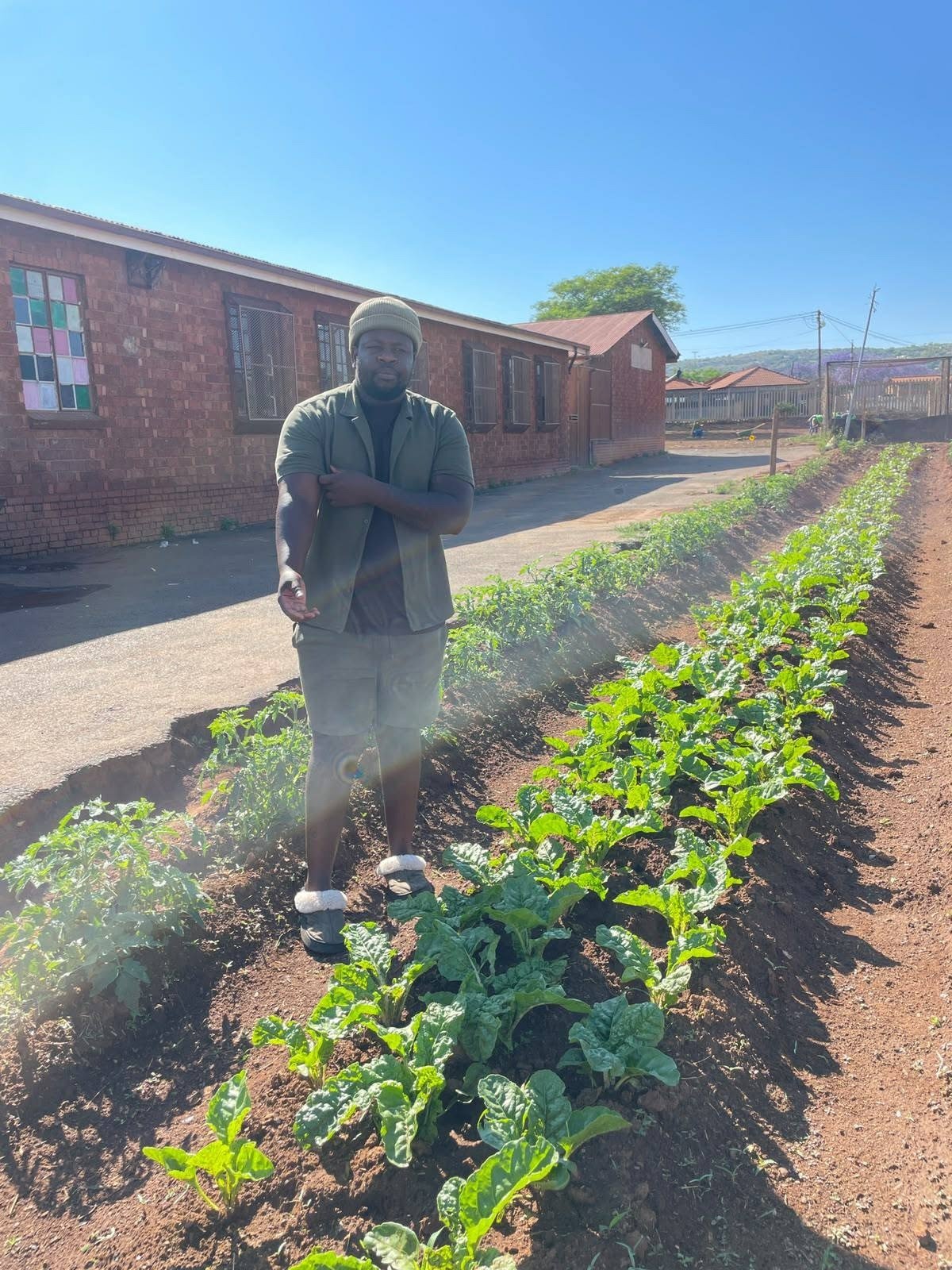
Tshepo Mochekgechekge (29), a former Social Employment Fund (SEF) participant who is now a crop farmer based in Saulsville, in the South African City of Tshwane, represents a compelling example of how the SEF enterprise development pathway can translate into sustained business growth and long-term livelihood creation. Prior to joining the programme, Tshepo was a student relying on a National Student Financial Aid Scheme (NSFAS) stipend, with limited income-generating opportunities. Although he had an interest in agriculture, his business remained informal and unregistered, with constrained capacity for growth. Becoming a participant marked a turning point, enabling him to transition from a theoretical understanding of agriculture to practical, applied enterprise development.
Through the programme, Tshepo strengthened both his technical and leadership capabilities. Notably, his role as a team leader allowed him to develop the ability to coordinate and manage larger groups, while also refining his approach to production planning and crop management. These skills have directly influenced how he now makes business decisions, particularly in adopting more effective planting methods and diversifying production. Since completing the programme, Tshepo has experienced measurable growth in his enterprise. His business was formally registered in 2025, marking a shift toward a more structured and sustainable operation. He has expanded his production area significantly, moving from a 62 x 25 metre plot to a quarter hectare, and has increased both his output and customer base.
Importantly, his enterprise demonstrates clear indicators of sustainability. Tshepo continues to operate consistently, supported by a combination of passion and discipline, which he identifies as key drivers of his progress. He also collaborates with other local farmers, such as Eden Farm, reflecting the role of networks and peer learning in sustaining enterprise growth. Beyond individual success, Tshepo’s business is contributing to local employment. In addition to participants previously placed through SEF, he currently engages three seasonal workers during harvest periods and two part-time workers for local sales, highlighting the enterprise’s role in supporting broader economic participation.
While progress is evident, challenges remain. Access to water continues to constrain operations, requiring manual irrigation, which limits efficiency and scalability. Despite this, Tshepo has maintained momentum and continues to grow his enterprise with a clear long-term vision of transitioning into commercial farming. Reflecting on his journey, Tshepo highlights the foundational role of the programme, noting that it provided “the building blocks” for his enterprise, supporting approximately 80% of its establishment. His experience underscores the programme’s ability to catalyse not only business formation but also sustained entrepreneurial development. “Without this enterprise, I wouldn’t feel like the responsible person I am today. My business is my pride and my first child,” said Tshepo Mochekgechekge, former SEF participant and current crop farmer.