

According to Research intelo, the global Rainfed Agriculture Fertilizers market size reached USD 51.2 billion in 2024, demonstrating robust growth supported by increasing demand for sustainable agricultural practices. The market is projected to expand at a CAGR of 5.8% from 2025 to 2033, reaching a forecasted value of USD 85.3 billion by 2033. This growth is driven by the rising need to improve crop yields in rainfed areas, where water availability is unpredictable and efficient fertilizer usage plays a critical role in ensuring food security and farmer profitability.
Introduction
In much of Africa, agriculture begins with a question that no farmer can completely control: When will the rain come? Across millions of smallholder farms, planting decisions, crop growth, household income, and food security remain closely connected to seasonal rainfall. Unlike irrigated agriculture, rainfed farming depends primarily on natural precipitation, making soil fertility and efficient fertilizer use especially important.
The Rainfed Agriculture Fertilizers Market is therefore more than a commercial opportunity for fertilizer manufacturers. It represents an important part of Africa’s agricultural resilience. When rainfall is limited or arrives unevenly, crops need to make better use of every available drop of water. Fertile, well-managed soils can help crops develop stronger roots and use moisture more effectively.
This is changing the conversation around fertilizers in Africa. The question is no longer simply, “How much fertilizer should a farmer apply?” Increasingly, the better question is, “Which nutrient, in what quantity, at what time, and for which soil and crop can create the greatest value when rainfall is uncertain?”
What Is the Rainfed Agriculture Fertilizers Market?
The Rainfed Agriculture Fertilizers Market refers to the demand, production, distribution, and use of fertilizers specifically supporting crop production in farming systems that depend primarily on rainfall rather than controlled irrigation.
These fertilizers can include nitrogen, phosphorus, potassium, compound and blended fertilizers, micronutrients, organic fertilizers, biofertilizers, and specialty formulations designed to improve nutrient availability and crop performance.
In Africa, this market has a distinctive character because farming conditions can change dramatically between regions. A maize farmer in Zambia may face different soil and rainfall conditions from a sorghum farmer in Niger, while a smallholder growing beans in Kenya may require a different nutrient strategy from a cassava producer in Nigeria.
Consequently, Africa’s fertilizer opportunity cannot be treated as one uniform market. Local soil conditions, crop choices, rainfall patterns, farm size, fertilizer affordability, and access to agricultural advice all influence demand.
Why Is Fertilizer Important for Rainfed Agriculture in Africa?
Fertilizer becomes particularly important in rainfed agriculture because rainfall alone does not guarantee a productive harvest.
A crop requires water, nutrients, sunlight, suitable temperatures, and healthy soil. When one of these elements becomes limiting, yield potential can fall. Fertilizers cannot create rainfall, but they can address nutrient deficiencies that prevent crops from making full use of available moisture.
For example, nitrogen supports vegetative growth and contributes to grain formation in many crops. Phosphorus plays an important role in root development and energy transfer, while potassium contributes to several physiological processes and can support crop tolerance to environmental stress.
For African farmers, the practical goal is therefore not simply to increase fertilizer application. It is to improve nutrient-use efficiency so that every kilogram of fertilizer has a meaningful chance of producing additional value.
What Is Driving the Rainfed Agriculture Fertilizers Market in Africa?
Growing Pressure to Increase Crop Productivity
Africa’s agricultural systems are under pressure to produce more food from existing farmland. Population growth, changing diets, urbanization, and expanding food markets are increasing the importance of agricultural productivity.
For rainfed farmers, increasing productivity requires more than expanding cultivated land. Better seed, soil management, water conservation, crop diversification, and appropriate fertilizer use increasingly form part of the solution.
Soil Nutrient Depletion
One of the most important challenges facing African agriculture is declining soil fertility in areas where nutrients removed through repeated cropping are not adequately replaced.
When crops are harvested, nutrients leave the field with the grain, roots, leaves, and other biomass. If those nutrients are not replenished through fertilizers, manure, compost, crop residues, or other practices, soil productivity can gradually decline.
This creates a strong long-term opportunity for balanced fertilizer solutions.
Unpredictable Rainfall
Rainfall variability is becoming a major consideration for farmers.
A fertilizer investment can become difficult to recover when drought arrives immediately after application. This makes fertilizer timing increasingly important.
Farmers and agricultural advisers are therefore looking for approaches that combine fertilizer use with moisture conservation, appropriate planting dates, drought-tolerant varieties, and improved soil structure.
Expansion of Commercial Agriculture
Africa’s agricultural sector includes millions of smallholder farmers alongside increasingly commercial farms, cooperatives, contract farming systems, and agribusinesses.
Commercialization creates additional demand for predictable crop performance. Fertilizer suppliers that can combine products with agronomic advice, soil testing, financing, and reliable distribution may have an advantage over businesses selling fertilizer as a standalone commodity.
Which Fertilizers Are Most Relevant to Rainfed Farming?
Nitrogen Fertilizers
Nitrogen fertilizers remain important for crops with significant nitrogen requirements, particularly cereals.
However, nitrogen management is highly sensitive to timing and environmental conditions. Applying excessive nitrogen without sufficient moisture or without considering soil conditions can reduce economic efficiency.
The future opportunity is therefore likely to favor precision in nitrogen management rather than simply higher nitrogen volumes.
Phosphorus Fertilizers
Phosphorus is particularly relevant in soils where phosphorus availability limits crop development.
Many African agricultural regions contain soils with specific phosphorus-management challenges. Appropriate phosphorus sources, placement, and application rates can therefore play an important role in improving crop establishment and root development.
Potassium Fertilizers
Potassium is receiving increasing attention as farmers move toward more balanced plant nutrition.
Although nitrogen and phosphorus often receive greater attention, potassium contributes to several plant functions and can be important in maintaining balanced crop nutrition.
NPK and Compound Fertilizers
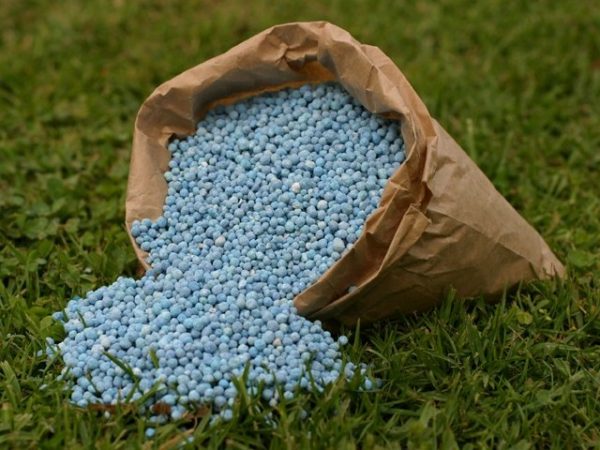
NPK fertilizers combine nitrogen, phosphorus, and potassium in predetermined nutrient ratios.
Their convenience makes them attractive where farmers want to apply multiple nutrients in a single product. However, the ideal nutrient ratio is not necessarily the same across Africa.
A fertilizer blend designed for one soil and crop combination may not be optimal for another. This creates opportunities for location-specific fertilizer formulations.
Micronutrient Fertilizers
Micronutrients are required in smaller quantities but can still have significant effects when a deficiency exists.
Zinc, boron, iron, manganese, and other micronutrients may become increasingly important as African agriculture moves toward more intensive production.
The opportunity is not to encourage farmers to purchase more products unnecessarily, but to use soil and crop information to identify genuine deficiencies.
How Climate Change Is Changing Fertilizer Demand
Climate change introduces a difficult contradiction for rainfed agriculture.
Farmers need higher productivity, yet weather conditions are becoming harder to predict in many farming areas. A fertilizer strategy that worked reliably under historical rainfall patterns may not perform identically under increasingly variable conditions.
This is encouraging interest in integrated approaches.
Instead of thinking about fertilizer separately from water management, farmers can combine nutrient management with practices such as mulching, conservation agriculture, residue management, minimum soil disturbance, water harvesting, improved planting timing, and drought-tolerant crop varieties.
The future of rainfed fertilizer use in Africa may therefore be less about “more fertilizer” and more about “better-managed fertilizer.”
What Role Does Soil Testing Play?
Soil testing can fundamentally change fertilizer decisions.
Without information about soil nutrient status, farmers may rely on generalized fertilizer recommendations. Such recommendations can be useful as a starting point but may not accurately reflect the conditions of every farm.
Soil testing can help identify nutrient deficiencies, pH conditions, organic matter status, and other characteristics relevant to fertilizer management.
For Africa, expanding affordable soil-testing services could become one of the most important developments supporting fertilizer-market growth.
Mobile soil-testing services, digital agricultural platforms, extension networks, farmer cooperatives, and local agronomists could help bring this information closer to smallholder farmers.
The Smallholder Farmer Is at the Center of the Market
Any serious discussion about Africa’s fertilizer market must start with the economics of the smallholder farmer.
For a farmer operating on limited land and with uncertain seasonal income, fertilizer is not simply an agricultural input. It is an investment.
The farmer is effectively asking:
“If I spend money on this fertilizer today, will the additional harvest I receive tomorrow justify that cost?”
This makes affordability, fertilizer availability, credit access, product quality, and agronomic guidance extremely important.
A technically excellent fertilizer can struggle to achieve widespread adoption if farmers cannot afford it, cannot find it at the right time, or do not understand how to apply it correctly.
Fertilizer Distribution Remains a Critical Challenge
Africa’s geography creates unique logistics challenges.
Fertilizer may need to travel from manufacturing facilities or ports through major cities, regional distribution centers, rural towns, and eventually to individual farms.
Transportation costs, poor rural roads, seasonal demand spikes, storage limitations, and supply disruptions can influence the final price paid by farmers.
This means the Rainfed Agriculture Fertilizers Market is also a distribution and infrastructure market.
Companies that improve last-mile delivery, local warehousing, cooperative-based distribution, and seasonal inventory planning can potentially unlock demand that remains inaccessible through traditional supply chains.
Digital Agriculture Could Transform Fertilizer Recommendations
The combination of mobile connectivity, satellite data, weather information, soil databases, and artificial intelligence is creating new possibilities for African agriculture.
A future fertilizer recommendation could potentially consider a farmer’s crop, location, soil characteristics, expected rainfall, planting date, previous crop, and historical productivity.
Instead of receiving a generic recommendation such as “apply fertilizer,” a farmer could receive a more practical instruction:
Which fertilizer should I use? How much should I apply? When should I apply it? What should I do if rainfall is delayed?
This transition from product-based selling toward decision-based agricultural services could become a major competitive advantage for fertilizer companies.
Organic and Bio-Based Fertilizers Are Gaining Attention
Africa’s fertilizer landscape is not limited to conventional mineral fertilizers.
Organic fertilizers, compost, manure, microbial products, biofertilizers, and other biological soil amendments are increasingly being considered as components of integrated soil fertility management.
These products can be particularly relevant where farmers have access to livestock manure, crop residues, composting systems, or locally available organic resources.
However, organic and mineral fertilizers should not automatically be treated as substitutes. Depending on the farm, crop, soil, and nutrient requirement, they can potentially complement one another.
The larger opportunity is integrated nutrient management, where farmers use available resources strategically rather than relying on a single input category.
What Are the Biggest Challenges Facing the Rainfed Agriculture Fertilizers Market?
High Input Costs
Fertilizer prices can become a major barrier when farmers have limited access to affordable finance.
Rainfall Risk
A farmer may hesitate to invest in fertilizer when rainfall is highly uncertain.
Limited Soil Information
Insufficient soil testing can result in generalized fertilizer recommendations.
Weak Last-Mile Distribution
Fertilizer may be available nationally but still difficult to access in remote farming communities.
Knowledge Gaps
Incorrect application rates, timing, placement, and product selection can reduce fertilizer effectiveness.
Counterfeit and Poor-Quality Products
The presence of counterfeit or substandard agricultural inputs can damage farmer confidence and reduce market trust.
What Opportunities Exist for Fertilizer Companies in Africa?
The strongest opportunity may not simply be selling larger volumes of conventional fertilizer.
Companies can differentiate themselves through farmer-centered solutions.
A fertilizer company could combine fertilizer products with soil testing, digital recommendations, weather information, farmer training, financing partnerships, crop advisory services, and distribution networks.
This changes the business model from:
“Here is a bag of fertilizer.”
to:
“Here is a nutrient-management solution designed for your crop, soil, climate, and farming conditions.”
That shift could be particularly powerful in fragmented smallholder markets.
The Future of Rainfed Fertilization in Africa
Localization means developing recommendations and products around specific crops, soils, regions, and farming systems.
Resilience means helping farmers maintain productivity despite rainfall uncertainty and other environmental pressures.
Technology will support all three.
Satellite imagery, digital farm records, mobile advisory platforms, weather forecasting, soil testing, remote sensing, and artificial intelligence can gradually make fertilizer recommendations more precise.
But technology alone will not solve Africa’s fertilizer challenge. The final link remains the farmer.
If a recommendation cannot be understood, afforded, accessed, and implemented at the farm level, its technological sophistication has little practical value.
Source:- https://researchintelo.com/report/rainfed-agriculture-fertilizers-market