

Ghent, Belgium, 24th June 2026 – A new collaborative research initiative aimed at improving the reliability of microbial agricultural products has secured €1.9 million in support from the Flemish Agency for Innovation & Entrepreneurship (VLAIO).
The project, known as MicroFix, is a €3.2 million undertaking involving Flemish biotechnology company Zymofix and researchers led by Prof. Tina Kyndt from the Faculty of Bioscience Engineering at Ghent University.
The initiative seeks to establish a stronger scientific foundation for predicting how microbial products perform under real-world agricultural conditions.
Microbial solutions are increasingly viewed as an important component of sustainable agriculture, helping farmers improve crop health and resilience while reducing reliance on conventional inputs.
However, the effectiveness of these products can vary significantly depending on environmental conditions, making their performance difficult to predict.
Rather than concentrating solely on selecting microbial strains, the MicroFix project will investigate how manufacturing processes influence microbial physiology, functional traits and, ultimately, product performance in agricultural systems.
Researchers will combine expertise in microbiology, plant science and modelling to develop a data-driven framework that links production conditions with microbial characteristics and crop responses.
The work is expected to provide new insights into how traits observed under controlled conditions translate into plant performance when crops are exposed to abiotic and biotic stresses.
According to the project partners, a key objective is to better understand how production methods shape microbial function, enabling the development of more reliable and effective biological products for agriculture.
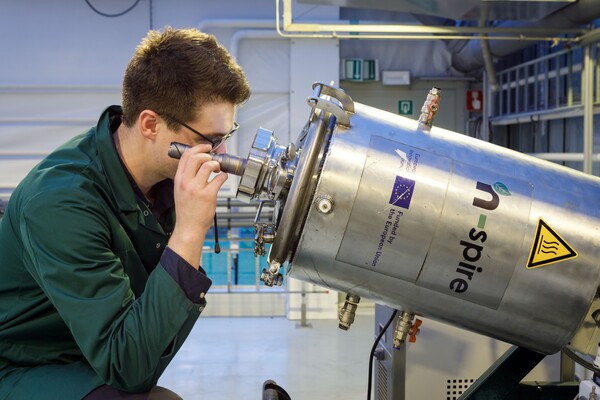
At the centre of the research is Zyft, Zymofix’s proprietary solid-state fermentation platform, which uses thermally processed substrates derived from agricultural sidestreams.
The system allows microorganisms to be cultivated on a solid substrate that serves both as a growth medium and as part of the final product formulation. Unlike conventional liquid fermentation, the substrate remains integrated into the end product.
By examining how this production and formulation approach affects microbial traits, stability and performance, the project aims to generate knowledge that could improve the consistency of biological agricultural solutions while also supporting the utilisation of agricultural by-products.
The initiative is expected to run for three years and deliver benefits beyond its scientific goals. Project leaders say it will strengthen expertise in microbial biotechnology in Flanders, support the creation of highly skilled research and development jobs, and contribute to the valorisation of agricultural sidestreams.
In addition to advancing scientific understanding of microbial production systems, the project is expected to support the transition toward more sustainable and circular agricultural practices through the increased use of agricultural sidestreams in biological manufacturing.