


By Benson Ngigi, Stewardship Manager, aak-GROW / CropLife Kenya
When a farmer buys a bottle of crop protection product, they trust it will do what the label says – protect their maize, their vegetables, and their income. When that bottle is counterfeit or smuggled, that trust is broken. Crops fail. Money is wasted. Soil and water are harmed, and the safety of the food on our tables is put at risk.
Five years ago, CropLife Kenya launched the Sustainable Pesticide Management Framework (SPMF), a five-year initiative representing an investment of US$1.5 million by CropLife International. The program is designed to protect human health, safeguard the environment, and support increased agricultural productivity through responsible pesticide management.
A central pillar of this initiative has been the fight against the illicit trade in pesticides, a threat that undermines farmer livelihoods, consumer safety, and environmental sustainability. Over the past five years, this is what we have achieved in Kenya.
Building awareness and skills
The work started with awareness. Over the past five years, the SPMF has reached multiple stakeholders – farmers, agrodealers, regulators, border enforcement officers and cross-border communities – and shown them the dangers of using illegal pesticides, how to spot the fake and illegal pesticides and what to do with the offenders. Awareness has been key in supporting CropLife Kenya’s other anti-counterfeit initiatives. Farmers and agrodealers in several counties were reached through trainings, field days, social media, radio, SMSs and road shows in hotspot areas.
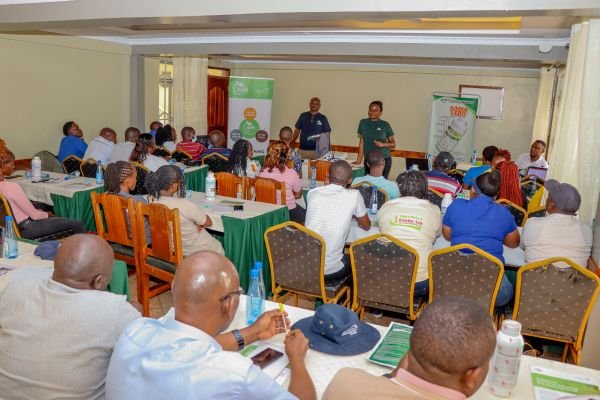
The training and awareness creation also targeted the borders and ports through which smuggled pesticides gain entry to Kenya. Through the SPMF, 51 customs and regulatory officers in Mombasa Port were trained on risk profiling at points of entry and the tricks used by smugglers. This helped them to know which shipments to check more closely. We also held four border posts seminars with our partners in Uganda and Tanzania where officials from the over 12 government agencies at the One Stop Border Points, the clearing and forwarding agents, the transporters and representatives of respective cross border traders’ associations were sensitized. Feedback from the training was very positive since most were previously unaware of the illegal pesticides trade.
Results?
Some of our best results came from policy work. Working closely with the Pest Control Products Board (PCPB), the Anti Counterfeit Authority (ACA) and other stakeholders, we advocated for stronger oversight and enforcement to address the challenge of illicit pesticide trade. As a result, PCPB hired more than 60 new inspectors to support inspection and enforcement, and they are now stationed across 6 regions and 10 border post offices. More inspectors means wider coverage on the ground.
To enhance the inspectors’ capacity to undertake their mandate on illegal pesticide trade, SPMF supported the training of 55 PCPB inspectors by the Directorate of Criminal Investigations, on investigation and prosecution, and they have since been officially gazetted. These new status and skills on how they can follow a case from seizure all the way to prosecution has seen a leap in the conversion of intelligence to actual raids, seizures and court cases from across the country. Over 9 tons of illegal pesticides have been seized and over 87 active cases have been prosecuted in various courts across the country. Every conviction shows that the trade now carries a real cost.
“SPMF has supported the training of other government agencies at borders so that they can work with PCPB in identifying illegal pesticides as they attempt to get into the country”, Frederick Muchiri, CEO, PCPB.
We have also supported the people closest to farmers as a source of pesticides. In 2025, we ran an integrated anti-counterfeit (ACF) campaign that pulled the interventions made since 2021 together. Radio, social media, SMSs and physical trainings were deployed targeting all stakeholders and the public. During the campaign, over 169 agrodealers were trained on anti-counterfeit, and since agrodealers are the last point in the supply chain before a pesticide reaches a farmer, helping them avoid illegal pesticides protects everyone.
What else can be done?
The progress achieved over the past five years is encouraging, but sustaining and building on these gains will require continued collaboration across the region. As we look ahead, there are three areas where collective action could further strengthen our response to illicit pesticide trade.
First, there is an opportunity to deepen cross-border cooperation. Illicit pesticides often move through the spaces between national jurisdictions, making regional coordination essential. Enhanced information sharing, joint inspections, and coordinated enforcement efforts among Kenya, Uganda, Tanzania, and other East African Community partner states would significantly strengthen our collective ability to address this challenge.
Second, continued review of regulatory and legal frameworks could help ensure that penalties remain an effective deterrent. When the opportunity arises, stronger sanctions should be considered to reflect the impact of offences related to illicit pesticide trade and to discourage those who seek to profit from activities that put farmers, consumers, and the environment at risk.
Third, sustained investment in implementation and enforcement remains critical. Effective regulation depends on adequately resourced institutions, including inspectors, testing laboratories, prosecutors, and border control agencies. Strengthening these capacities will help ensure that existing laws and regulations deliver their intended impact.
The past five years show what is possible when industry, regulators and enforcement work together. Much remains to be done, so let us build on the SPMF – together and across our borders.
Benson Ngigi is an accomplished crop protection and product stewardship specialist with over 20 years of experience spanning both the public and private sectors. Throughout his career, he has championed sustainable agricultural practices by promoting the responsible use of crop protection products, strengthening Integrated Pest Management (IPM) systems, and building the capacity of farmers, extension officers, agro-dealers, regulators, and other agricultural stakeholders.
Having begun his career in Kenya’s public agricultural sector before transitioning to industry leadership, Benson offers a unique perspective that bridges policy, science, and practical implementation. He currently serves as Product Stewardship Manager at aak-GROW/CropLife Kenya, the national representative of CropLife International and Kenya’s leading organization championing sustainable crop protection and food systems. His work has been instrumental in strengthening farmer outreach, expanding professional capacity-building programs, supporting responsible waste management initiatives, spearheading innovative technological solutions, and fostering partnerships across government, industry, academia, healthcare, and development organizations.
He is passionate about translating technical knowledge into practical solutions that improve livelihoods, protect natural resources, and contribute to resilient and sustainable food systems.