South Africa’s 21 national parks have, since the establishment of the first national park (Kruger National Park) in 1962, been known and revered for being home to the country’s natural and cultural heritage. From far and wide, national and international tourists visit the parks to experience wildlife through game drives, guided bush walks, camping and other activities. From spotting the Big 5 and birdwatching, to exploring cultural heritage sites, national parks are popular amongst people.
Having been born and raised near the Kruger National Park myself, I have had my fair share of wildlife experiences at the park during school trips in the early 1990s, during family visits and later on during mandatory excursions as a university student studying Ecotourism Management. My experiences at Kruger National Park and other nature reserves left me with an appreciation for wildlife and the interconnectedness of wildlife and the communities living alongside these protected areas.
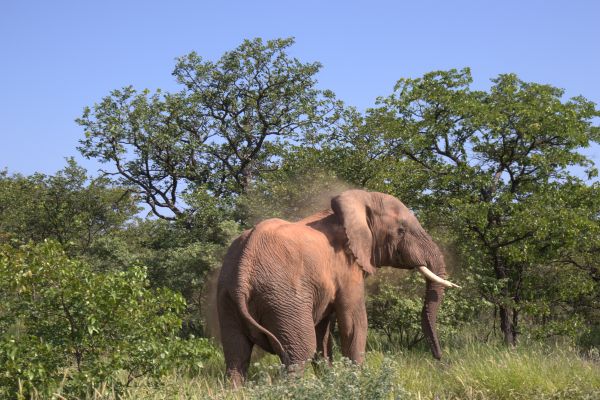
When we think of people experiencing wildlife in a national park, we often imagine people in a safari vehicle driving through the park, having the time of their lives. While these experiences are a reality for many tourists, people who live adjacent to conservation areas encounter wildlife in a more complex way; with a wider range of experiences of wildlife encounters that have direct implications on their daily lives. While doing research at the Mapungubwe National Park and surrounding farms in Musina in the Limpopo Province, communities living next to the park, mostly farmers, shared stories of the challenges they face as a consequence of living next to the park. The biggest challenge that was most often mentioned was human-elephant conflict, where African elephants (Loxodonta africana) would leave the conservation areas and enter farmland.
Farmers and human-elephants conflict: challenges and solutions
Elephants at the interface of wildlife conservation and agriculture areas destroy fences, trample and raid croplands as they roam in search of food and water. This is the case in dry areas such as Mapungubwe where elephants are forced to seek alternative sources of water and forage often on farmland. This presents farmers with a number of challenges: It puts farmers and farmworkers at a risk of being physically harmed or even killed. For raided crops, losses cause distress and great financial burden, essentially affecting the farmers’ livelihoods negatively. This conflict between farmers and elephants also has implications for managers of conservation areas as they have to answer for the damage caused by “their animals” and come up with ways to prevent the human-wildlife conflict. As a result, farmers and impacted communities who live near the parks have negative views of elephants because they affect their daily lives negatively.
The concerns about elephants are best encapsulated by one farmer, Piet (not his real name), who shared the following after I asked him if elephants do make their way to his farm: “In very, very dry times, they come down this gravel road and then we chase them away.” I then asked him why they chase the elephants away, to which he responded, “They destroy everything. They are destructive. We don’t want them here.”
In efforts to keep elephants within conservation areas and away from farms, farmers and national park managers, sometimes in collaboration with each other, spend copious amounts of time and money maintaining fences. However, their efforts are often in vain when elephants destroy the fences that are used to keep them in. This challenge is shared by the farmers I conversed with in Mapungubwe. In order to reduce human-elephant conflict, some communities have come up with strategies to keep elephants away from their homesteads. Communities in Hwange National Park in Zimbabwe, for example, started implementing a deterrent fencing strategy that uses chilli pepper as a deterrent. The concept of chilli pepper fences includes soaking cloths and ropes in ground chilli pepper mixed with oil, followed by mounting the cloths and rope to wooden poles at different heights, which are placed around the crop fields.
The sensitive noses of elephants prevent them from raiding crops where chilli pepper fences have been erected. Further research into using chilli pepper oil in ping-pong balls delivered by gas dispensers was investigated in Zimbabwe, Mozambique and Zambia between 2009 and 2013. This method was also proven to be a strategy that could possibly be successful in deterring elephants. The chilli pepper methods help to reduce human-elephant conflict for communities and farms close to conservation areas. These serve as examples of strategies to deal with challenges of human-wildlife conflict for continued farming practices while still coexisting with biodiversity. Farmers and protected area managers in other areas, including the Mapungubwe region, can draw lessons from other farmers who have already put these mechanisms to the test and found them to be successful in deterring elephants.
Written by Dr Tribute J. Mboweni, Agricultural Research Council, Economic Analysis Unit. mbowenit@arc.agric.za