

More than 100 leading forestry researchers, practitioners, policymakers and Indigenous and area-based scholars have warned that the global biodiversity targets risk failure if Africa’s spiritual landscapes are ignored.
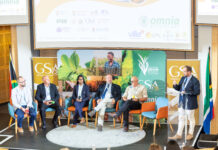
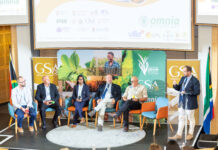
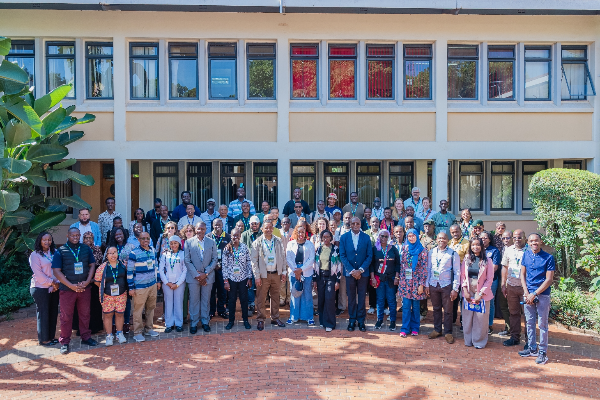
The warning was issued this week at a landmark symposium on Heritage-Sensitive Forest Governance in African Contexts held at the CIFOR–ICRAF campus in Nairobi, the gathering that brought together experts from across Africa and beyond to launch new findings from the SPIRAL Project and unveil a forthcoming book, Ecospiritual Practices in African Contexts, both of which challenge dominant global conservation approaches.
Participants argued that without recognition of African spiritual landscapes and the stewardship of Indigenous Peoples and Local Communities (IP&LCs), the Kunming–Montreal Global Biodiversity Framework’s Target 3 — which seeks to conserve 30% of land and sea by 2030 — is unlikely to succeed.
The Nairobi meeting marked the second symposium in an international series aimed at reshaping debates on forest governance. The first was held at Chiang Mai University in collaboration with the PLACES Lab at CY Cergy Paris Université. Organisers said a third event is planned in Latin America, in partnership with CIFOR–ICRAF and the Governance, Equity and Wellbeing group led by Anne Larson.
As countries accelerate efforts to expand protected areas, speakers noted that many conservation frameworks remain rooted in secular, resource-focused models that marginalise cultural and spiritual dimensions of land. Yet territories governed by IP&LCs currently protect more than one-third of the world’s most biodiverse forest ecosystems, often outperforming state-managed protected areas.
In his opening address, Peter Minang, Director for Africa at CIFOR–ICRAF, stressed the importance of bridging science with local cultural values.
“One of the core values we hold at CIFOR–ICRAF is the recognition of Indigenous and local knowledge and the need to bring these knowledge systems into meaningful dialogue with science,” he said.
Drawing on his experience in Cameroon, Minang recalled witnessing widespread deforestation alongside the survival of sacred forests protected through traditional values. “I have seen this work. The challenge is that science has not yet fully caught up.”
Delivering the institutional welcome, Dr. Phosiso Sola of CIFOR–ICRAF highlighted that African forests are also heritage systems.
“These spiritual landscapes are not merely ecological spaces; they are heritage systems shaped by long histories of spiritual worldviews,” she said, noting that nearly 20 speakers from across the continent were contributing to a transdisciplinary dialogue on indigeneity, ecospiritual practices and biocultural conservation.
The keynote address by Prof. Kokou Kouami of the University of Lomé underscored the strategic value of ecospiritual knowledge.
“The strategic value of ecospiritual knowledge must be formally recognized as a complementary system to ecological sciences and biophysical data,” he said, adding that inclusive governance rooted in customary institutions is vital for responding to climate and socio-economic change.
Presenting the SPIRAL Project findings, lead researcher Dr. Alessandra Manzini of the PLACES Lab argued that global conservation has long been constrained by “fortress conservation” models.
“This moment calls for an epistemic shift: moving away from top-down forest governance toward relational and adaptive paradigms grounded in indigeneity, custodianship, and cosmoecologies,” she said.
The project analysed data from 72 small-scale societies worldwide, including 28 in Africa and the African diaspora. When combined with information from the Environmental Justice Atlas, the research revealed a strong correlation between sacred forest values and community resistance to extractive activities and the commodification of nature.
Customary laws such as taboos, sacred zones and harvesting restrictions were shown to function as effective governance and monitoring systems over centuries.
A central theme of the symposium was the role of Other Effective Area-Based Conservation Measures (OECMs) in formally recognising sacred forests. Unlike conventional national parks, OECMs can acknowledge biodiversity conservation as a secondary outcome of cultural and spiritual relationships with land.
However, participants cautioned against bureaucratising sacred landscapes and stressed that conservation finance must flow directly to communities.
The event also featured discussions around the forthcoming book Ecospiritual Practices in African Contexts, edited by Alessandra Manzini and colleagues, drawing on case studies from Senegal to Madagascar. The symposium concluded with a high-level roundtable including scholars from CIFOR–ICRAF, the ERAIFT and other institutions.
The consensus was clear: meeting global biodiversity targets will require conservation policies that move beyond extractive models and recognise forests as living landscapes sustained through cultural, spiritual and political relationships.