

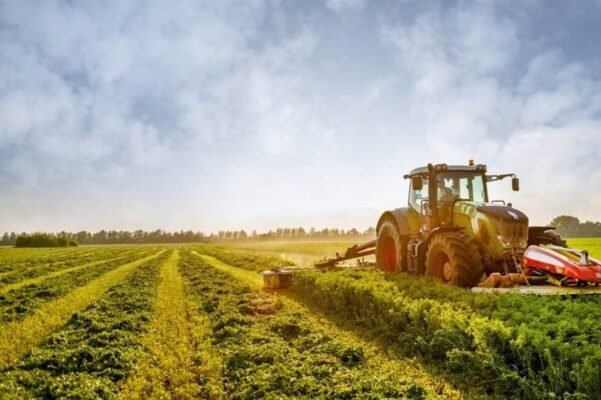
Weak El Niño conditions are expected to strengthen rapidly ahead of the 2026/27 summer, increasing the possibility of warmer and drier conditions across South Africa’s summer rainfall regions.
The South African Weather Service said in its July seasonal outlook that El Niño conditions were expected to continue through the summer, although their effects vary between seasons and locations.
“If production declines, processors receive less raw material, transport schedules change and exporters can miss critical market windows,” says Lester Botha, Business and Market Development Executive at Alpha.
Weather is one of several risks capable of affecting multiple agricultural businesses. An outbreak of foot-and-mouth disease can restrict livestock movement and disrupt feedlots, abattoirs, transporters and market access.
Machinery failures can have a similar effect. A breakdown during planting or harvesting can delay production and reduce deliveries to processors. For perishable products, interruptions to packing, cooling or transport can shorten shelf life and reduce their value.
Input costs make these disruptions harder to absorb. The National Agricultural Marketing Council’s June 2026 report recorded substantial year-on-year increases in several international fertiliser prices and freight indices.
“A farm, packhouse, cold store and transporter may be independently owned, but operationally they rely on one another,” Botha says. “The exposure often sits in the connections between them.”
The reliability of roads, municipal electricity networks, cold-storage facilities and ports can also determine whether agricultural products reach their markets in time.
Transnet National Ports Authority reported in July that average container turnaround time at the Port of Cape Town had improved from 74 hours in the 2025/26 financial year to 58 hours in the current year to date. Average anchorage waiting time had fallen from 127 hours in 2023/24 to 79 hours in 2025/26.
However, exporters remain dependent on infrastructure performing consistently during concentrated seasonal export periods.
Botha says mitigation starts with identifying single points of failure, such as machinery without backup, cold-storage facilities dependent on one power source, critical parts available from only one supplier or transport routes with no viable alternative.
During a review of a cold-storage operation, Alpha found that the refrigeration system depended on a single electricity supply and that the standby generator could not support the full cooling load.
Alpha recommended additional generating capacity, automatic changeover testing and an agreement allowing products to be transferred to a nearby facility during an extended outage. The measures were intended to limit stock deterioration, interruption and financial loss.
Businesses should also establish how long operations can continue without each critical resource, how quickly it can realistically be restored and whether contingency arrangements have been tested under operating conditions.
“A backup plan only reduces risk if it can carry the actual operational demand,” Botha says. “The time to discover that a generator cannot support the full cooling load, or that a critical replacement part takes six months to arrive, is not after the failure.”
These risks and their mitigation will form part of Alpha’s discussions with farmers, agribusinesses and brokers at NAMPO Cape 2026.