


The market is in decline in the United States, Canada and Brazil. In Europe, sales are falling in Germany, France and Spain. Turkey is experiencing a sharp decline, whilst the economic strategies and policies implemented by India and China are driving purchases in both countries. Potential demand for agricultural technology remains high, but economic factors are holding the sector back. Mariateresa Maschio: worldwide politics must revitalise the economy and promote cooperation.
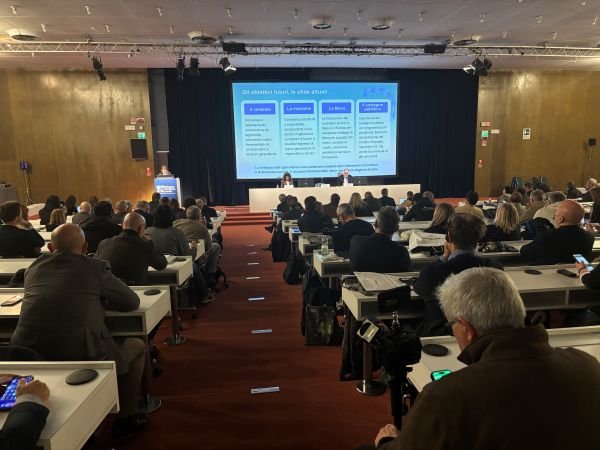
Inflation, the climate emergency and the crisis in farm incomes are hampering sales of agricultural machinery, which are falling across the main markets. This is the picture outlined this afternoon in Bologna by FederUnacoma President Mariateresa Maschio, during the traditional press conference held on the eve of EIMA International, the global exhibition dedicated to agricultural and gardening machinery (Bologna Exhibition Centre, 10–14 November).
In the United States, between January and September, tractor sales fell by 13 per cent, continuing the downward trend of the last four years. Between 2021 and 2025, the number of machines sold in the US has fallen by over 100,000 units (from 318,000 to 196,000). The picture is also negative for Canada, where sales have fallen by over 9 per cent. In Latin America, the downturn is evident in the two most important countries: Brazil, where tractor sales were down 19 per cent in the seven months to July, and Argentina, where a 27 per cent decline was recorded in the six months to June.
In reporting on market trends, Mariateresa Maschio highlighted the figures for the main European countries. In the nine months to September, tractor sales fell in Germany (down 6 per cent compared with the same period last year), France (down 3.3 per cent), Spain (down 4.6 per cent) and, above all, Poland (down 18.8 per cent). Among the major European markets, only the UK recorded growth; with a 17.4 per cent increase, recovering some of the substantial declines experienced in the two-year period 2024–2025.
A sharp decline was recorded in Turkey – the president of the Italian manufacturers’ association went on to explain – where rising production costs, a loss of purchasing power and limited access to credit led to a 46.2 per cent slump in tractor sales during the first eight months of the year. Bucking the trend are the two Asian giants, China and, above all, India, where government incentive schemes are providing support for the agricultural machinery sector. In June, China recorded a 5.5 per cent increase in tractor sales (178,000 units), whilst in September India showed a 15 per cent increase, with nearly 900,000 units registered since the beginning of the year.
Although the global market is currently being held back by unfavourable economic conditions, the medium- and long-term trends confirm the central role of agricultural machinery in the development of the agricultural economy, as every region in the world needs machinery, equipment and tools to improve productivity, sustainability and the quality of production. The agricultural machinery industry has an even broader potential market than the agricultural sector itself – as noted at the conference – because numerous models are used in related sectors ranging from land reclamation and land management to the development of bioenergy supply chains and the maintenance of green spaces.
Estimates by the research firm ExportPlanning predict, in this context, a growing demand and an increase in trade within the sector of around 4.5 per cent per annum between 2026 and 2029, which could be driven precisely by the need for equipment for complementary activities.
“In a scenario characterised by geopolitical tensions and protectionism,” added the president of FederUnacoma, “politics is called upon to implement measures to promote the ability of agricultural businesses to invest in new technologies.” “But at this historic juncture, politics has, above all, the task of helping to revive dialogue between countries by promoting cooperation.
The development of agriculture,” concluded Mariateresa Maschio, “is a fundamental prerequisite for economic well-being and social security; it is a crucial step towards a new era of peace.”