

Small-scale farmers are heading into the 2026/27 summer season facing hotter conditions and unpredictable rainfall, but for many, preparing for the impacts of El Niño is not simply a question of knowing what is coming. Access to water, infrastructure, finance and other resources can determine whether farmers are able to act on that knowledge.
The Department of Agriculture’s El Niño advisory issued on 2 September warns of below-normal rainfall and high temperatures during the summer season, with dry conditions and heat stress posing risks to crops and livestock.
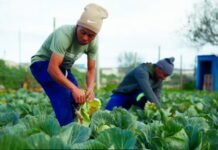
“Small-scale farmers are the most vulnerable group of farmers because, while many are aware of the climate risks they face, they often do not have the resources and infrastructure needed to respond,” says Dr Siphesihle Qange, Programme Lead at Seriti Institute.
Qange says farmers who have worked with Seriti are increasingly aware of the effects of climate change and some of the practical steps they can take. But awareness does not always translate into preparedness.
For example, farmers may be advised to harvest and store water, but not have access to water tanks or other storage infrastructure. There are also simple measures that can help. Mulching, for instance, involves placing leaves or grass around crops to help retain moisture in the soil and can be done without significant costs.
Through its work with farming communities, Seriti Institute focuses on food production, agroecology, soil health and building community resilience. These approaches are important not only in responding to one difficult season, but in helping farmers prepare for changing conditions over the longer term.
The challenge is also evident among farmers looking to participate in organised agricultural markets. Through Hluma Roots, more than 100 small-scale farmers have been identified as potential suppliers, particularly of chilli, with most based in Limpopo, Mpumalanga and North-West.
Wanga Pholi, Agri-Value Chain Lead at Hluma Roots, says many of these farmers have the land and willingness to produce, but do not always have the infrastructure or financial resources to support reliable production.
“Knowing what needs to be done and having the resources to do it are two very different things,” says Pholi.
For chilli farmers, hotter conditions and irregular rainfall can increase pressure on water supplies and soil moisture, affecting plant development, fruit formation, yields and quality. Reduced production can in turn affect farmers’ incomes as well as the reliability of supply to markets.
“Local small-scale farmers will feel the heat,” says Qange, warning that reduced production can also affect consumers through higher food prices and reduced availability.
Yashila Govender of Seriti Institute says farmers need to increasingly look beyond traditional planting calendars and build farming systems that can cope with greater variability.
“Agroecology gives us some of the tools to do that,” she says, pointing to practices such as mulching, intercropping, cover cropping, composting, water harvesting and the use of crops better suited to heat and dry conditions.
The Department of Agriculture is also encouraging farmers to conserve soil moisture, use water carefully, consider suitable cultivars, implement water harvesting and irrigation measures, and follow weather and early-warning information.
For Govender, however, meaningful climate adaptation cannot happen in one season.
“Adaptation is a generational process. It cannot be achieved in a single season or through one-off interventions,” she says, calling for sustained investment in water infrastructure, research, extension support and locally relevant farming practices.
For small-scale farmers, the challenge is not simply knowing that El Niño is coming. It is having the means to prepare for it.