

By Morris Akiri, Executive Director, Africa at CABI
For decades, the global coffee industry has celebrated the bean’s journey from African highlands to international cups. But an uncomfortable truth remains: the smallholders who anchor this multi-billion-dollar value chain are systematically locked out of the formal banking system.
New research across five major African coffee-producing nations—Cameroon, Côte d’Ivoire, Ethiopia, Kenya, and Uganda—reveals a staggering institutional failure. Credit provided by all financial institutions meets less than a quarter of smallholder needs, with commercial banks contributing a measly 7% of formal agricultural credit. This financing deficit persists even as regional frameworks like the African Union’s Agenda 2063 and the G-25 Kampala Declaration explicitly call for strategic investment in the sector.
The “Missing Middle” is Ignored
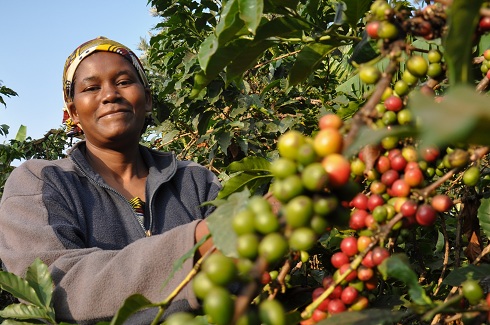
The so-called “missing middle” – smallholder farmers and small-to-medium coffee enterprises – aren’t missing at all. They are everywhere. In Ethiopia alone, coffee supports over 15 million livelihoods; in Uganda, it sustains 1.8 million households. Yet, mainstream financial institutions treat them as invisible.
Insights from 101 key informant interviews across the continent diagnose three interlocking systemic failures driving this exclusion: structural product misalignment, institutional risk aversion, and individual capacity deficits.
Lenders routinely justify their exclusion by pointing to systemic agricultural risks. However, the current banking models actively construct that risk through three barriers:
- Prohibitive Interest Rates: Borrowers face crushing rates, ranging from 10–21% in Kenya, 18–21% in Ethiopia, up to a staggering 25–30% in Uganda.
- Rigid Collateral Demands: Mainstream banks stubbornly demand formal land titles. This automatically disqualifies women and youth, who own less than 15% of agricultural land despite providing up to 70% of production labour.
- Temporal Mismatch: Loan repayment schedules completely ignore coffee’s annual harvest cycle, demanding rigid monthly instalments during lean months instead of providing flexible grace periods.
The Disproportionate Burden on Women and Youth
The compounding effect of these three barriers creates a system of intersectional exclusion that actively derails the value chain’s most vital demographics. Forced outside the formal banking system due to a lack of land deeds, women are routinely pushed into exploitative, informal trader networks where they must accept unfavourable credit terms or exit coffee production entirely.
Meanwhile, the next generation of agricultural talent is stifled at the source; landless youth, unable to absorb high interest rates or navigate rigid repayment timelines, are forced to abandon the family farm altogether in search of urban, informal employment. By utilizing neutral-sounding lending metrics that ignore the realities of customary law and seasonal cash flows, commercial banks do not just reflect societal inequalities, they actively reinforce them, locking out the very entrepreneurs needed to modernize Africa’s coffee sector.
The Cost of Doing Nothing
When capital is choked, productivity plummets far below biological potential. In Kenya, Arabica yields hover at a dismal 2–3 kilograms of cherry per tree against a genetic capacity of 30 kilograms. We are losing 90% of our potential output not from poor soil or lack of skill, but because farmers cannot access reasonable working capital to invest in fertilizer, stumping, or processing infrastructure.
The investment backlog is immense. Ethiopia needs an estimated $702 million for farm rejuvenation. Uganda requires $332 million to revamp production and $80 million to modernize primary processing. Kenya’s financing gap has stagnated at $100 million for a decade. Without formal options, liquidity-trapped farmers surrender pricing leverage to exploitative informal traders, stripping the sector of its entrepreneurial energy.
Highlighted Progress: Where Change is Already Happening
Despite these systemic hurdles, concrete institutional models have already proven that de-risking smallholders and last mile actors especially women and youth is highly profitable. The financing gap is a massive commercial opportunity, not an unresolvable mystery.
- Gender-inclusive credit guarantees (Ethiopia): Emerging data demonstrates that when partial credit guarantees are paired with targeted, gender-inclusive technical assistance, the participation of women and youth in formal lending surges significantly. These funds absorb default risks, shifting commercial banks from scepticism to active lending.
- Alternative collateral and tripartite lending (Rwanda, Tanzania, Uganda): Organizations like Root Capital have revolutionized lending through triangulation agreements. By utilizing an off-taker’s future purchase contract as security rather than traditional land titles, this framework completely bypasses the property-ownership barrier for landless youth and women.
- Movable asset registries (Ghana, Liberia, Malawi): Legal reforms recognizing movable assets—like livestock, machinery, and stored crop inventory—as legitimate collateral have unlocked substantial capital. Blueprinted registries have already facilitated over $3 billion in loans in Ghana and $230 million in Liberia, with 30% of those funds flowing directly to women entrepreneurs.
- Tailored last-mile delivery formats: Successful extension paradigms show that financial products only scale when delivery formats adapt to cultural and logistical realities. This means structuring financial literacy training to match the specific needs of smallholders and last mile borrowers. Eg for women this can include offering daytime, village-level, or separate sessions, while for youth approaches can focus on utilizing mobile-first, peer-led, and digital platforms.
A Smart Business Mandate
To commercial banks: You are leaving money on the table. Smallholder coffee is an underserved market, not an unbankable one. Track your portfolios using sex- and age-disaggregated data, and design products that match coffee’s seasonal rhythm.
To African governments: Strengthen online movable collateral registries—following successful blueprints in Ghana and Liberia—and aggressively reform customary land laws that bar women from property ownership.
Inclusive lending is not a zero-sum game; it is a pathway to a larger, more resilient market. It is time to stop studying the problem and treat Africa’s coffee smallholders for what they truly are: viable business partners in a multi-billion-dollar global industry.
Dr Morris Akiri is an executive leader with over 25 years of experience driving scalable ecosystems innovations, shaping agricultural policy, and overseeing transcontinental development research. He currently serves as the Executive Director, Africa at CABI, an international, inter-governmental organization improving livelihoods worldwide through agricultural science and knowledge. He is the principal contributor to the CABI Working Paper 38, “Enhancing credit access for ‘missing middle’ and last-mile borrowers in African coffee value chains.”