

With Foot-and-Mouth Disease (FMD) emerging as an increasingly severe crisis for South Africa’s livestock sector, many intervention efforts such as reliable vaccine supply, accelerating livestock identification, enforcing movement controls, expanding diagnostic capacity and intensifying national awareness campaigns continue to be embraced.
Additionally, local and global stockholders are roped in to complement government-led containment measures, recognising that the highly contagious transboundary disease poses not only a production challenge but also a long-term threat to trade, rural livelihoods and food security across South Africa and the wider region.
Among the stakeholders is Biogénesis Bagó, one of the world’s leading companies in Foot-and-Mouth Disease (FMD) vaccine development, which undertook an exploratory visit to South Africa in November last year to assess how it could support the country’s response and better understand local regulatory, production and logistical needs.
According to Dr. Rodolfo Bellinzoni, Executive Director of Innovation at Biogénesis Bagó, the visit was prompted by a surge in global FMD outbreaks and the company’s long-standing commitment to supporting countries facing animal health emergencies.
“During this year, multiple outbreaks of foot-and-mouth disease were registered in different regions of the world and from Biogénesis Bagó we seek to contribute with our vaccine, recognized for its quality and efficacy, opening new channels of dialogue,” said Dr. Bellinzoni.
He explained that the company’s exploratory mission to South Africa was motivated by the current outbreak and aimed at evaluating opportunities for collaboration and vaccine availability to help control the disease in the region.
As the world’s largest supplier of foot-and-mouth disease vaccines, Biogénesis Bagó commits to supporting regions and countries facing health crises given the company’s long history of working alongside governments and health authorities during FMD outbreaks through the provision of vaccines, technical expertise and emergency preparedness support.
Biogénesis Bagó also provide strategic reserve of antigens for formulation and use in health emergencies earning it global trust through decisive involvement in large-scale health emergencies across the Americas, Asia, Europe and North Africa.
“For more than two decades, Biogénesis Bagó has acted as an international supplier of antigen banks for the world’s largest producers of animal protein, such as the United States, Canada, Argentina, South Korea and more recently Brazil,” said Bellinzoni.
Nature of FMD
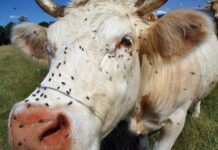
Reflecting on the nature of the disease, Dr. Bellinzoni says FMD is exceptionally difficult to control because of its enormous capacity for contagion.
“The virus spreads through air, contact, contaminated food and objects, allowing it to move quickly among cattle, pigs, sheep, goats and other cloven-hoofed animals,” he said noting that the virus can survive in cold and humid environments and in products such as milk or refrigerated meat, enabling spread even without direct animal movement.
According to the director, in livestock-dependent economies, these challenges are compounded by limited resources for surveillance, vaccination and border control, and by the fact that economic losses may delay outbreak reporting.
He warned that rising global movement of animals and people continues to fuel the spread of transboundary diseases such as FMD.
Impacts of FMD
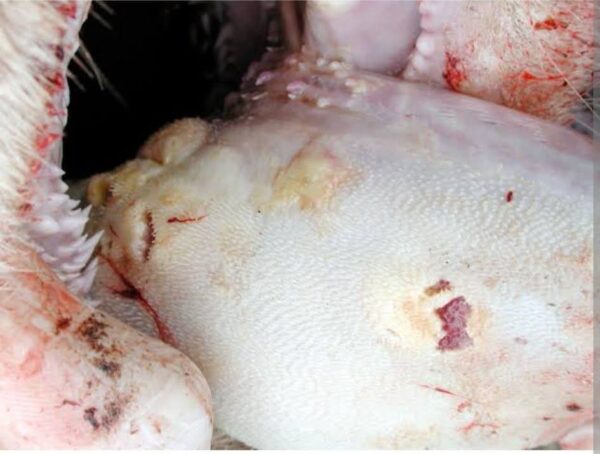
On impacts, Dr. Bellinzoni said FMD outbreaks cause immediate drops in production due to fever, lesions and loss of appetite that reduce milk yields, weight gain and overall productivity.
“Quarantines, sanitary culling and movement restrictions are often required, resulting in direct economic losses for both producers and governments,” he added.
He said that in the medium to long term, surviving animals may suffer chronic productivity losses, reproductive problems and lower performance, delaying sector recovery.
“In trade terms, affected countries often face immediate market closures and long-lasting loss of health status, with recovery requiring strong effort in vaccination, surveillance and certification programs,” Dr. Bellinzoni explained.
Speed and coordination for effective outbreak response
Drawing from experiences in Argentina, Vietnam, Indonesia and South Korea, Dr. Bellinzoni said speed and coordination are the most critical lessons for effective outbreak response.
“When authorities, industry and producers share information in real time and apply unified vaccination and movement control plans, outbreaks are contained faster and with less economic impact,” he said.
He emphasized that quality vaccines matched to circulating serotypes, efficient logistics and strong cold chains are equally vital.
“Improved cold chains, training of vaccinators and sustained campaigns have reduced incidence in countries like, South Korea, Vietnam, Indonesia, among otehrs” Dr. Bellinzoni noted also stressing the importance of engaging farmers and rural communities through clear communication, incentives for early reporting and inclusive vaccination programs.
Vaccine science
On vaccine science, Dr. Bellinzoni said vaccine quality, efficacy, high potency and cross protection, with circulating strains is critical because poor quality vaccines may allow outbreaks to advance even in vaccinated populations.
“Our vaccines are backed by more than 80 years of technological innovation, providing cross-protection between different strains and validation by worldwide reference institutes,” he said.
He defined a high-quality FMD vaccine as one that delivers safety, efficacy and potency, supported by a reliable cold chain and rigorous batch controls.
In emergency campaigns, speed and correct preservation of vaccines make a decisive difference in outbreak containment.
Vaccine supply
Addressing supply challenges, he said Biogénesis Bagó uniquely combines multivalent vaccine production with strategic antigen banks.
“These banks allow stable antigens to be stored long-term and rapidly formulated into specific vaccines once the viral serotype is identified,” he explained.
He said this model has supported responses to major outbreaks in Indonesia, Jordan, Israel, Palestine, Libya and Algeria, among others.
Future outlook
Looking ahead, Dr. Bellinzoni said Biogénesis Bagó envisions collaborative plans with South Africa and other African countries built on high-quality vaccines, strategic logistics and scientific cooperation.
“Greater control, more antigen banks, solid strategies, reliable supply chains, and assured quality at every stage are essential for a future in which foot-and-mouth disease can be effectively controlled,” he concluded.