

African-led collaboration for healthier potato crops and resilient livelihoods
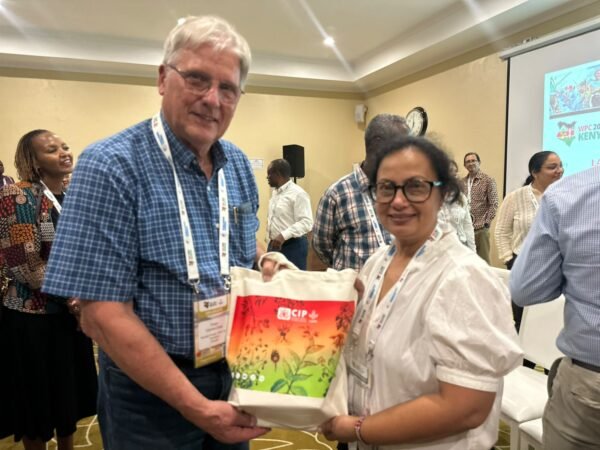
Nairobi, Kenya, — Researchers, agricultural institutions and potato-sector partners launched the AfricaBlight Network on 27 October at the 13th World Potato Congress in Naivasha, Kenya. The African-led collaboration aims to build a coordinated African response to late blight; one of the most destructive diseases affecting potato production worldwide. Drawing on the experiences and lessons learned from established regional networks, including AsiaBlight, Tizón Latino and EuroBlight. AfricaBlight will focus on identifying priority countries and strategic partners, promoting knowledge exchange and joint research, and fostering sustained regional collaboration to advance effective sustainable late blight management across Africa.
AfricaBlight Network launch inaugurated by Dr Peter VanderZaag (PhD), President of the World Potato Congress comes at a critical moment for the global potato sector. Late blight remains a major threat to potato production, particularly where farmers have limited access to resistant varieties, reliable disease forecasting and effective crop protection measures. Caused by Phytophthora infestans, the disease can spread rapidly under favourable weather conditions, damaging foliage and tubers and causing severe crop losses within few days of initial infection. Beyond reducing yields, late blight increases production costs as farmers rely heavily on fungicides spray to protect their crops, placing additional pressure on household incomes. Globally, the disease is estimated to cost between USD 3 billion and USD 7 billion annually, while fungicide expenses can account for 10–25% of the total value of a potato harvest.
“The launch of AfricaBlight Network provides an opportunity to bring countries and partners together around a shared challenge that affects potato productivity, farmer incomes and food security. By strengthening collaboration, co-designing innovations and sharing expertise, we can support more coordinated and effective approaches to late blight management across Africa,” said Dr. Joyce Maru, CIP Regional Director for Africa.
The AfricaBlight network aims to strengthen engagement with potato-producing countries, including Kenya, Rwanda, Ethiopia and Eritrea, while welcoming participation from across Africa. Priorities include identifying national coordinators, expanding access to weather-based disease forecasting, strengthening farmer training, and exploring partnerships for late blight surveillance and pathogen genotyping. Sustaining these activities will require resources for training, workshops, technical collaboration and national capacity development. The network will explore opportunities to engage national funding bodies, development partners and the private sector.
“Effective late blight management requires more than access to tolerant varieties and fungicides. It demands a sound understanding of the prevailing pathogen population, the ability to predict and respond to disease outbreaks, and the capacity to equip farmers and agricultural advisers with the knowledge and decision support tools needed for timely and informed disease management,” said Dr. Kalpana Sharma, CIP Plant Health Lead.
Partnerships with national agricultural research institutions will be central to AfricaBlight’s success. In Kenya, collaboration between CIP and the Kenya Agricultural and Livestock Research Organization (KALRO) provides an important foundation for strengthening research, building national capacity and connecting scientific advances with farmers’ needs. Working with KALRO and other national programmes across Africa, AfricaBlight aims to support coordinated disease monitoring, strengthen the use of forecasting tools and promote practical management approaches suited to local production conditions.
“The experience of established blight networks shows the importance of sustained collaboration across countries and institutions. AfricaBlight can build on these lessons to connect expertise, strengthen national capacities and support practical solutions that respond to farmers’ needs, said Dr. Peter VanderZaag, President of the World Potato Congress Inc. .
The inaugural meeting brought together representatives of the International Potato Center (CIP), CGIAR Capacity Sharing Accelerator (CapSha), Beijing Huisi Junda Technology Co., Ltd. (HSJD), the Belgian research and agricultural advisory organization CARAH, the James Hutton Institute and EuroBlight, AsiaBlight, Tizón Latino as well as World Potato Congress representatives and other national and international partners. The meeting identified priority areas for strengthening late blight management across Africa, including integrated disease management, disease forecasting and regional collaboration.
Lessons from AsiaBlight highlighted the importance of establishing country-level coordinators, strengthening institutional capacities through farmer-focused training, integrating weather-based decision-support tools to optimize fungicide applications, and expanding pathogen surveillance and genotyping to inform disease management strategies. Building on these experiences, AfricaBlight can leverage the CGIAR Capacity Sharing Accelerator (CapSha) to promote South–South knowledge exchange, peer learning, and institutional partnerships between Asia and Africa. These collaborative efforts will strengthen regional capacities for pathogen monitoring, disease forecasting, and integrated late blight management, enabling farmers to reduce crop losses, minimize unnecessary fungicide applications and associated environmental risks, and enhance the resilience and sustainability of potato production across Africa.