Across Africa, smallholder farmers remain at the heart of food production, rural employment and household incomes. Yet their ability to benefit fully from agriculture is often limited by inadequate access to quality inputs, finance, markets, technology and reliable climate information.
For millions of farming households, the challenge is therefore not simply how to produce more food, but how to build agricultural systems that can withstand climate shocks while generating sustainable incomes.
The Empowering Farmers Foundation (EFF) is seeking to address some of these challenges through programmes designed to strengthen food security, improve livelihoods and build resilience among smallholder farmers and rural communities.
Working across countries including Kenya, Tanzania, Zambia and Mozambique, the organisation combines farmer training, climate-smart agriculture, value-chain development and partnerships with governments, financial institutions and private-sector actors.
According to its Annual Report 2022-2023, the organisation’s work is built around key areas including food security and income generation, climate resilience and adaptation, and value-chain development.
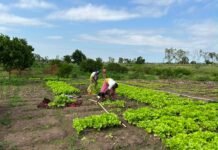
These priorities are translated into practical interventions covering crops and commodities such as cashew, rice, maize, coffee, tea, sunflower and seaweed. Rather than focusing solely on agricultural production, EFF seeks to connect farmers with inputs, knowledge, finance, processing opportunities and markets.
Linking farmers to better markets and incomes
One example is the Matsangoni Community Project in Kilifi County, Kenya, where EFF has worked to improve household incomes and nutrition.
The initiative has supported cashew production, farmer organisation and the promotion of finger millet, while also helping to establish links between farmers and financial institutions.
Market access has been an important component of the intervention. During the 2022-2023 harvest, negotiations with cashew processors helped the community secure its first offtake agreement involving five tonnes of cashew nuts.
Such connections are critical because increased agricultural production does not automatically translate into improved livelihoods. Farmers need dependable buyers and opportunities to participate in markets where their produce can command better returns.
The experience demonstrates why strengthening agricultural value chains is important for smallholder farmers. When producers have access to finance, technical knowledge and reliable markets, they are better positioned to invest in their farms, increase productivity and improve household incomes.
Climate-smart agriculture for a changing environment
Climate change presents another major challenge to African agriculture, with farmers increasingly exposed to droughts, floods, changing rainfall patterns and other environmental pressures. EFF has therefore placed climate resilience and adaptation at the centre of several of its interventions.
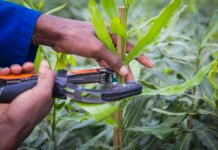
In Kenya, its HiFarm project has worked with lead farmers in the maize, coffee and tea value chains to promote climate-smart and data-driven farming practices.
The programme combines farmer training with improved agricultural inputs, nutrition information and technology designed to provide better understanding of crop and soil conditions.
In Zambia, EFF’s work has also connected agricultural development with environmental conservation. Through the Zambia Integrated Forest Landscape Project, the organisation supported the production and distribution of about 1.2 million seedlings to farming households.
Farmers planted trees alongside crops including maize, soybeans, groundnuts and sunflower, helping to demonstrate how food production and environmental restoration can be pursued together.
The participation of women has also been significant. Women accounted for 42 per cent of farmers participating in the Zambia project, while seedling production and distribution contributed to the creation of hundreds of jobs.
This highlights the potential for climate-focused agricultural programmes to generate both environmental and economic benefits for rural communities.
Expanding opportunities across agricultural value chains
EFF’s programmes extend beyond crop production to other agricultural and rural industries with potential to improve incomes.
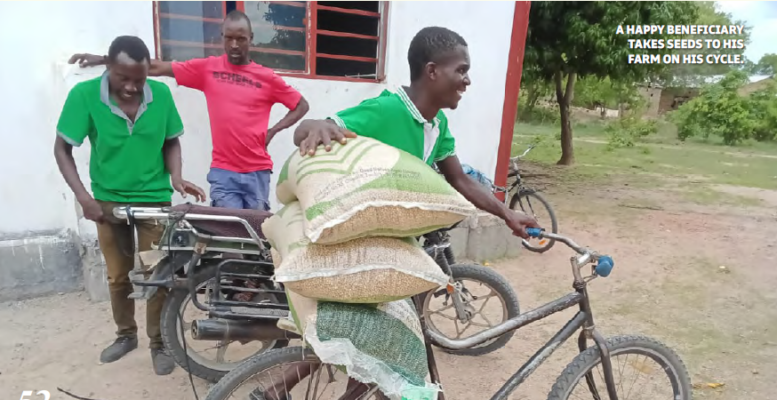
In Tanzania, the organisation has supported efforts to strengthen the sunflower value chain, including improving access to quality seed, raising farmer productivity, developing markets and supporting seed multiplication.
In Zanzibar, EFF has explored opportunities to increase rice production through improved irrigation, climate-smart farming practices and stronger farmer organisations.
The organisation has also examined opportunities in the cashew and seaweed sectors, including the challenges faced by women involved in seaweed farming.
Women are particularly important to the seaweed value chain, participating in activities ranging from seedling preparation to harvesting and processing.
However, they continue to face challenges such as inadequate equipment, labour shortages and dependence on middlemen.
Addressing these constraints could enable women to increase production and retain a greater share of the value generated by their work.
EFF’s approach also places considerable emphasis on partnerships. Collaboration with private-sector organisations and development institutions has sought to strengthen the distribution of agricultural inputs and improve networks connecting agro-dealers, village-based agents, farmer organisations and producers.
The broader lesson from EFF’s work is that agricultural transformation requires more than distributing seeds or fertiliser. Smallholder farmers need access to knowledge, finance, technology, climate information, reliable markets and supportive institutions.
When these elements are brought together, agriculture can become more than a means of subsistence—it can provide a foundation for resilient livelihoods and rural economic growth.
As climate change, food insecurity and rural unemployment continue to put pressure on African communities, the experiences documented by EFF demonstrate the importance of putting smallholder farmers at the centre of agricultural development.
The future of African agriculture will depend not only on how much farmers produce, but also on whether they can produce sustainably, access profitable markets and retain enough value from their work to transform the lives of their families and communities.