

Rainbow Chicken Limited has reported a strong set of financial results for the year ended 28 June 2026, delivering significant growth in revenue, profitability and shareholder returns.
The Group says the performance was driven by higher sales volumes, a better product mix, firm pricing and a sharp decline in key feed input costs, supported by disciplined execution across its value chain.
Strong Financial Performance
Rainbow’s revenue grew 7.7% to R17.1 billion (2025: R15.8 billion). EBITDA more than doubled, up 101.8% to R2.136 billion (2025: R1.058 billion), lifting the EBITDA margin from 6.7% to 12.5%.
Headline earnings surged 131.4% to R1.35 billion, while headline earnings per share rose 130.1% to 150.87 cents. Earnings per share increased 133.5% to 149.55 cents. Return on Invested Capital (ROIC) improved significantly to 36.2%, up 19.9 percentage points year-on-year.
The Group maintained a strong cash position with low gearing and declared a final dividend of 45.00 cents per share, up from 20.00 cents last year, plus a special dividend of 75.00 cents per share, subject to SARB approval.
“By consistently advancing our five strategic pillars – operational efficiencies, competitive procurement, future-proofing the business, unlocking people potential, and strengthening market-facing capabilities – Rainbow continues to improve its operational resilience and competitiveness,” said CEO Marthinus Stander.
“This strategic focus enables us to deliver quality, affordable products and support long-term value creation while contributing meaningfully to South Africa’s food system.”
Operating Environment: Tailwinds and Headwinds
Lower maize and soya prices, on the back of strong local harvests and ample global supply, provided major relief in feed costs – the biggest cost driver in poultry production. Poultry demand was further supported by supply disruptions in red meat and pork following foot-and-mouth disease and swine flu outbreaks.
Despite this, consumer spending remained constrained due to high living costs. Many households reduced animal protein consumption, although chicken remained the most affordable option. While national load-shedding has eased, Rainbow flagged municipal failures, water interruptions, rail inefficiencies and higher fuel prices as ongoing risks to operational reliability and cost.
Segment Performance
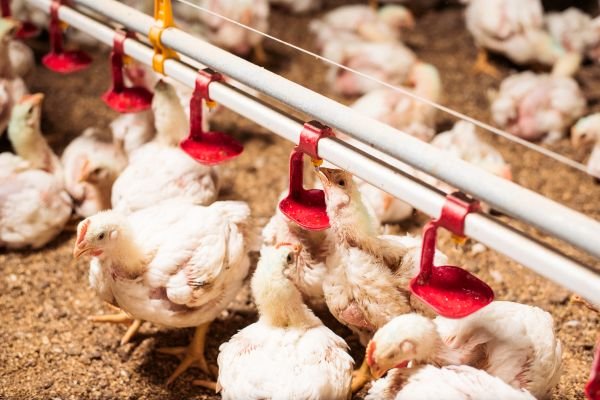
- Chicken Division: The core driver of Group performance. Revenue up 7.6% with EBITDA up an exceptional 138.1%. This was attributed to lower feed costs, a strategic product mix, and improved agricultural performance under its ‘Brilliant Basics’ operational approach. Its day-old chick business, RC Chicks, is gaining momentum and supports small-scale and emerging farmers with access to chicks, feed and technical support.
- Animal Feed Division: Revenue declined 3.9% in line with softer raw material prices, but EBITDA rose 19.8% thanks to operational efficiencies, disciplined cost control and effective margin management. The division remains critical to Group competitiveness.
- Waste-to-Value (W2V) Division: Progress was slow but steady and below expectations. The Worcester plant met targets, while operational challenges at Rustenburg remain a key focus area.
Industry Outlook and Strategy
Rainbow says it has restored operational strength after its turnaround strategy, with improved KPIs across breed, feed, agriculture, processing and logistics. The next phase will focus on growth, premiumisation, innovation and value extraction, underpinned by a consolidated 10-year capital investment plan.
On industry matters, the company reported no major Avian Influenza outbreaks during the year due to enhanced biosecurity. It is assessing government’s new regulations allowing larger-scale poultry vaccination.
Rainbow also noted that South Africa’s rail system remains uneconomical for feed raw material distribution compared to road, despite reform commitments. It confirmed continued cooperation with the Competition Commission’s Poultry Market Inquiry and supports fair, predictable trade policies, including anti-dumping measures and engagement on AfCFTA export opportunities.
Outlook
Industry forecasts show chicken consumption growing beyond 2030 as the most affordable and versatile protein, providing a positive long-term outlook for Rainbow. However, the company cautioned that near-term performance could be impacted by consumer affordability, potential El Niño conditions, currency volatility, and rising fuel and fertiliser costs.
“In the face of a volatile and cyclical operating environment, our strategy aims to continue building resilience and extracting further value from the strong operating platform built over the past several years,” Stander said.