

Improving how farmers feed, breed and manage livestock could provide Kenya with an important pathway to cut methane emissions while advancing the country’s commitment to reduce greenhouse gas (GHG) emissions by 32 percent by 2030.
The Food and Agriculture Organization of the United Nations (FAO) says livestock is a major source of methane, particularly through enteric fermentation—the digestive process in cattle, sheep, goats and other ruminants—and manure management. Globally, livestock systems account for about 32 percent of human-caused methane emissions.
For Kenya, the opportunity is particularly significant. Livestock contributes more than 90 percent of agricultural greenhouse gas emissions and about 20 percent of the country’s total GHG emissions, according to FAO. The country’s updated Nationally Determined Contribution (NDC) commits the country to cutting emissions by 32 percent from a business-as-usual scenario by 2030.
The FAO report Methane Emissions in Livestock and Rice Systems: Sources, Quantification, Mitigation and Metrics points to improved productivity and management as important ways of reducing methane without undermining food production.
One of the most practical measures is improving animal nutrition. Better-quality feed can improve the efficiency with which animals convert feed into milk or meat, potentially reducing methane emissions per unit of product.
However, FAO cautions that interventions need to be suited to local production systems, since a practice that works in intensive or housed livestock systems may not be appropriate for pastoral and grazing systems.
Animal health is another important entry point. Healthy animals generally produce more efficiently, meaning farmers can obtain more milk or meat without maintaining unnecessarily large herds. Better disease prevention, treatment, nutrition and husbandry can therefore lower methane emission intensity while improving farm returns.
Improved reproductive performance can deliver similar benefits. Keeping fewer unproductive animals in a herd reduces the methane generated by livestock that consume feed and occupy land without contributing significantly to milk or meat production. Better breeding can also improve productivity and feed efficiency over time.
Manure management provides another opportunity. Livestock methane is generated not only in animals’ digestive systems but also when manure decomposes under oxygen-limited conditions.
Better manure handling, including systems that recover methane for energy or convert waste into useful agricultural inputs, can help reduce emissions while creating additional value for farmers.
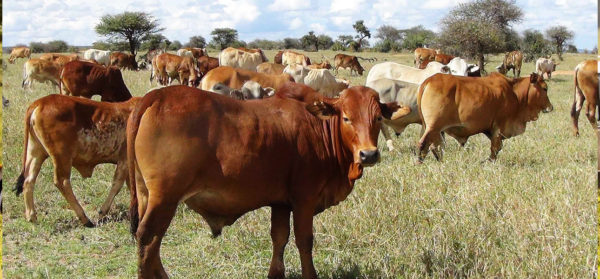
FAO stresses, however, that there is no single solution for every livestock system. Kenya’s large pastoral population, particularly in arid and semi-arid areas, means climate action must account for differences in feed availability, animal breeds, production systems and farmers’ resources.
The country has already begun aligning livestock policies with its climate commitments, with FAO and Kenya’s Ministry of Agriculture and Livestock Development working to identify measures for reducing enteric methane and strengthening emissions monitoring.
For farmers, the climate agenda therefore need not be separated from productivity. Better feeding, healthier animals, improved breeding and more efficient herd management can simultaneously increase production, strengthen livelihoods and reduce the amount of methane emitted for every litre of milk or kilogram of meat produced.
As Kenya works towards its 2030 emissions target, making these practices accessible to livestock keepers could turn methane reduction from a climate obligation into an opportunity for a more productive and resilient livestock sector.