


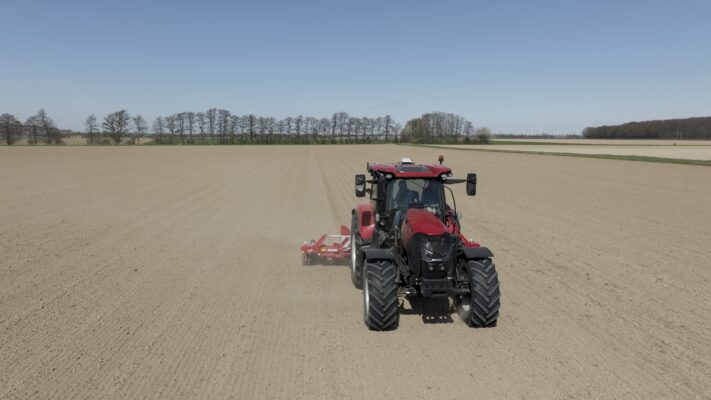
SugarBeet Expo 2026: New industry platform for professional sugar beet production – Synergies with PotatoEurope – Soil health, robotics, technology trends and research – Live machinery demonstrations: 9–10 September 2026 – Rittergut Gestorf, Springe near Hanover, Germany – sugarbeet-expo.de
Direct seeding is gaining attention in sugar beet production. Visitors to SugarBeet Expo, the new exhibition for professional sugar beet cultivation, will be able to explore the opportunities and challenges offered by this cultivation system as well as broaden their understanding of the practical solutions developed by growers. The technical program of SugarBeet Expo will offer presentations tailored to the practical needs of farmers.
The new international outdoor exhibition organized by the DLG (German Agricultural Society), dedicated exclusively to professional sugar beet production, will take place on 9 and 10 September 2026 alongside the established PotatoEurope exhibition. Held at the Rittergut Gestorf estate in Springe near Hanover, the new event focuses on practical farming solutions, machinery, digitalization and sustainability.
Professional sugar beet growers will also be able to attend live machinery demonstrations, providing direct insight into the practical application of modern sugar beet technologies in the field.
Benefits of Direct Seeding
Direct seeding is characterized by minimal soil disturbance and offers a number of agronomic advantages, particularly for sugar beet production. One of the most obvious benefits is improved soil structure. By avoiding intensive full-field tillage, the soil capillary systems and earthworm burrows remain intact and can continue to develop. This improves water infiltration and movement, increases soil bearing capacity and reduces the risk of erosion, a particularly important advantage on vulnerable sites.
Another key benefit is the nearly year-round soil cover achieved through the consistent use of cover crops and the retention of crop residues and organic material on the soil surface. These measures protect the soil from drying out, reduce evaporation losses and promote biological activity within the soil.
Organic matter continuously accumulates in the topsoil and is transported into deeper layers by soil organisms. Permanent soil cover also helps soils retain moisture for longer periods during dry conditions, providing an important foundation for stable sugar beet yields.
Crop Production Advantages
Direct seeding also offers advantages from a crop management perspective. Weed pressure is generally lower because the lack of soil disturbance stimulates fewer weed seeds to germinate. Combined with precision technologies such as spot spraying, crop protection measures can be applied more efficiently and with lower resource use. At the same time, fungicide and insecticide applications can often be reduced thanks to more resilient crop stands and well-designed crop rotations.
Challenges to Consider
However, direct seeding also presents challenges. Soils warm up more slowly in spring, which can delay early sugar beet development. Populations of slugs and rodents may also increase because their habitats experience less disturbance.
Crop emergence is often less uniform, making higher seeding rates necessary in some situations. As a result, yield reductions of approximately 4 to 8 percent can occur in sugar beet production.
Successful direct seeding also requires a high level of management expertise, experience and specialized equipment, particularly in areas such as precise seed placement, crop management and plant protection.
Nevertheless, when implemented consistently, the system remains economically attractive and can deliver substantial long-term benefits.
Direct seeding has the potential to become a future-oriented cultivation system for sugar beet production, offering clear advantages for soil structure, water management and resource efficiency.
Despite certain challenges, practical experience shows that the system is economically viable and can provide a valuable alternative to conventional mulch-based cultivation systems, particularly under difficult site conditions.
Read the full technical article here: www.sugarbeet-expo.de/en/news/robotics-in-sugar-beet-cultivation