

Mycotoxin testing has become a routine part of quality assurance and risk management across grain, feed ingredient, and finished feed production systems.
The results generated from these tests help stakeholders make critical decisions regarding raw material acceptance, feed formulation, storage management, and overall product safety.
However, emerging research is shifting the conversation from whether mycotoxins are present to whether testing methods are capturing the complete contamination profile within a sample.
A test result may be highly accurate for the specific analyte being measured, yet still provide an incomplete picture of the overall mycotoxin risk.
This is particularly important as studies continue to demonstrate that multiple mycotoxins frequently occur together rather than in isolation.
Co-Occurrence Begins in Grain
Evidence increasingly shows that co-occurrence starts at the very beginning of the supply chain. Grain entering storage and processing facilities often contains more than one mycotoxin, making single-analyte testing potentially insufficient for fully characterizing contamination risk.
Large-scale studies have highlighted the prevalence of multiple mycotoxins in grain and forage materials:
- 90.2% of corn grain samples and 96.8% of corn silage samples contained two or more mycotoxins, with average occurrences reaching 4.8 and 5.2 mycotoxins per sample, respectively.
- In another study, 100% of maize samples collected in Michigan contained multiple mycotoxins, with some samples recording as many as six different mycotoxins within a single year.
These findings underscore a critical reality: identifying one mycotoxin does not necessarily provide a complete assessment of contamination at intake. While a test may accurately quantify a targeted toxin, additional contaminants may remain undetected if they are not included in the screening scope.
Co-Occurrence Extends Beyond Harvest
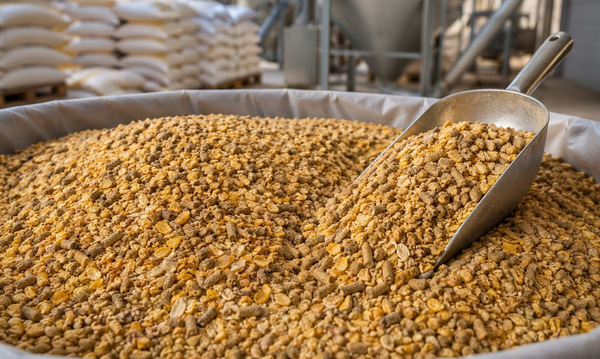
The challenge does not end at harvest. Mycotoxins persist throughout the grain-to-feed value chain, influenced by field conditions, storage environments, handling practices, and ingredient blending processes.
Research examining feed ingredients and finished feed continues to reveal significant levels of contamination by multiple mycotoxins. Among the most frequently detected contaminants are:
- Fumonisins – 86%
- Deoxynivalenol (DON) – 45%
- Zearalenone – 36%
Importantly, more than half of the samples analyzed contained multiple mycotoxins simultaneously.
This highlights the fact that mycotoxin risk is not an isolated event tied to a single stage of production. Instead, it is a continuous challenge that can persist throughout the entire grain and feed supply chain. As ingredients from different sources are combined and processed, the likelihood of encountering multiple contaminants remains high.
When Incomplete Screening Becomes Visible
The limitations of narrow testing strategies often become apparent only after operational decisions have already been made.
A single-analyte result may initially appear acceptable and meet procurement or production specifications. However, additional contaminants can remain hidden until further testing is conducted or circumstances require a deeper investigation.
In many cases, incomplete visibility becomes evident when:
- Loads are rejected or discounted due to previously undetected contamination.
- Additional testing becomes necessary, leading to delays and increased costs.
- Feed formulations require modification because new contamination information emerges.
- Ingredient sourcing decisions must be revisited to manage unexpected risks.
These situations illustrate an important principle: testing results accurately reflect the scope of the assay performed, but not necessarily the complete risk profile of the sample.
Expanding Insight Without Adding Complexity
As awareness of mycotoxin co-occurrence grows, the challenge for laboratories and feed manufacturers is not simply recognizing the issue. The real challenge lies in expanding monitoring capabilities without creating additional complexity, cost, or workflow burdens.
Modern analytical approaches are increasingly designed to evaluate multiple mycotoxins from a single extraction. Such methods provide broader visibility into contamination profiles while maintaining operational efficiency.
Rather than conducting several separate assays for different toxins, laboratories can obtain a more comprehensive understanding of contamination through consolidated testing workflows. This approach helps reduce the likelihood of overlooked contaminants while supporting faster decision-making.
A Practical Path Forward
In today’s increasingly complex grain and feed supply chains, the key question is straightforward: Does your testing provide a complete enough picture to support confident decisions?
Given the widespread occurrence of multiple mycotoxins in grain, feed ingredients, and finished feed, expanding monitoring scope is becoming an important consideration for quality assurance programs.
Comprehensive testing can help organizations better understand contamination risks, minimize surprises, and make more informed procurement and production decisions.
Expanding Mycotoxin Monitoring with Waters VICAM
To address the growing need for broader mycotoxin visibility, Waters VICAM offers the Myco 5-in-1 PLUS workflow, which enables the analysis of six mycotoxins from a single extraction using the Vertu TOUCH platform.
Key benefits include:
- Analysis of six mycotoxins from one extraction.
- Results delivered in less than 10 minutes per assay (excluding sample preparation).
- Consolidation of multiple assays into a single workflow.
- Maintenance of quantitative accuracy while expanding monitoring scope.
By simplifying multi-mycotoxin analysis, the workflow provides laboratories and feed producers with faster, broader insight into contamination risks without increasing testing complexity.
Looking Ahead
The growing body of research on mycotoxin co-occurrence suggests that relying on single-analyte testing alone may not always provide the full picture needed for effective risk management. While individual test results may be accurate, they can still be incomplete if additional contaminants remain outside the scope of analysis.
As grain and feed supply chains continue to evolve, broader monitoring strategies will play an increasingly important role in supporting quality assurance, operational efficiency, and informed decision-making.
With solutions such as the Waters VICAM Myco 5-in-1 PLUS workflow, expanding monitoring scope no longer requires expanding complexity—delivering one extraction, six mycotoxins, and faster insight for today’s feed and grain industry.