

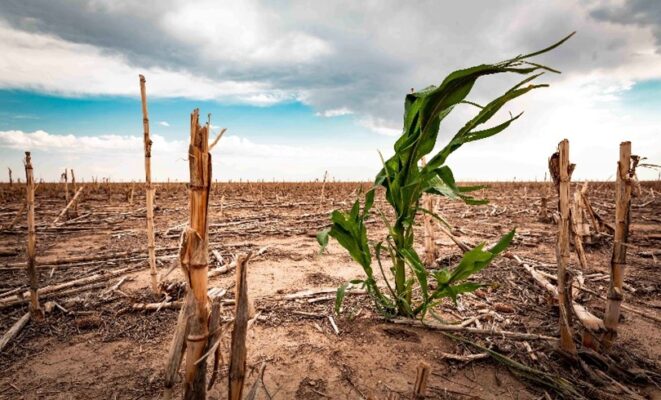
A new El Niño phase is likely to begin within weeks, raising concerns over the potential impact on agriculture and food security across some of the world’s most vulnerable regions, according to new analyses by the Food and Agriculture Organization of the United Nations (FAO).
The warning comes as the World Meteorological Organization (WMO) forecasts a stronger-than-usual El Niño Southern Oscillation (ENSO) cycle. Using 41 years of historical satellite imagery from FAO’s Agricultural Stress Index System (ASIS), experts have identified areas where El Niño-linked drought is most likely to affect crops and pasturelands over the coming months.
The analysis points to the Sahel, Southern Africa, South and Southeast Asia, and Central America’s Dry Corridor and the Caribbean as regions facing the highest risks. In several of these areas, agricultural and pastureland zones face more than a 50 percent probability of drought.
According to FAO, many of the regions now under threat experienced severe impacts during previous El Niño episodes in 2015–16 and 2023–24. These weather events are known to expose existing vulnerabilities, often resulting in crop failures, livestock losses, rising household debt and increased migration as communities search for food and water.
The 2015–16 El Niño alone affected more than 60 million people and triggered humanitarian appeals worth US$5 billion across 23 countries.
“This isn’t like previous El Niños. The planet is much warmer today, and with conflict and food insecurity widespread, this new phase will hit hardest in places that are already vulnerable and have limited coping capacity,” said Jorge Alvar-Beltrán, FAO Natural Resources Officer.
The latest forecasts come at a time when climate shocks are increasingly interacting with conflict, economic instability and food insecurity, creating compounded risks for rural communities.
In response, FAO and the World Food Programme (WFP) have launched a joint anticipatory action appeal seeking US$202 million to protect 8.8 million people in 22 high-risk countries. The initiative aims to support farmers and pastoralists before droughts, floods and storms develop into humanitarian crises through early interventions, cash assistance and strengthened early warning systems.
Southern Africa faces elevated risk
Among the regions highlighted, Southern Africa faces some of the most significant threats.
The previous El Niño cycle brought the region’s worst drought in more than a century, leaving 61 million people in need of assistance and pushing more than 8 million people into food insecurity. Livestock losses, shrinking water supplies and deteriorating pasture conditions compounded the crisis.
FAO’s latest assessment indicates a greater than 50 percent probability of agricultural drought across large parts of Namibia and Botswana, extending into Angola, Zambia, Zimbabwe, South Africa and parts of Mozambique and Madagascar.
In many of these countries, livestock serve as both a source of food and a critical store of household wealth. As pasture conditions deteriorate, farmers face the dual challenge of reduced livestock productivity and declining household assets.
Across the Sahel, meanwhile, food insecurity has worsened for five consecutive years amid ongoing conflict and displacement. FAO’s maps show a broad drought risk corridor stretching from Senegal and southern Mauritania through Côte d’Ivoire, Ghana, Togo, Benin and Nigeria, and further east into Ethiopia and Sudan.
“A farmer might first lose crops, then livestock, and with that their entire livelihood,” said Alvar-Beltrán. “With cascading impacts of multiple crises already evident, there is an urgent need to act early.”
Global food production at risk
The impacts of El Niño are expected to extend beyond vulnerable rural communities and could affect global agricultural markets.
In Asia, El Niño has historically weakened the summer monsoon, threatening rainfed crops such as rice and maize. During the 2015 event, reduced production in major growing countries contributed to higher prices for key food commodities.
Current forecasts show elevated agricultural drought risks stretching from Pakistan and India through Myanmar, Thailand, Cambodia and Viet Nam, and further east into the Philippines, Indonesia and Timor-Leste.
Central America and the Caribbean also face significant threats. The 2015–16 El Niño left 3.5 million people food insecure across Central America’s Dry Corridor, while Haiti experienced harvest losses of up to 70 percent.
Current forecasts indicate a 70 percent probability of below-normal rainfall across the region, with the highest agricultural drought risks concentrated along the Dry Corridor, Colombia and Venezuela, as well as Cuba, the Dominican Republic and Haiti.
Many of the countries facing elevated El Niño risks also feature prominently in FAO and WFP’s latest Hunger Hotspots analysis, highlighting the growing interaction between climate shocks, conflict and economic stress.
Early action critical
FAO officials emphasize that identifying risk early creates opportunities to reduce losses before the growing season is fully underway.
Farmers and pastoralists can adjust planting dates, select drought-tolerant crop varieties, store fodder for livestock and secure additional water supplies when provided with timely information.
FAO’s Agricultural Stress Index System can pinpoint drought risks at resolutions as small as one square kilometre, allowing governments and humanitarian agencies to target support more effectively.
“This level of detail changes what a government can do,” said FAO Natural Resources Officer Riccardo Soldan. “Instead of spreading resources thinly, it can concentrate support in the hotspots, directing cash transfers, water and irrigation support, livestock feed, and other critical inputs to the places most at risk.”
Evidence from previous interventions suggests early action can significantly reduce losses. Ahead of the 2023–24 El Niño, a regional preparedness effort in Southern Africa channelled nearly US$31 million to more than two million people across seven countries through seed distribution, livestock support and improved forecasting systems.
With El Niño expected to develop in the coming weeks, FAO says the science is already clear. The challenge now is ensuring that governments, humanitarian agencies and communities act quickly enough to turn early warnings into effective protection measures.