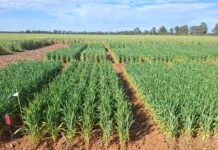


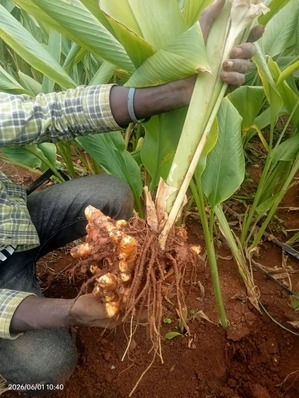
A major agro-industrial initiative is set to transform turmeric farming in Kenya, targeting more than 800,000 farmers through a large-scale contract farming and value-addition programme aimed at unlocking income opportunities of up to Sh500,000 per acre.
The programme, led by Turmeric Kenya, seeks to integrate smallholder farmers from tea and sugarcane-growing regions into a structured turmeric production system supported by processing, certification and export-oriented value addition.
Speaking on the initiative, Oliver Ndegwa, the company’s agro-value chain developer, said the project is already engaging farmers across East Africa, with active production models in Uganda and expansion plans underway in Kenya.
“We are building a complete turmeric value chain — from farm production to processing, certification and export markets. Our target is to integrate farmers into a high-value agro-industrial system that goes beyond raw production,” he said.
The programme will primarily recruit farmers from Kenya Tea Development Agency (KTDA) networks, sugarcane-growing zones across Western and Coastal Kenya, as well as smallholder mixed-crop farmers seeking alternative income streams.
The model is designed to utilise small portions of land for high-value turmeric production, offering farmers a crop that matures within six to seven months while complementing existing agricultural activities.
Processing and value addition
The initiative plans to work with institutions such as the Kenya Industrial Research and Development Institute (KIRDI) to establish local processing systems that will convert turmeric into export-grade powder, herbal and functional tea products, as well as nutraceutical and extract-based formulations.
According to Ndegwa, this approach is intended to reduce dependence on raw exports while increasing farmer earnings through participation in higher-value segments of the supply chain.
Beyond crop production, the project is also expanding into livestock and veterinary applications by developing turmeric-based supplements, feed additives and natural animal health products. The company believes this will create additional demand for turmeric while supporting livestock productivity and health.
The programme further incorporates organic farming and climate-smart agriculture practices where turmeric-derived products are being explored as natural alternatives for pest control and crop protection, helping farmers reduce reliance on synthetic chemicals while supporting sustainable and regenerative farming systems.
Circular economy and export opportunities
In line with its circular economy approach, the initiative is investigating innovative uses of agricultural waste, including plant-based bio-preservatives and natural storage solutions for post-harvest protection.
At the same time, the company is positioning Kenya to benefit from the rapidly expanding global wellness and nutraceutical industry through the production of turmeric-based supplements, functional beverages and export-grade herbal products.
To strengthen market access, the project is developing an Eco-Guarantee certification framework that will support organic compliance, product traceability and premium pricing opportunities for participating farmers while recognising climate-smart production practices.
Vision for a bio-economy transformation
According to Ndegwa, the long-term goal is to transform turmeric into a fully integrated agro-industrial platform that links farming, processing, veterinary products, nutraceutical manufacturing and export markets.
“Our goal is not just farming. We are building a bio-economy system that connects farmers, processors, veterinary solutions, nutraceutical industries and global export markets under one ecosystem,” he said.
The initiative is expected to help reduce Kenya’s annual turmeric import bill, currently valued at more than Sh28.6 million, while positioning the country as a regional hub for the production and export of high-value turmeric products.