



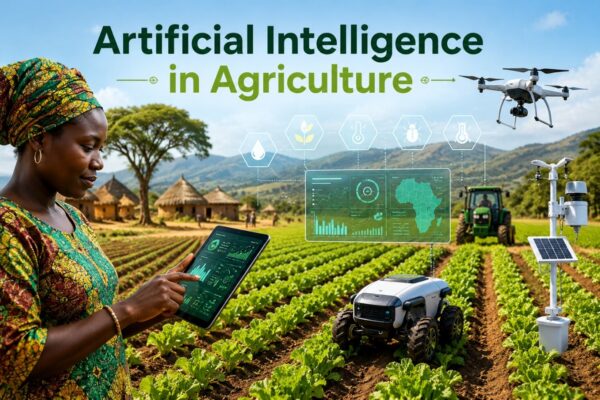
According to our Growth Market Report, the global Artificial Intelligence (AI) in Agriculture market size reached USD 2.7 billion in 2025. The market is experiencing robust growth, driven by the increasing adoption of advanced technologies in the agricultural sector, with a compound annual growth rate (CAGR) of 23.6% projected from 2026 to 2034. By the end of 2034, the market is forecasted to reach an impressive USD 20.8 billion. This remarkable expansion is primarily attributed to the growing demand for precision farming, increased investments in agri-tech startups, and the pressing need to enhance crop yields and farm productivity globally. The broader landscape of artificial intelligence adoption across industries is further reinforcing confidence among investors and technology vendors targeting the agricultural sector.
Introduction: Why Artificial Intelligence Matters for African Agriculture
Agriculture has always been the backbone of Africa’s economy, supporting millions of livelihoods and contributing significantly to national development. Yet African farmers continue to face challenges such as unpredictable weather patterns, water scarcity, pest infestations, soil degradation, and limited access to agricultural expertise. Today, Artificial Intelligence (AI) is emerging as a powerful solution capable of addressing many of these challenges while improving productivity and sustainability.
The Artificial Intelligence in Agriculture Market is gaining momentum across Africa as governments, agribusinesses, technology providers, and farmers recognize the potential of data-driven farming. AI is no longer a futuristic concept; it is becoming a practical tool that helps farmers make better decisions, reduce risks, and increase yields in environments where every harvest matters.
What Is Artificial Intelligence in Agriculture?
Artificial Intelligence in agriculture refers to the use of advanced technologies that enable machines and software to analyze data, learn patterns, and make recommendations that support farming operations. These systems use information gathered from satellites, drones, sensors, weather stations, and farm equipment to provide actionable insights.
For African farmers, AI can help determine the best planting times, predict rainfall patterns, identify crop diseases before they spread, optimize irrigation schedules, and improve livestock management. The result is a smarter agricultural ecosystem that makes farming more efficient and profitable.
Why Africa Represents a Major Growth Opportunity for AI Agriculture
Africa possesses approximately 60% of the world’s uncultivated arable land, making it one of the most promising regions for agricultural expansion. However, productivity levels often remain below global averages due to infrastructure limitations and climate-related challenges.
Artificial Intelligence offers an opportunity to bridge these gaps. Instead of relying solely on traditional farming methods, farmers can use predictive analytics and digital tools to maximize output from existing resources. This is particularly important as Africa’s population continues to grow and food demand rises rapidly.
The increasing availability of mobile phones, internet connectivity, and digital payment systems is creating favorable conditions for AI adoption across rural communities. As technology becomes more accessible, even smallholder farmers can benefit from advanced agricultural intelligence.
How AI Is Transforming Farming Across Africa
Precision Farming for Better Resource Management
One of the most significant applications of AI is precision farming. By analyzing soil conditions, moisture levels, and crop health, AI systems help farmers apply water, fertilizers, and pesticides only where needed.
In regions where water resources are limited, this approach reduces waste while improving crop performance. African farmers can achieve higher productivity without increasing operational costs, making agriculture more sustainable and resilient.
Early Detection of Crop Diseases
Crop diseases remain a major threat to food security across the continent. AI-powered image recognition systems can identify disease symptoms from smartphone photos or drone imagery before they become visible to the human eye.
Early intervention allows farmers to take corrective action quickly, preventing widespread crop losses and protecting household incomes.
Smart Weather Forecasting
Weather unpredictability has become one of the greatest challenges facing African agriculture. AI-driven forecasting models analyze vast amounts of climate data to provide localized weather predictions.
These insights help farmers decide when to plant, irrigate, fertilize, or harvest crops. Improved timing leads to better yields and reduces losses caused by extreme weather events.
Livestock Monitoring and Management
Livestock contributes significantly to Africa’s agricultural economy. AI technologies are increasingly being used to monitor animal health, feeding patterns, and movement.
Wearable sensors and smart monitoring systems can detect signs of illness early, enabling farmers to reduce mortality rates and improve overall herd productivity.
The Role of AI in Strengthening Food Security
Food security remains a critical priority for many African nations. Rising populations, climate change, and supply chain disruptions place increasing pressure on agricultural systems.
Artificial Intelligence helps address these concerns by improving production efficiency and reducing waste throughout the agricultural value chain. Better forecasting, optimized harvesting schedules, and intelligent logistics management ensure that more food reaches consumers while minimizing losses.
As AI adoption grows, African countries can strengthen domestic food production and reduce dependence on imports, contributing to long-term economic stability.
Emerging Technologies Driving Market Growth
Agricultural Drones
Drones equipped with AI-powered analytics provide real-time insights into crop conditions. Farmers can monitor large areas quickly, identify stress zones, and make informed decisions without extensive manual inspections.
Smart Irrigation Systems
AI-enabled irrigation solutions automatically adjust water usage based on weather conditions, soil moisture, and crop requirements. This technology is particularly valuable in drought-prone regions where water conservation is essential.
Satellite-Based Farm Intelligence
Satellite imagery combined with AI algorithms offers a broader view of agricultural landscapes. Farmers, cooperatives, and governments can monitor crop performance, assess risks, and plan interventions more effectively.
Farm Management Platforms
Digital farm management systems integrate multiple data sources into a single dashboard. These platforms provide recommendations on planting schedules, pest control, fertilizer application, and harvest planning.
Challenges Facing AI Adoption in African Agriculture
Despite its enormous potential, several barriers continue to affect market expansion.
Limited internet connectivity in remote regions can restrict access to digital agricultural services. Many smallholder farmers also face financial constraints that make technology investments difficult. Additionally, digital literacy remains a challenge in some farming communities.
However, ongoing investments in telecommunications infrastructure, agricultural innovation hubs, and farmer education programs are gradually reducing these obstacles. Public-private partnerships are expected to play a crucial role in accelerating adoption.
Competitive Landscape
- IBM Corporation
- Microsoft Corporation
- Deere & Company (John Deere)
- Bayer AG
- Trimble Inc.
- Corteva Agriscience
- AGCO Corporation
- Climate LLC (A subsidiary of Bayer)
- CropX Technologies
- Ag Leader Technology
- Blue River Technology (A subsidiary of John Deere)
- AgEagle Aerial Systems Inc.
- Taranis (acquired by Corteva)
- PrecisionHawk Inc.
- Gamaya SA
- Descartes Labs Inc.
- Farmers Edge Inc.
- aWhere Inc.
- Hummingbird Technologies
Future Outlook for Investors and Agribusinesses
According to our Growth Market Report, The Artificial Intelligence in Agriculture Market presents substantial opportunities for technology companies, investors, and agribusiness organizations operating in Africa.
Solutions designed specifically for African farming conditions are likely to experience strong demand. Affordable mobile-based applications, AI-powered advisory services, climate-smart farming tools, and digital marketplaces are becoming attractive investment areas.
Organizations that focus on accessibility, affordability, and local relevance will be best positioned to capture future growth.






[…] Agricultural AI Market Projected at $20.8 Billion by 2033 – Farmers Review Africa […]
[…] RoboCare (Tunisia): Six-figure funding from 216 Capital to expand AI-driven crop disease detection across Africa and the Middle East. The AI-in-agriculture market is projected to reach $20.8B by 2033 at a 23.6% CAGR. ^7 […]
Comments are closed.