

Twelve months of farm-level data across 8 trial sites in 3 provinces will show whether the units can offer businesses a CSI initiative that pays its way
Regenerative agriculture company RegenZ has expanded the trial of its Roost & Roots micro-farming unit to three new sites in Gauteng and Limpopo. Over the next year, the trial will measure whether a unit small enough to fit in a backyard can pay for itself and help communities grow their own food.
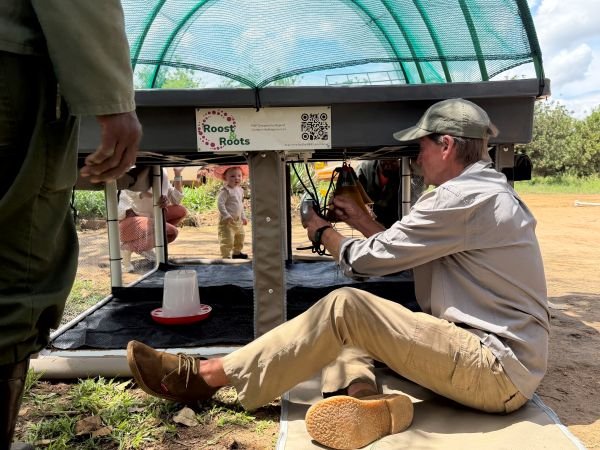
Roost & Roots combines two small enterprises in a single 2m x 2m structure. The “Roost” raises
50 broiler chickens per batch, from day-old chicks to around 2kg in six to seven weeks. The “Roots” produces up to 2,400 vegetable seedlings per cycle across 12 trays, which owners can plant in their own gardens or sell to neighbours.
The unit is a robust structure, built to withstand daily use on farms and in communities. That makes it a strong fit for funders looking for practical CSR initiatives that empower communities to grow their own food and earn an income from it.
Five units are already running in KwaZulu-Natal. They are now joined by Afrika Tikkun in Gauteng, Lufafa Farms in Tzaneen and Limpopo Citrus. The new sites were chosen to test the units in different climates, from the Highveld’s cold winters to Limpopo’s heat.
Each site will run six full production cycles over 12 months, so every season is tested. Participants will record chick and feed costs, mortality, final weights, seedling germination and sales after every cycle, backed by receipts and photos. RegenZ will support each site with twice-weekly check-ins throughout the year.
“We built Roost & Roots to be simple enough for anyone to run, tough enough to last and dynamic enough to ultimately sustain a family,” said Justin Platt, founder of RegenZ, who led the design of the unit. “We could have published a brochure full of projected returns. Instead, we want twelve months of real numbers from real farms, in real weather, so funders and farmers can make decisions based on evidence.”
The target is a unit that pays for itself within two years. The structure is built to last at least ten years, a conservative estimate, which leaves many years of return once the initial cost is recovered. A complete unit currently costs approximately R25,000, with running costs per cycle covering chicks, feed and wood shavings.
If the numbers stack up, RegenZ believes Roost & Roots can give businesses a practical CSR initiative with a measurable outcome: communities producing their own chickens and vegetables, and earning an income from the surplus.
“We see the Roost & Roots unit as a valuable tool to teach our staff new skills in how to rear chickens and seedlings successfully. The intention is to create a means not only to uplift them as individuals but also to assist their own communities with sustainable food production” said Mark Scott, Owner of Lufafa Hatcheries in Tzaneen.
RegenZ looks forward to sharing results as each cycle is completed, with a full case study on production, costs, revenue and return on investment at the end of the 12-month trial.