

Kenya’s ambitious tree-planting campaign is likely to remain resilient under a range of climate change scenarios through 2050, but the expansion of tree cover could come at the expense of biodiversity, ecosystem productivity and pastoral livelihoods in some parts of the country, according to a new study.
The study, published in the journal Earth’s Future, the American Geophysical Union’s (AGU) journal for science about sustainability and resilience in the Anthropocene, found that Kenya’s ongoing afforestation efforts aimed at increasing tree cover are unlikely to be significantly hindered by climate change or fire disturbances over the next few decades.
However, researchers warn that the combination of climate change and expanding woody vegetation could reduce herbaceous plant cover and ecosystem productivity, particularly in savanna and deciduous forest landscapes.
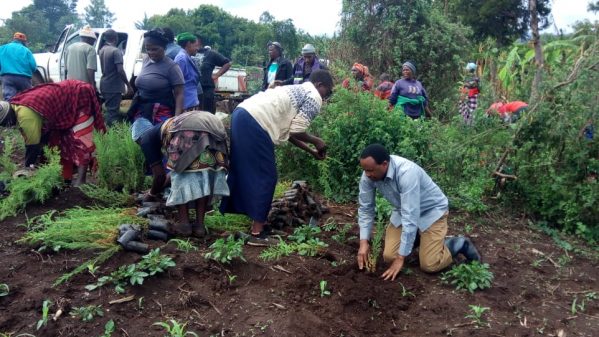
Kenya has pursued large-scale tree planting to meet constitutional and climate commitments. The country initially targeted a minimum tree cover of 10% by 2030, a goal it has already surpassed, and has since raised its ambition to 30% tree cover by 2032.
Using the L-Range ecosystem model and downscaled climate projections from 13 global climate models, researchers simulated how Kenya’s vegetation could respond between 2030 and 2050 under four climate scenarios and varying fire regimes.
“Our simulations indicate that, under all scenarios, tree cover across Kenya will remain stable or show increasing trends in the near term,” the authors wrote.
The study found that overall tree cover could increase by between 7% and 10% under historical fire conditions by 2050, while newly planted forests generally maintained or exceeded their 2030 baseline cover. Even under scenarios where fire frequency doubled, tree cover remained largely stable, with only slight declines projected under the most extreme climate scenario.
Savanna ecosystems were projected to experience the largest gains in tree cover, followed by tropical deciduous forests. However, these gains were accompanied by significant reductions in herbaceous vegetation, which forms the basis of grazing systems and supports many wildlife species.
Across all climate and disturbance scenarios, herb cover was projected to decline by 31% to 35% relative to 2030 levels, while shrub cover increased substantially. Net primary productivity, a measure of ecosystem growth and carbon uptake, also declined across all scenarios, alongside reductions in aboveground live biomass.
The researchers said these changes highlight potential trade-offs between afforestation goals and broader sustainability objectives.
“Tree cover expansion in savannas is accompanied by large declines in herbaceous vegetation, net primary productivity and aboveground live biomass,” the study noted. “This suggests that afforestation-driven gains within savannas come at the cost of reducing overall habitats for herbivores and ecosystem-wide declines in carbon sequestration potential.”
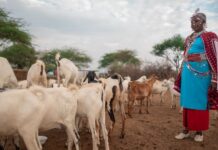
The findings also raise concerns for pastoral communities that depend on grasslands for livestock production. According to the researchers, afforestation in rangelands, coupled with woody encroachment and declining herbaceous cover, could pose livelihood challenges even as increased tree cover improves access to firewood and other forest resources.
The study concludes that climate change is unlikely to prevent Kenya from achieving its tree-cover ambitions, but cautions that success should not be measured solely by the number of trees planted.
“Climate change does not hinder the achievement of Kenyan afforestation goals,” the researchers wrote. “However, this success may be inimical to achieving goals in spheres such as biodiversity conservation and climate change mitigation.”