


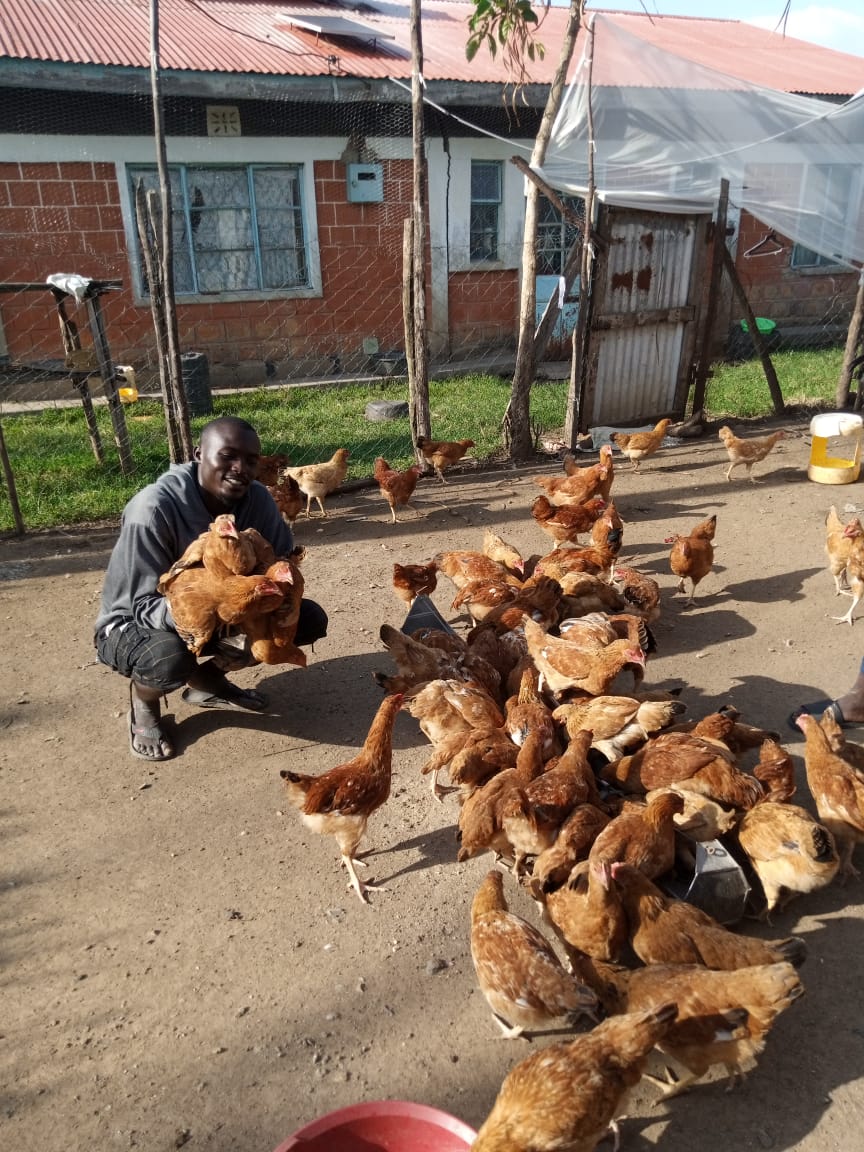
Young people remain an underutilized force in Kenya’s agriculture sector due to perceptions that farming is unattractive and financially inaccessible. Limited access to affordable credit and insurance, especially in rural areas, continues to hinder youth participation in agribusiness despite agriculture’s potential to create jobs and incomes.
A 2019 study by the European Union and the Kenya Institute for Public Policy Research and Analysis (KIPPRA) found that while rural youth borrow more frequently than urban youth, only 18 per cent access formal loans compared to 31 per cent of urban youth. The study also showed rural female youth had slightly better loan access than rural male youth.
Rural youth were also found to invest more of their borrowed funds in agriculture, with 41 per cent of loans directed to farming compared to 27 per cent among urban youth.
The findings highlight the need to expand affordable agricultural finance and insurance to help young people drive agricultural transformation and strengthen food security in Kenya.
For a group of young people in Katito area of Kisumu County, Kenya, this exclusion became the very reason to innovate their own solutions.
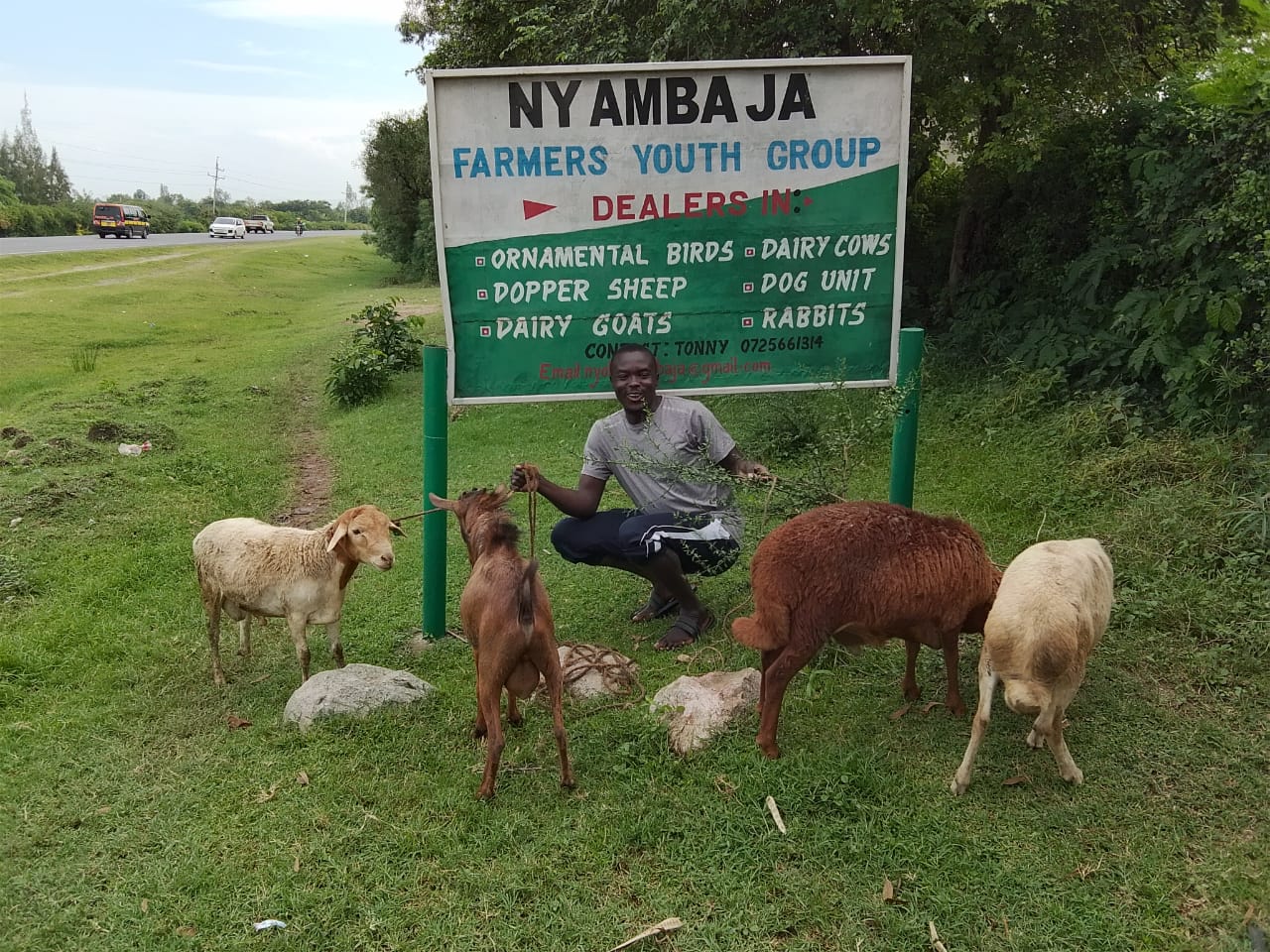
Around 2022, amid rising unemployment and social challenges such as drug abuse among idle youth, 16 young people came together to form the Nyambaja Farmers Youth Group. Their motivation was simple but urgent that if formal financial institutions could not support their agricultural ambitions due to lack of collateral, then they would pool their own limited resources and grow together.
“At the time, many of us were unemployed or underemployed, and that came with social challenges,” recalls the group’s chairperson, Tony Okoth. “We decided to save money together and engage in income-generating agricultural projects as a way of changing our situation.”
Born in 1994, Okoth is a trained teacher by profession, but like many rural youth, he wears multiple hats. Beyond the classroom, he is now deeply involved in farming, including poultry, rabbits, horticulture and ornamental birds such as peacocks.
His journey mirrors that of other group members which is the gradual but determined shift from subsistence thinking to agribusiness.
The group initially pursued collective farming ventures, including beekeeping, dairy goats and pig farming and over time, they expanded into poultry keeping, rabbit rearing, fish farming, tree planting and horticulture.
All earnings from these activities were brought together under a savings scheme, locally structured around the principles of table banking.
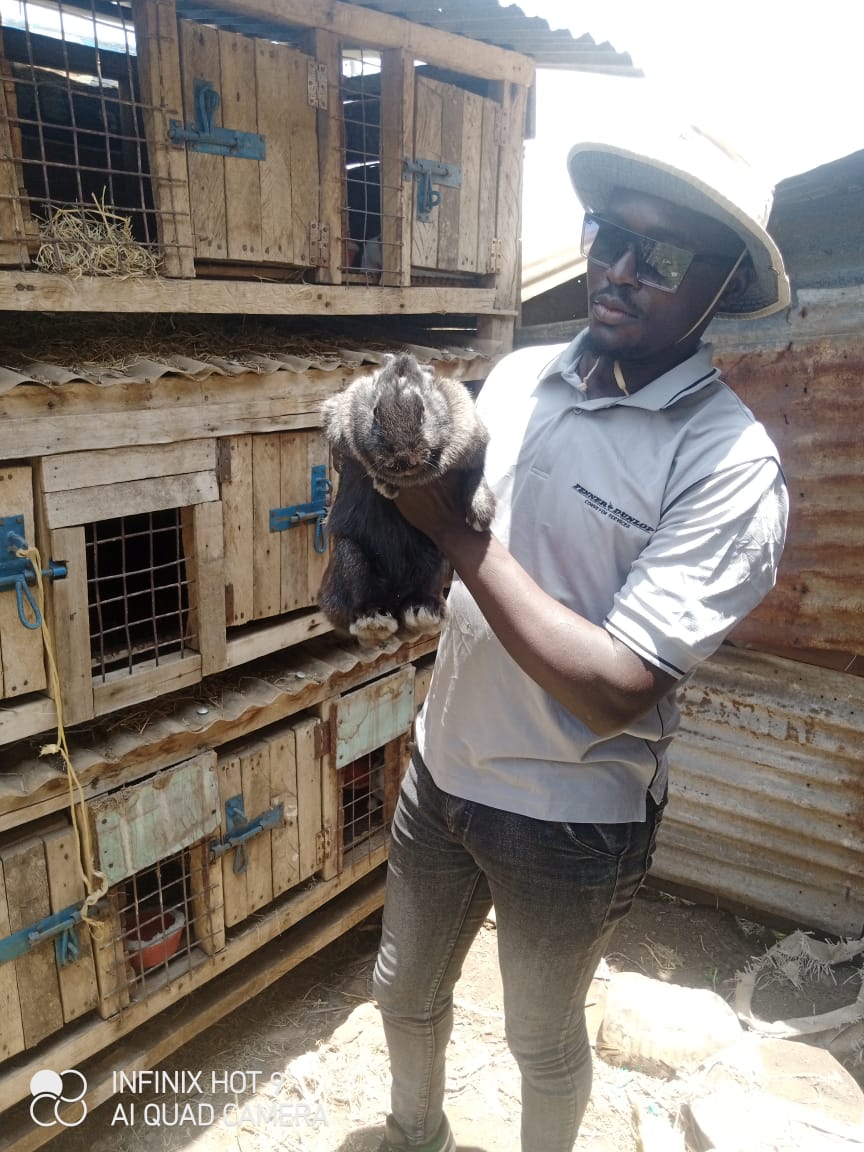 Tony Okoth, chairperson of Nyambaja Youth Group at his farm in Katito, Kisumu County.
Table banking as a financial lifeline
Table banking, a grassroots savings and lending model where members save and borrow from a common pool during regular meetings, became the cornerstone of the group’s financial strategy.
To complement this savings scheme, Nyambaja Farmers Youth Group affiliated itself with Imarisha Savings Sacco, a move that helped formalise their savings and improve their borrowing prospects.
Initially, the group organised small fundraising activities, or harambees, involving community members where the funds raised were used to purchase goats, which were later sold at a profit. To grow their savings faster, the group introduced small fines for lateness or non-compliance with rules and lent money to members at low interest rates.
“These small measures made a big difference,” Okoth explains. “They instilled discipline, grew our savings and created a sense of responsibility among members.”
Beyond immediate access to funds, the savings scheme had longer-term benefits such as the regular saving increasing the group’s collective loan limit with the sacco, further strengthening their bargaining power with financial institutions, and helped regulate borrowing among members to avoid over-indebtedness.
The turning point
By 2024, the impact of this collective approach became tangible when the group realised a total profit of Ksh940,000 from their savings and investments. In a strategic decision, members agreed to distribute Ksh800,000 among themselves to fund individual farming ventures, while retaining Ksh140,000 as group savings.
Each member received at least KES 100,000, with allocations guided by the type of project they intended to pursue marking a significant transition from purely collective farming to a hybrid model where individual agribusinesses thrived alongside a strong group structure.
“Today, we still retain the group and continue saving through it, but each member now runs their own successful farming activity,” says Okoth. “The group became our springboard.”
The decision reflects a mature understanding of agribusiness development whereby while collective action reduces risk and builds capital, individual ventures allow members to specialise, innovate and respond more flexibly to market opportunities.
Thriving ventures amid climate challenges
Two years on, most members of Nyambaja Farmers Youth Group are performing well in their respective enterprises as seasonal planning plays a key role. By June, many focus on horticultural crops, while dairy-related activities peak around September.
The group holds annual general meetings to review progress, with each member contributing Ksh2,000 per month, and conducts quarterly visits to monitor and support individual projects.
Training and exposure have also been critical as members regularly participate in agricultural exhibitions such as the Kisumu Agricultural Show, where they learn about new technologies, inputs and market trends.
Despite challenges such as prolonged drought, many have embraced modern farming practices and climate-smart approaches to stay resilient.
For Okoth, diversification has been key. On his farm, he keeps about 200 poultry birds, 100 rabbits and several peacocks, alongside horticultural crops. His ventures earn him an estimated Ksh5,000 per week, translating to around KES 240,000 annually—a significant income in a rural setting.
“Farming has given me financial stability and confidence,” he says. “It may not make you rich overnight, but with planning and discipline, it can sustain you.”
Lessons for youth agrifinance
The experience of Nyambaja Farmers Youth Group offers important lessons for policymakers, financial institutions and development partners. First, it highlights the power of collective action in overcoming structural barriers to finance.
“When collateral and formal credit histories are out of reach, savings groups and table banking can provide a viable alternative,” said Timothy Ndwiga, agri-finance expert.
Second, it shows that youth are not a homogeneous group. Rural youth, in particular, require tailored financial products and support systems that recognise their realities and potential.
The KIPPRA-EU study already points to their heavy reliance on agriculture; what is missing is adequate financial inclusion to match that commitment.
Finally, the group’s journey demonstrates that youth-led agribusiness is not just about funding, but also about social transformation. By creating productive pathways, the initiative helped address unemployment and social challenges, replacing idleness with purpose.
As Kenya looks to agriculture to absorb a growing youth population, stories like that of Nyambaja Farmers Youth Group can serve as a blueprint that with the right mix of self-initiative, collective savings and supportive institutions, rural youth can finance their own futures—one pooled shilling at a time.