

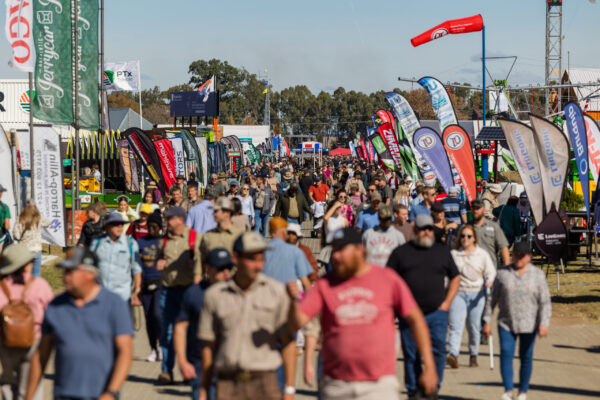
The 59th edition of the annual NAMPO Harvest Day closed on a high note last Friday after drawing 81,822 visitors over four days, narrowly missing the all-time attendance record of 81,945 set in 2023.
The event, regarded as the largest agricultural exhibition in the Southern Hemisphere, also set a new single-day attendance record after 24,579 people streamed through the gates on Wednesday.
Organisers attributed the surge largely to the massive turnout for Toyota South Africa Motors’ attempt to set multiple Guinness World Records during the launch of the all-new ninth-generation Hilux.
Air traffic to the exhibition also reflected the scale of the event, with organisers reporting that 311 attendees arrived by airplane and another 100 by helicopter. In total, 657 aircraft movements were recorded during the four-day exhibition.
This year’s NAMPO once again underscored the increasingly close relationship between agriculture and the automotive industry in South Africa.
Alongside agricultural machinery manufacturers such as John Deere, Massey Ferguson and CLAAS, the exhibition grounds featured a strong presence from vehicle manufacturers including Toyota South Africa Motors, Ford Motor Company of Southern Africa, Isuzu Motors South Africa, Volkswagen Group Africa, Jaguar Land Rover South Africa, Mahindra South Africa, Suzuki Auto South Africa, Tata Africa, GWM South Africa and Porsche South Africa.
Major truck brands including FAW, Volvo, MAN and Daimler also showcased their products and services to farmers and agribusiness stakeholders attending the event.
With automotive participation growing each year, attention is already shifting to the 2027 edition, with speculation that more brands such as BYD, Chery and Jetour could use the agricultural showcase to deepen engagement with South Africa’s farming economy.
The agricultural calendar now turns to NAMPO Cape 2026, scheduled to take place from September 9 to 12 at Bredasdorp Park in the Overberg region of the Western Cape.
Beyond exhibitions and product launches, one of the major discussions on the final day centred on the future of developing farmers and the need to accelerate commercialisation within the agricultural sector.
Grain SA’s farmer development division, Phahama Grain Phakama (PGP), hosted a high-level plenary roundtable under the theme “Empowering Developing Farmers to Commercialisation”.
The discussion brought together Agriculture Minister John Steenhuisen, Free State MEC for agriculture Elsabé Rockman, African Farmers Association of South Africa president AJ Mthembu, as well as representatives from Bayer and Kagiso Trust.
Participants examined persistent barriers facing developing farmers, including limited access to finance, land ownership challenges, inadequate infrastructure, training gaps and poor market access.
PGP chairperson Jeremia Mathebula said the organisation aimed to help farmers transition from subsistence farming into sustainable commercial agriculture through mentorship, training and improved access to finance and markets.
Mathebula also announced plans to identify and support five developing farmers per province over the next five years through a focused commercialisation programme.
A key issue raised during the discussion was the need to convert state land leases into bankable assets to help farmers secure financing.
Steenhuisen acknowledged that many developing farmers operating on state-owned land still struggle to access funding because they lack title deeds.
“Where farmers are successfully farming on state land, we should be giving those title deeds over to those farmers. They have earned their stripes,” Steenhuisen said.
Stakeholders also highlighted deteriorating rural roads, logistics bottlenecks, rising fuel prices and limited storage facilities as major challenges affecting profitability and market access for farmers.
The session further stressed the importance of innovation, digital agriculture technologies and practical skills development programmes in improving productivity and ensuring the long-term sustainability of the sector.