

With fertilizer supply chain disruptions driving up costs and limiting access, smallholder farmers urgently need technologies that reduce dependence on synthetic nitrogen inputs.
In response to this need, the International Maize and Wheat Improvement Center has signed a memorandum of understanding (MoU) with the University of California, Davis under the World Bank Group to accelerate the development and responsible deployment of nitrogen-related innovations in wheat for Africa.
According to a statement shared by CIMMYT on its X platform, the partnership marks a significant step toward building more resilient and sustainable wheat production systems across the continent, where farmers continue to grapple with rising input costs and climate-related pressures.
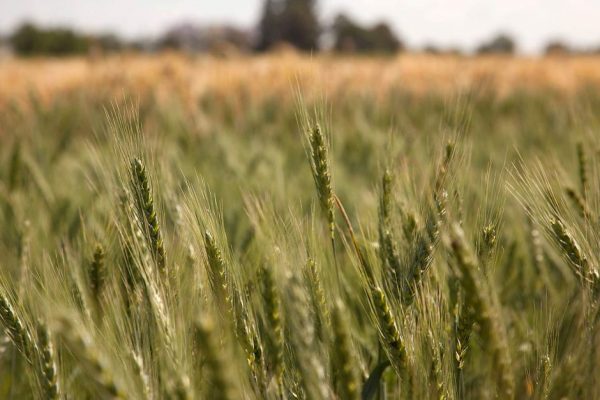
The collaboration brings together research, technology development and global financing expertise to advance wheat varieties that require less nitrogen fertilizer—an input that has become increasingly expensive and, in some regions, difficult to access due to global supply chain disruptions.
“We thank Bayer for convening this collaboration and supporting innovation for farmers in Africa,” CIMMYT said in its statement, acknowledging the role of Bayer in facilitating the partnership.
Officials involved in the initiative say the effort builds on existing technologies already undergoing field trials. Paschal Donohoe, Managing Director and Chief Knowledge Officer at the World Bank Group, noted that innovations developed at UC Davis are already being tested in collaboration with Bayer.
“We’re using technology that’s been developed at UC Davis. It’s in the fields in trials with Bayer and we’re working with CIMMYT to make this a reality for millions and millions of farmers around the world,” Donohoe said.
The initiative is expected to leverage advances in biotechnology to create wheat varieties that significantly reduce fertilizer requirements without compromising yields. Bill Anderson, Chief Executive Officer of Bayer, described the effort as a potential breakthrough for both farmers and global food systems.
“While we’re really excited for the opportunity to partner with UC Davis and CIMMYT to bring the miracles of biotechnology to the African continent in the form of wheat that requires less fertilizer, this could be a huge breakthrough for the farmers and for humanity,” Anderson said.
At UC Davis, researchers say the partnership underscores the importance of science-driven collaboration in addressing global agricultural challenges. Ashley Stokes, Dean of the College of Agriculture and Environmental Sciences, highlighted the broader potential of the research.
“Thinking about the science that really developed these wheat varieties and other crops and the difference it can make around the world, we are so excited about this partnership with CIMMYT and Bayer and how we can scale this globally,” Stokes said.
The World Bank Group also emphasized the transformative potential of applying advanced agricultural technologies in Africa. Guangzhe Chen, Vice President for the Planet, said deploying such innovations could be “game-changing” in reducing farmers’ reliance on fertilizers.
“This technology is going to help farmers to reduce the reliance on fertilizers,” Chen said, adding that applying scientific solutions to Africa’s agricultural challenges is critical for long-term sustainability.
The partnership aligns with broader global efforts to reduce the environmental footprint of agriculture, particularly nitrogen use, which is associated with greenhouse gas emissions and soil degradation when overapplied.
Ismahane Elouafi, Director General of the CGIAR, said the collaboration could contribute to global efforts to cut nitrogen use in wheat production.
“Looking forward to a fruitful partnership that will allow us to reduce use of nitrogen in wheat production globally,” she said.
As the initiative moves forward, stakeholders say scaling these innovations will be key to ensuring that millions of smallholder farmers across Africa can access and benefit from more sustainable and cost-effective wheat production technologies.