A new study published in the journal Carbon Research highlights the potential of aquaculture systems to act as effective carbon sinks under controlled greenhouse-like conditions, offering fresh insights into climate change mitigation strategies.
The research, titled Greenhouse-temperature induced manure driven low carbon footprint in aquaculture mesocosm, examined how rising temperatures—simulating greenhouse gas (GHG) effects—interact with organic manure inputs to influence carbon storage in aquaculture ponds.
The study found that elevated temperatures, roughly 6°C higher in simulated greenhouse environments, significantly enhanced carbon accumulation in pond sediments. Carbon burial rates increased by nearly 28% compared to systems operating under normal ambient conditions.
Researchers observed that this increase was driven by faster decomposition of organic manure and heightened biological activity, particularly from microalgae. These processes contributed to greater soil organic carbon levels and improved carbon sequestration efficiency.
Notably, the study estimates that each 1°C rise in temperature could lead to an approximate 4% increase in residual carbon stored in aquaculture systems.
Manure combinations influence outcomes
Different combinations of organic inputs—including cattle manure, poultry droppings, vermicompost, and sawdust—were tested across multiple treatment setups. The mixture of all manure types produced the highest carbon burial rates and overall carbon reduction potential.
Under greenhouse conditions, carbon reduction potential ranged between 44% and 62%, compared to 39% to 53% under ambient temperatures.
The findings suggest that nutrient-rich organic inputs stimulate phytoplankton growth, which plays a central role in capturing atmospheric carbon through photosynthesis and depositing it into sediments.
Aquaculture’s overlooked climate role
While wetlands and oceans are widely recognized as carbon sinks, the study emphasizes that aquaculture ponds—especially small-scale systems—have been largely underestimated in global carbon cycling.
Globally, aquaculture ponds already contribute to carbon sequestration, with estimates suggesting that millions of tonnes of carbon are buried annually in pond sediments.
The study argues that better management of these systems, particularly through organic fertilization and controlled environmental conditions, could enhance their role in mitigating climate change.
Additional benefits for fish production
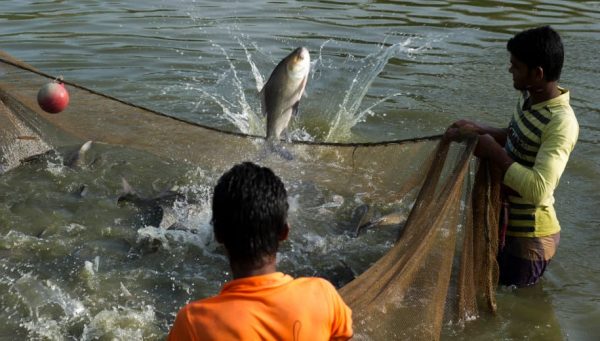
Beyond carbon storage, the greenhouse-like environment also improved aquaculture productivity. Tilapia breeding was successfully induced during winter conditions, with some treatments achieving 100% survival rates.
This suggests that such systems could simultaneously support sustainable fish farming while contributing to climate mitigation goals.
Implications for sustainable agriculture
The researchers conclude that integrating manure-based aquaculture with temperature-controlled systems could provide a dual benefit—enhancing food production and reducing carbon footprints.
They note that increasing soil organic carbon in aquaculture sediments may help offset carbon dioxide emissions from other sectors, particularly fossil fuel use.
However, the study calls for further large-scale research to validate these findings and explore their applicability across different climates and aquaculture systems.