

The KwaZulu-Natal MEC for Agriculture and Rural Development, Thembeni kaMadlopha-Mthethwa, has issued a stern warning to individuals involved in the illegal movement of livestock as the province battles a severe outbreak of Foot-and-Mouth Disease (FMD).
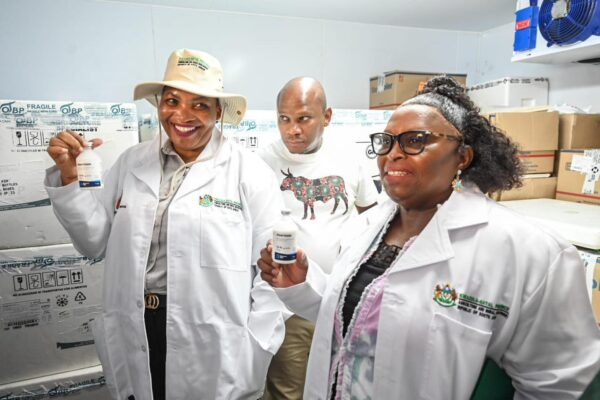
Speaking during a media briefing at the Provincial Veterinary Laboratory – Allerton in the Cascade area of Pietermaritzburg, the MEC stressed that strict adherence to animal control measures is critical to containing the disease. She also oversaw the arrival and storage of 200,000 vaccine doses earmarked for the first phase of a mass vaccination campaign in the Ugu District.
“We urge the public who continue to engage in cattle movement to stop doing that. This instruction applies even to those who use cattle for ilobolo. As an alternative, online platforms may be used for dowry exchanges,” kaMadlopha-Mthethwa said. She further called on traditional leaders to caution their communities against the illegal movement of animals within communal lands.
“We have to be harsh now so that people will see how serious we are in dealing with this. This disease is serious, and we have to adhere to the animal control measures that have been put in place,” she added.
In a statement issued by the KwaZulu-Natal Department of Agriculture and Rural Development, the department outlined an extensive mass vaccination rollout plan set to begin on 26 February 2026. From the first batch of one million FMD vaccine doses procured nationally, the province has received 200,000 doses.
The vaccines were collected from Onderstepoort Biological Products in Pretoria and are currently stored at the Allerton Laboratory, which is equipped with sufficient cold rooms and back-up generators to ensure vaccine integrity.
The MEC explained that veterinary services selected Ugu and Harry Gwala districts for the initial rollout of the BioGenesis Bago vaccines because these areas have not reported cases of the SAT 3 FMD virus. The vaccines are designed to target and neutralise SAT 1 and SAT 2 strains found in cattle in these districts.
“Taking our mass vaccination drive to northern KwaZulu-Natal would have been ineffective and futile because these vaccines may fail to deal with the SAT 3 FMD virus,” she said.
The department plans to deploy 45 vaccination teams daily, targeting 45 locations and inoculating between 45,000 and 90,000 animals per day once the full workforce is in place. Over a four- to six-month period, teams aim to vaccinate cattle at 2,286 dip tanks, covering the province’s entire cattle population of approximately 2.4 million animals, including both communal and commercial herds.
Each vaccination team will comprise seven members — three Animal Health Technicians and four data capturers — who will work closely with livestock associations to record owners’ and animals’ details into the Livestock Identification and Traceability System (LITS). Vaccination efforts will begin in Ugu District, move to Harry Gwala, and prioritise districts bordering other provinces and neighbouring countries before progressing inward.
Both state and registered private veterinarians have been authorised to administer vaccines to accelerate the campaign. Private veterinarians are encouraged to register with the department to bolster capacity.
For commercial farms and feedlots, the department is collaborating with industry bodies such as Kwanalu and the Red Meat Producers’ Organisation to monitor and facilitate the rollout, while the state will oversee vaccinations on commercial farms.
Meanwhile, Dr Kolisa Amanda Nokoyo, Deputy Director of Veterinary Diagnostic Services, said the Allerton Laboratory will soon be upgraded to allow for comprehensive testing of all blood samples, including suspected FMD cases. Once fully operational, the upgraded facility is expected to address the current backlog of FMD test results.
The department has urged farmers and livestock owners to cooperate fully with authorities to curb the spread of the highly contagious disease and protect the province’s livestock industry.
For more information, farmers can contact Vusi Khumalo (MLO) at 082 350 4674.