By Thanda Sithole, FNB & WesBank Senior Economist
South Africa’s economy delivered a stronger-than-expected performance in the first quarter of 2026, with agriculture and financial services emerging as the key drivers of growth.
Real Gross Domestic Product (GDP) expanded by 0.5% quarter-on-quarter, slightly faster than the 0.4% recorded in the final quarter of 2025 and above both market expectations and our own forecast.
On an annual basis, economic growth accelerated to 1.9% from 0.8% in the previous quarter and while this is encouraging, a closer examination of the data reveals that the economy’s recovery remains concentrated in a few sectors rather than being broad-based across the productive landscape.
The strongest contributions to growth came from financial services and agriculture. The finance, real estate and business services sector expanded by 0.9% quarter-on-quarter, contributing the largest share from the production side of the economy.
Increased activity in financial intermediation and related services underpinned this performance, reinforcing the sector’s role as a key pillar of economic activity.
Agriculture
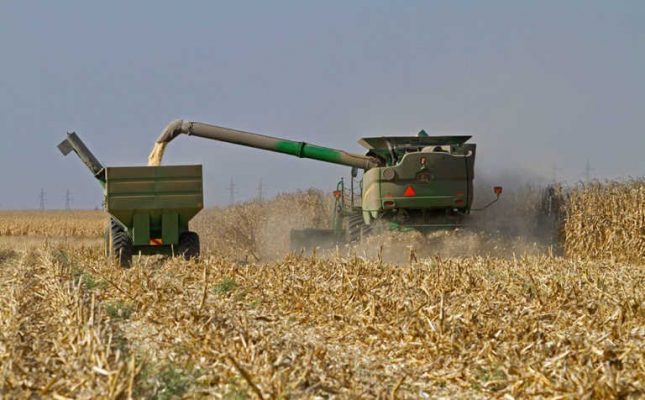
Agriculture also staged a notable recovery. The sector grew by 3.9% on a quarterly basis and recorded annual growth of 5.3%, rebounding sharply from the severe contraction experienced a year earlier. Improved activity in field crops and horticulture was instrumental in supporting this turnaround.
The rebound highlights the sector’s importance not only to rural livelihoods and food security but also to overall economic growth.
Other sectors showed signs of improvement as well. Mining and quarrying returned to growth, supported by stronger production of platinum group metals and gold.
Transport, storage and communication expanded, while electricity, gas and water posted modest gains after earlier weakness. Construction also returned to positive territory, albeit at a subdued pace.
However, these positive developments were offset by continued weakness in manufacturing, which contracted for a second consecutive quarter. Output declines in chemicals, petroleum products, metals, machinery, and wood products continued to weigh on industrial activity.
Manufacturing remains one of the economy’s most significant challenges, particularly given its role in employment creation and export competitiveness.
Demand-side view
From a demand-side perspective, the picture is less encouraging. Household consumption expenditure, which accounts for the largest share of economic activity, slowed markedly. Growth eased to just 0.1% quarter-on-quarter from 1.2% in the previous quarter.
Spending on durable goods, semi-durable goods and non-durable goods all lost momentum, while expenditure on services contracted.
The slowdown in consumer spending is particularly concerning because it occurred before households faced the full impact of recent fuel price increases and higher interest rates. Rising living costs continue to erode purchasing power, placing additional strain on consumers. This suggests that household demand could remain under pressure in the months ahead.
Investment activity also weakened. Gross fixed capital formation declined by 1.1% after two consecutive quarters of expansion. The primary drag came from private-sector investment, which fell by 4.9%.
Although investment by public corporations and government increased strongly, the decline in private business investment raises concerns about future productive capacity and long-term growth prospects.
The inventory data similarly point to cautious business sentiment. Inventory drawdowns increased significantly compared with the previous quarter, reflecting weaker conditions in manufacturing and trade-related sectors. Businesses appear reluctant to accumulate stock amid an uncertain economic environment.
One of the more positive developments came from the external sector. Export volumes rose modestly, supported by increased shipments of mineral products, agricultural goods, and processed food products. At the same time, imports contracted significantly.
Supply-side (production) view
This combination resulted in a substantial improvement in net exports, which contributed 0.9 percentage points to GDP growth and represented the largest contribution from the demand side of the economy.
While the first-quarter outcome undoubtedly demonstrates greater resilience than expected, it would be premature to conclude that South Africa has escaped its low-growth trap. The composition of growth remains uneven, relying heavily on a handful of sectors and favourable trade dynamics rather than widespread domestic demand.
Looking ahead, risks to the outlook remain elevated. Business confidence has deteriorated, with the latest survey showing a decline in sentiment compared with the previous quarter. Operating conditions have also weakened as firms contend with higher costs and ongoing economic uncertainty.
These factors suggest that growth in the second quarter could be materially softer than the performance recorded at the start of the year.
The stronger-than-expected first-quarter result does present a modest upside risk to our 2026 growth forecast of 1.0%. Nevertheless, sustained and inclusive economic expansion will require stronger household spending, a recovery in private-sector investment, and improved confidence across the broader economy.
For now, South Africa’s economy continues to move forward, but the journey remains uneven and fragile. The challenge is to convert pockets of resilience into a broader, more durable growth cycle capable of generating jobs, investment and rising living standards.