

De Heus Kenya has officially opened one of Africa’s largest animal feed manufacturing facilities, a KSh 3 billion (about USD 23 million) plant in Athi River, Machakos County, aimed at transforming the country’s livestock sector and boosting milk and meat production for farmers.
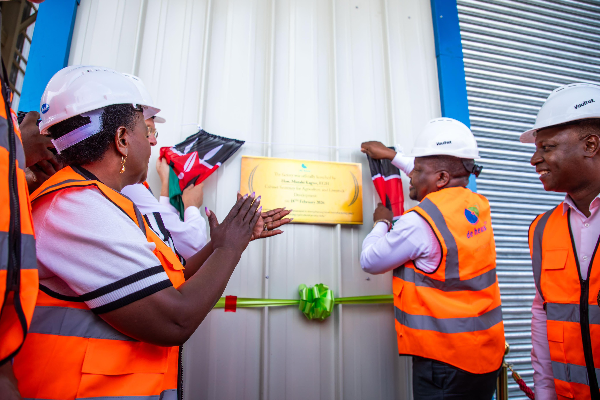
The state-of-the-art facility, inaugurated on 18 February 2026 in a ceremony presided over by Agriculture and Livestock Cabinet Secretary Mutahi Kagwe, signals a significant private-sector investment supporting Kenya’s broader ambitions to enhance food security, industrial growth and regional competitiveness.
“With this investment, we are not just opening a factory — we are transforming Kenya’s livestock economy,” CS Kagwe said at the launch. He emphasized that the focus is not on increasing herd sizes, but on improving productivity per animal, which he described as critical to doubling milk output and expanding meat exports.
The Athi River plant has an initial annual production capacity of up to 200,000 metric tonnes, expandable to 260,000 tonnes, making it among the largest feed mills in East Africa. It will produce a wide range of animal nutrition products, including compound feeds, concentrates, premixes and specialty feeds for poultry, pigs, ruminants and aquaculture.
Global animal nutrition firm De Heus, founded in the Netherlands in 1911, brings decades of expertise and operates more than 80 production facilities worldwide. The company says the new Kenyan facility will leverage global research with local manufacturing, rigorous quality testing and farmer support services.
“By manufacturing feed locally, we are tackling longstanding challenges such as inconsistent quality and heavy reliance on imports, while helping producers improve productivity and profitability,” said Wiehan Visagie, Managing Director of De Heus Kenya.
Feed is widely recognised as the single largest cost component in livestock farming — accounting for up to 60–70 per cent of production expenses — and inconsistent quality has long hampered farmers’ ability to achieve predictable results.
In response, the government has pledged to roll out a feed quality index and strengthen enforcement of standards to protect farmers from substandard products and improve competitiveness in domestic and export markets.
Aside from strengthening feed supply, the facility is expected to generate direct employment — approximately 250 jobs — and up to 1,000 indirect jobs across logistics, distribution, packaging and raw material supply chains.
De Heus Kenya plans to source key raw materials, such as maize and soybeans, from local farmers, helping to stimulate demand for domestic grain and support rural incomes.
The project has drawn support from local and international partners, with the Ambassador of the Kingdom of the Netherlands hailing the investment as a vote of confidence in Kenyan agriculture and economic potential.
Machakos Governor Wavinya Ndeti described the facility as a boost to the county’s agro-industrial development, noting its potential to uplift youth employment and enhance value addition in livestock farming.
Kenya’s livestock sector contributes an estimated 12 per cent of GDP but continues to fall short of its productivity potential. The government has set ambitious targets to double annual milk production from about 5.2 billion to 10 billion litres, with quality nutrition seen as central to achieving this goal.
By combining science-based feed production, stringent quality controls and farmer education, stakeholders say the new plant can help bridge gaps in the value chain and lay the foundation for stronger domestic supply and future exports of milk, meat and live animals.