

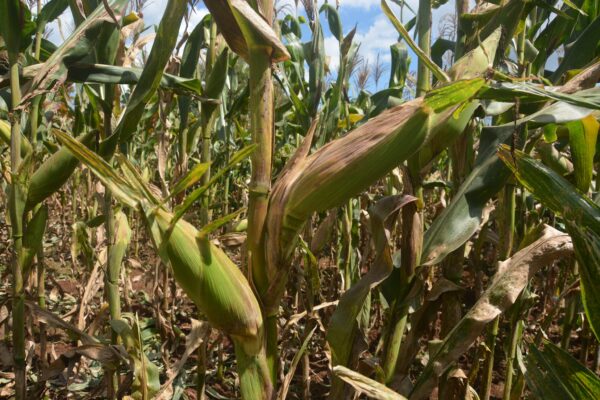
Although summer grain crops across large parts of the country are currently showing fair to good conditions, Grain SA warns that the real crisis this season does not lie only in the fields, but in the harsh economic realities of grain production. Producers are experiencing increasing strain due to a combination of low grain prices, sharply rising input costs, excessive mechanisation expenses and the additional costs associated with replanting after waterlogging and stand damage.
“There are places where crops look promising, but producers know: a good-looking field where the numbers don’t add up is not a sustainable field,” says Richard Krige. Across much of the country, grain crops currently range from fair to good and planting is well advanced in many areas. However, the dominant message from the field is that financial pressure has now become the biggest threat to sustainable production.
A season of extremes: wet fields, cold growth, expensive decisions
In several summer grain production regions, persistent rainfall and high water tables have resulted in extremely wet fields. This has, among other things, delayed planting or brought it to a complete standstill in places, limited access for weed control and follow-up spraying, caused waterlogging damage in lower-lying areas, and in some cases forced producers to replant in a second attempt to achieve adequate plant populations.
Core message from the field: prices and costs are making producers anxious
Across all production areas, one message is repeated consistently: profit margins are under pressure to breaking point. In several regions, producers indicate that above-average yields are required just to break even. Where long-term average yields are lower, the risk becomes even greater. The main cost drivers keeping producers awake at night include:
- Mechanisation costs, including replacement with more efficient machinery, spare parts and repairs increasing disproportionately;
- Crop protection chemicals and availability, where alternative products are often significantly more expensive;
- Seed and fertiliser, which continue to increase above inflation year after year; and
- Energy (diesel and electricity), which is making production in certain regions increasingly unviable.
Production area overview
In the north-western production areas, the season to date has been predominantly wet, with weekly rainfall supporting good subsoil moisture and strong growth. Planting is nearly complete in many areas, but high water tables and heavy, wet soils are still keeping producers out of fields in certain parts. There are blocks that have been waterlogged, areas that had to be replanted, and in some regions it is already accepted that a portion will no longer be planted. With the optimal planting window closing and wet conditions persisting, some producers are considering planting remaining hectares to sunflower later in the season. Nevertheless, the greatest pressure remains economic: producers state plainly that current prices, especially where export parity sets the tone, cannot carry the cost structure. In some areas, pressure is further compounded by grain from the previous season still stored in silos, severely affecting cash flow and the ability to properly finance the new season.
In the north-eastern regions, a wet start to the season combined with prevailing cool conditions is widely reported. Although crops in many areas appear acceptable to good, early cold weather has slowed growth and producers are concerned that yields may be negatively affected later. What stands out most strongly, however, is the cost-price squeeze. Input costs for maize and soybeans are already at levels where producers believe they must achieve above-average yields just to break even. There are also areas where wet fields are frustrating spraying and weed control, and where some hectares can no longer be planted because the optimal planting window in the east has already passed. Producers in several regions also express growing concern about foot-and-mouth disease, which could pose an additional risk to mixed farming systems in the new year.
In the Eastern Free State, the picture is mixed: in many areas planting is well advanced and crops are looking good, but heavy soils and persistently wet conditions have significantly restricted planting and access to fields in certain areas. There are producers who are still substantially behind on planting, while others are already switching to alternative crops as the planting window tightens. In traditionally lower-potential areas, the reality is stark: at current input costs, production is not profitable, and the pressure on producers is palpable. The cost of follow-up spraying – in some cases forced to be done by aircraft or drones – together with lost planting opportunities earlier in the season, has further increased expenses, while product prices have not followed suit.
The Western Free State has also received above-normal rainfall this season. There are early plantings that look excellent with above-average potential, but large parts of the season have been characterised by compaction, uneven emergence, seed becoming stuck, replanting, and crop protection products that do not perform optimally under continuously wet conditions. This double work – more trips, more fuel, more labour and more repairs – translates directly into higher costs. In some areas, it is already expected that a meaningful portion of land will not be planted, as water tables remain high and further rainfall is forecast in the short term. Low heat units and limited access to wet fields mean producers struggle to make timely corrections, which could later impact yield and quality.
For irrigation areas, the major red flag is the affordability of energy. In many of these regions, production conditions remain relatively stable, but producers indicate that irrigation is becoming increasingly uneconomical. The issue is no longer the availability of electricity, but its cost, together with diesel, fertiliser, seed and other inputs. Where winter crops have been harvested, there were also cases where rain prevented harvesting and losses occurred due to fires and other disruptions. In other irrigation areas, input costs for high-input crops are exceptionally high, while power interruptions are forcing producers to implement additional solutions such as solar power and generators – at even greater cost.
In the Southern Cape, winter grain producers face a very different, but equally serious challenge: extreme drought and water restrictions. With restrictions at key water sources and sections of rivers running low or dry, producers in some areas can no longer pump water. Even where average yields are reported, financial pressure remains intense because input costs stay high while product prices do not provide sufficient relief.
Grain SA’s focus: sustainable local grain production is a national priority
Grain SA emphasises that local grain production is a cornerstone of food security and rural economic stability. When producers cannot farm profitably, the impact is felt not only on farms, but also in rural employment, service providers and value chains throughout the economy. “The message from the fields is clear: producers cannot rely only on hoping for a good season – they must also be able to survive the season financially. Without a more realistic relationship between prices and costs, even good production conditions become insufficient,” Grain SA concludes.