

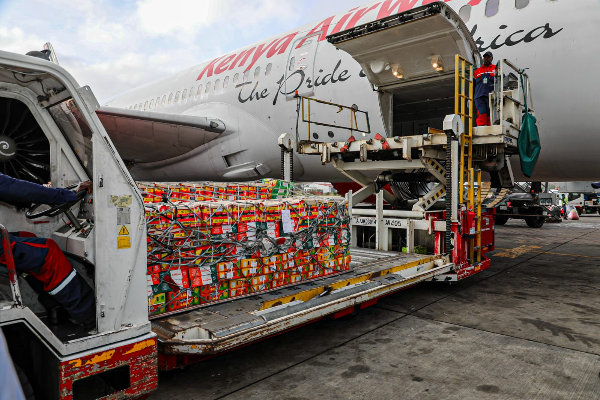
Kenya has shipped its first-ever consignment of the Apple mango variety to the United Kingdom (UK). The consignment confirms that Kenya has implemented phytosanitary measures that meet Britain’s food safety and plant health requirements. The successful shipment demonstrates Kenya’s readiness to expand mango exports while maintaining the highest quality and safety standards.
Britain is a large, year-round market, with trade data compiled from customs statistics placing UK fresh mango imports at approximately 81,000 tonnes in 2023. Entry of Apple mangoes into the UK market opens a premium segment that has remained effectively inaccessible to Kenya’s most widely grown variety. Apple mangoes now account for over 80% of Kenya’s mango production, following more than two decades of targeted investment in varietal improvement, orchard management and post-harvest handling. The variety is characterised by uniform size, attractive colour, low fibre content, extended shelf life and stable eating quality, attributes that align well with UK retail and consumer expectations.
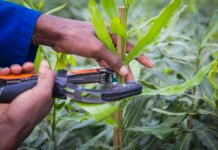
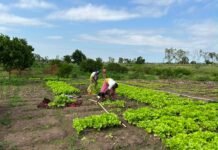
Beyond dietary appeal, the Apple mango value chain delivers strong pro-poor trade and development outcomes, with production dominated by smallholder farmers integrated into organised supply systems. The crop supports rural incomes, youth and women participation, and livelihood diversification in key mango-growing regions across Kenya.
Unlike other mango varieties that are often channelled into processing or culinary uses such as salads and desserts, Apple mangoes are prized for fresh consumption, valued for their juicy texture and natural sweetness. The variety dominates Kenya’s mango exports due to its large production volumes and relatively long shelf life. Under controlled conditions, Apple mangoes can be stored for up to 30 days and remain fresh for several weeks thereafter, making cold-chain integrity critical for market access.
Market access has historically been shaped by compliance. Between 2010 and 2014, repeated interceptions linked to fruit fly infestations led Kenya to impose a temporary self-export ban while strengthening pest management controls to safeguard its market reputation. Reforms included the establishment of a national fruit-fly surveillance and trapping network; mandatory orchard and packhouse registration tied to export eligibility; a systems-based approach to pest risk management across pre- and post-harvest stages; strengthened inspection and residue testing through accredited laboratories; and tighter cold-chain controls to preserve phytosanitary integrity throughout the export process.
Although the ban was lifted in 2021, market confidence among regulators and buyers was slow to return. The country produces an average of 650,000 tonnes of mangoes annually, valued at over Kshs.10 billion, making it one of Africa’s largest producers. However, gaps in surveillance, residue testing, cold-chain control and traceability have continued to limit access to advanced markets such as the UK, which imports over 70,000 tonnes of mangoes each year.
The timing of the pilot also aligns with a wider political push to reduce trade friction under the UK–Kenya Economic Partnership Agreement, which the UK says has been in force since March 2021. Kenyan officials and programme partners are presenting the Apple mango pilot in the UK market as evidence that investments in compliance can translate into restored market access.
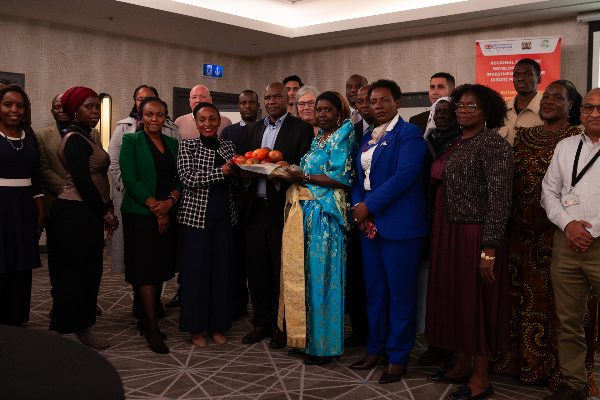
Speaking at the flag-off ceremony, Floice Mukabana, Chief Executive Officer of KEPROBA, said, “Today is a defining moment in Kenya’s export transformation story and it speaks directly to our nation’s Bottom-Up Economic Transformation Agenda (BETA).The resumption of exports of Apple mango, Kenya’s most widely grown variety, gives us a competitive advantage in the export markets and will greatly benefit our smallholder farmers. We are here not just to launch a pilot shipment, but to demonstrate Kenya’s readiness to compete in a demanding global market. This pilot is a testament to our strengthened sanitary and phytosanitary systems, post-harvest handling, traceability, and cold-chain integrity from farm gate to final delivery.”
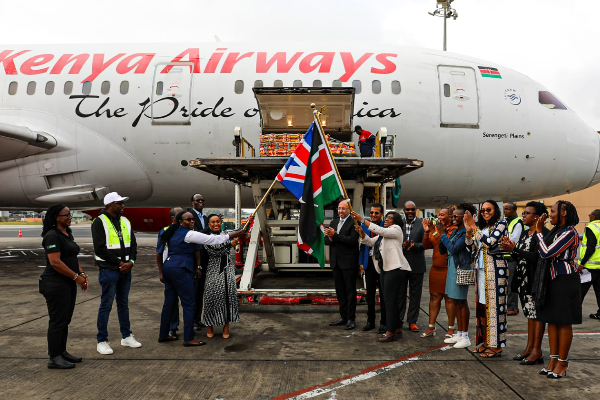
Daniel Wilcox, Economic Counsellor at the British High Commission Nairobi, said, “Breaking trade barriers is a top priority for the renewed Kenya-UK Strategic Partnership, as we seek to double trade by 2030. The re-starting of apple mango exports to the UK is a massive result for our long-term efforts to improve trade infrastructure—from the roads the mangoes travel on, to the testing process that ensures their quality—including the provision of laboratory equipment in the last few weeks. We’re going far and going together!”
Lillian Mwai, Country Director for Kenya at TradeMark Africa (TMA), said, “Beyond the shipment itself, the pilot provides practical evidence that recent investments in compliance infrastructure can translate into restored market access. It reflects a broader recalibration in trade policy away from volume-driven exports towards quality-led competitiveness, in line with Kenya’s National Export Development Strategy and the UK–Kenya Economic Partnership Agreement.”
The pilot shipment was facilitated under the UK-funded Regional Economic Development and Trade Investment Programme, implemented by TMA in partnership with the Government of Kenya, the Fresh Produce Exporters Association of Kenya, the Fresh Produce Consortium of Kenya and CABI International.