

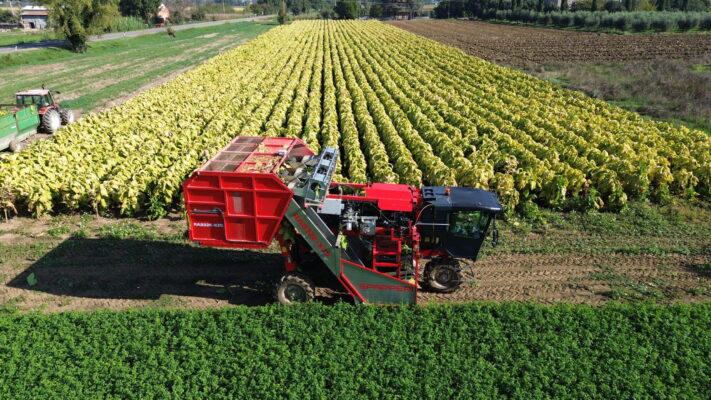
Mechanization in any agricultural field follows common processes, challenges, and expectations, but this is particularly true for Virginia Bright tobacco (VFC – Virginia Flue-Cured).
Critical sector factors—such as high labor requirements, steadily rising production costs, increasing demands for high-quality products, and the growing need for productivity, sustainability, process control, flexibility, and safety—are driving the VFC tobacco sector toward a radical metamorphosis and a continuous search for process mechanization.
Consequently, the push toward automation is not merely a choice for efficiency; it is a necessity dictated by the shortage of specialized labor, the need to reduce production costs, and the desire to standardize and improve final product quality while increasing yield per hectare. For these reasons, the success of a mechanization project must be guaranteed from its very first stages.
A Strategic Approach to Automation
To effectively manage the transition to automation, it is essential not to view process mechanization as an isolated element. As highlighted by the experts at Spapperi, an Italian leader in the manufacturing of machinery for tobacco cultivation and curing, it is vital to move along three key guidelines:
- Choice of Technological Partner: It is necessary to rely on companies with a solid international reputation that deeply understand the complex biology of the tobacco plant.
- Agronomic Adaptation: Mechanization requires adjusting cultivation practices based on machinery settings. Planting patterns, fertilization, and irrigation must be “designed” to facilitate the passage of the machines.
- The Human Factor: Innovation can be daunting as it pushes people out of their “comfort zone.” Personnel training and engagement are crucial to the project’s success.
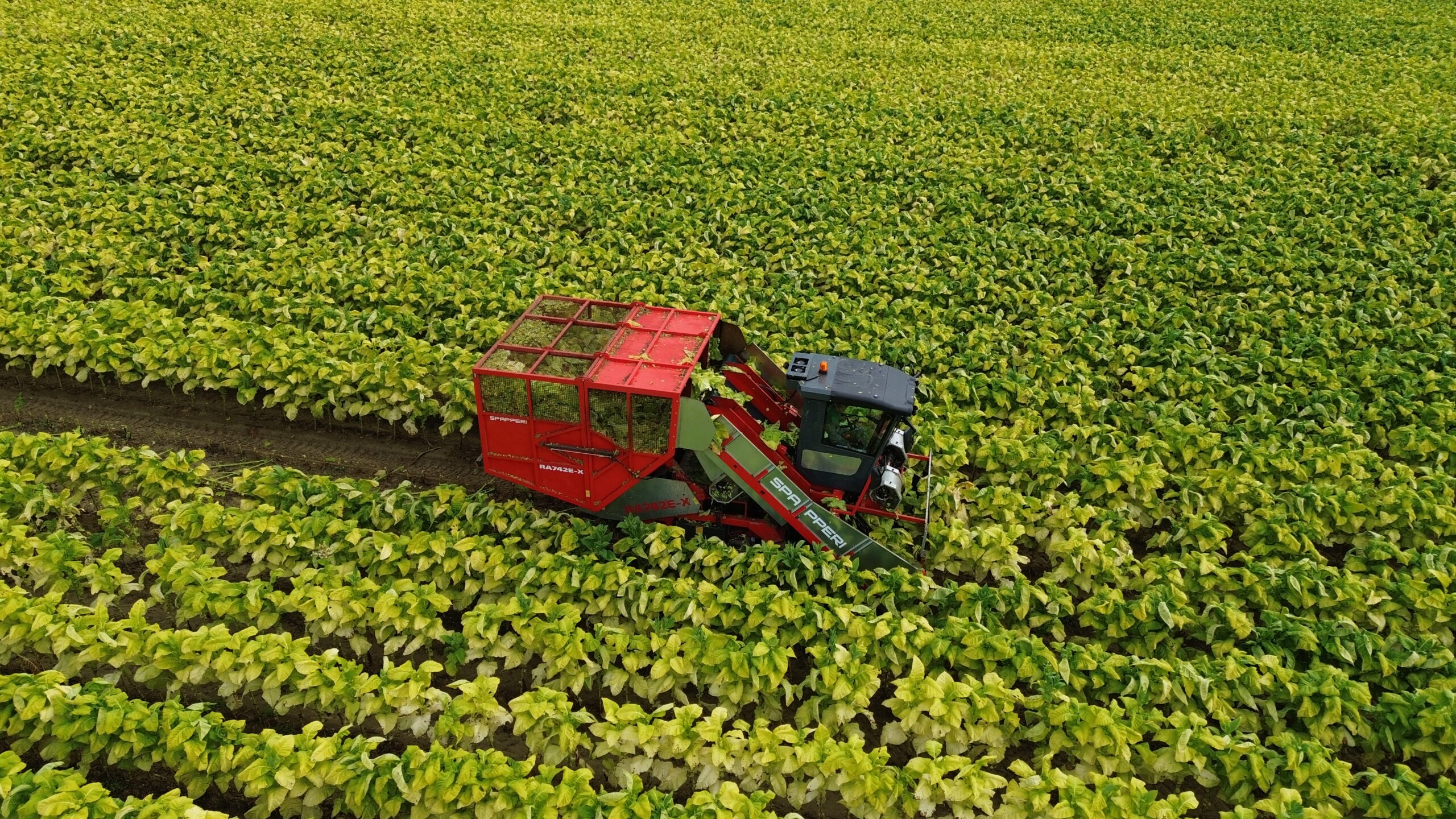
Spapperi has established a dedicated team, including tobacco agronomists with extensive international experience in all aspects of tobacco production and processing.
From Precision Transplanting to Crop Care: the cultivation cycle begins with the precision of the transplant. Compared to the past, the use of automatic and semi-automatic transplanters has transformed this phase. The new SPAPPERI transplanters, specifically designed for tobacco, allow for the planting of thousands of seedlings per hour, ensuring consistent planting depth and uniform spacing between rows. Field uniformity is fundamental: homogeneous leaf mass growth is a prerequisite for successful mechanical harvesting.
VFC tobacco requires meticulous care during growth. In this phase, mechanization intervenes on two critical fronts:
- Soil Care: Ensuring uniform plant growth and protection against pathogens.
- Topping and Sucker Control: Removing the inflorescence (topping) diverts the plant’s energy toward leaf development. Today, high-clearance machines equipped with mowing heads perform topping rapidly. Simultaneously, precision spray bars apply “sucker” inhibitors (lateral buds)—an operation that once required weeks of manual labor.
The Harvesting Revolution: the true technological turning point lies in the harvest. VFC tobacco matures scalably from the bottom to the top.
- Self-Propelled Harvesters: These machines utilize specialized defoliators that can be adapted to harvest leaves at the desired level. A single machine can replace the work of 50 to 70 laborers. It can cover 4 to 6 hectares per day with high product uniformity, resulting in a minimal impact on the total machine cost.
Post-Harvest Mechanization: Loading and Curing : Once harvested, the leaf must be transported and placed into curing barns. Here, mechanization meets logistics.
- “Bulk” Loading Systems: Mechanically harvested leaves are loaded in bulk into large metal containers (bulk-curers). This eliminates the need to manually tie leaves to strings or sticks.
- Automated Curing: Modern curing plants are managed by software that regulates temperature and humidity curves. The biochemical transformation of the leaf (yellowing, color fixing, leaf and stem drying) is monitored remotely, ensuring the tobacco acquires the golden-yellow color typical of Virginia without the risk of scalding or unwanted fermentation.
ROI and Sustainability
Investment in machinery offers a rapid Return on Investment (ROI), guaranteed by the reduction in unit cost per kilogram of tobacco produced. Furthermore, mechanization enables greater traceability: each batch can be linked to the data of the machine that harvested it, providing manufacturers with precise guarantees regarding cultivation methods.
From a sustainability perspective, optimizing mechanical passes reduces soil compaction and fuel consumption, while the efficiency of automated barns drastically cuts the consumption of biomass or natural gas for curing.
Conclusion
The mechanization of VFC tobacco processes is not just a technical improvement; it is a paradigm shift. While the figure of the tobacco grower remains central for agronomic sensitivity, their role is shifting toward that of a company manager and an overseer of complex systems.
Mr. Andrea Bernicchi Sales Manager – SPAPPERI NT SRL Italy