



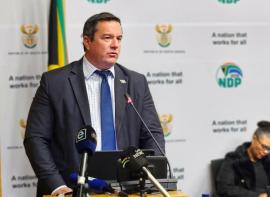
South Africa has unveiled a comprehensive new framework for controlling Foot and Mouth Disease (FMD), aimed at helping livestock farmers recover more effectively from outbreaks while protecting the country’s agricultural trade and biosecurity systems.
Minister of Agriculture John Steenhuisen announced the new national control measures on Thursday last week, describing them as a science-based and practical approach to managing one of the livestock sector’s most damaging diseases.
The measures will come into effect once they are published in the Government Gazette and will replace several existing directives, including the 2019 FMD Contingency Plan and subsequent amendments.
The revised framework establishes a single national system for managing FMD outbreaks, covering all stages from disease detection to recovery. According to Steenhuisen, the new approach is designed to provide farmers with greater certainty during outbreaks while ensuring disease control remains effective.
“South Africa’s livestock producers need clear rules, sound science and practical pathways that allow them to manage outbreaks without unnecessarily jeopardising their livelihoods,” he said.
FMD is widely regarded as one of the most economically significant animal diseases affecting the livestock industry. Outbreaks can disrupt production, restrict access to domestic and international markets, and place severe financial strain on farmers and rural communities.
One of the most significant changes introduced under the new framework is the adoption of risk-based pathways that allow some trade activities to resume during quarantine periods. Under the new rules, animals may be sent to designated FMD abattoirs 16 days after a property has been declared clinically clear. Broader slaughter options, including export-approved facilities, become available after 42 days.
The measures also clarify the status of vaccinated animals. Livestock that have been vaccinated but have never been infected with FMD and are not subject to quarantine restrictions will continue to be regarded as healthy and may be traded and moved under normal regulations.
Steenhuisen said the government’s goal is to strike a balance between disease control and economic sustainability.
“The objective is simple: protect animal health and stop the disease spreading, while ensuring that farmers can continue operating safely wherever possible,” he said.
The new regulations also seek to reduce unnecessary losses associated with disease control measures. Based on updated scientific knowledge of the FMD virus, products such as feed, fodder and manure will no longer automatically be destroyed. Instead, they will be managed according to scientifically determined risk periods.
Another major reform is the introduction of alternative recovery pathways for affected farms. Previously, producers often faced the prospect of removing entire herds before quarantine restrictions could be lifted. Under the revised framework, farmers will have several options, including restocking with vaccinated animals or sourcing livestock from FMD-free areas.
“For many farmers, particularly those operating under difficult financial conditions, the prospect of losing an entire herd can be devastating. These measures introduce practical alternatives that are scientifically sound and economically realistic,” Steenhuisen said.
The framework also introduces dedicated provisions for communal and peri-urban livestock systems for the first time. Recognising the unique challenges posed by shared grazing land, multiple ownership arrangements and varied livestock movement patterns, the measures provide tailored approaches to quarantine and vaccination.
In addition, farms with adequate fencing infrastructure will be permitted to isolate and manage outbreaks within affected sections rather than placing entire properties under quarantine.
The Department of Agriculture has also streamlined veterinary procedures and introduced clearer timelines for processing applications to move livestock products, helping farmers navigate regulatory requirements more efficiently.
Developed through consultations involving the Department of Agriculture, the Ministerial Task Team, the FMD Industry Coordination Council and veterinary experts, the new framework is expected to strengthen South Africa’s biosecurity system while supporting the long-term sustainability of the livestock sector.
Steenhuisen said the measures reflect current scientific evidence and the realities facing producers on the ground. The Department of Agriculture will continue monitoring their effectiveness and has committed to conducting a formal review within 12 months of implementation.




[…] The framework also clarifies the status of vaccinated livestock, a key issue for trade partners. Animals that have been vaccinated, have never been infected, and are not under quarantine will be regarded as healthy. They may be traded and moved under normal regulations. This gives exporters firmer ground when negotiating market access conditions and certification requirements. It also supports ongoing efforts to keep key markets such as the United Arab Emirates, Hong Kong and Kuwait open to South African products. […]
Comments are closed.