

Bühler Southern Africa will highlight the benefits of precision feed milling at the AFMA Forum 2026, taking place at Sun City from 8 to 10 September. During a panel discussion, Oliver Brägger, Sales Manager, Value Nutrition, Bühler Group, will explain how real-time data and automation can help feed manufacturers better manage raw material variability, optimise production, and improve feed quality.
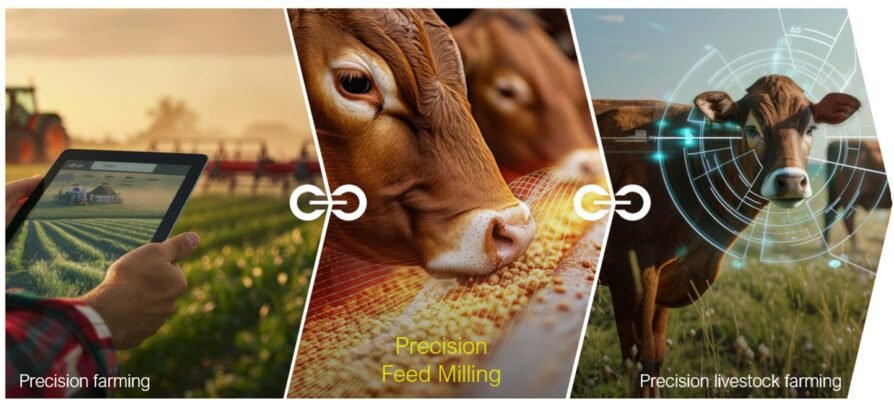
Feed manufacturers must maintain consistent nutritional specifications even though the quality of key raw materials such as grain can vary. Changes in raw material quality will affect nutritional composition, making it more difficult to maintain feed quality while managing costs. Precision feed milling offers a more proactive approach by combining real-time data with automated process control, enabling manufacturers to adjust to variability during production.
The AFMA Forum’s 2026 theme, ‘The Feed Factor – The Chain That Feeds a Nation’, highlights the role of feed manufacturing in food security and the wider food value chain. As a critical link between agricultural production and animal protein, the feed industry plays an important role in maintaining the quality, consistency and efficiency of food production. The theme provides a relevant backdrop for discussions around how technology and data can help feed manufacturers respond to variability and strengthen performance across the value chain.
From real-time monitoring to automated control
Bühler’s precision feed milling approach uses real-time monitoring and inline analytics to provide feed manufacturers with continuous visibility into raw material information. This data can support automated formulation and recipe adjustment, rather than relying solely on fixed assumptions. “Precision feed milling is about moving from reacting to variability to actively managing it in real time,” comments Brägger. “By turning data into actionable insights, manufacturers can make better decisions, improve feed consistency and maximize the value of available raw materials.”
Feed safety and quality
Bühler’s precision feed milling approach also encompasses optical sorting technologies that help identify and remove mycotoxin-contaminated materials, supporting feed safety and quality assurance. This can help manufacturers manage potential contamination risks when raw-material quality varies, alongside the need to maintain nutritional requirements.
“Feed safety starts at the feed mill, where contaminated raw materials can be identified and removed before they enter the production process,” says Brägger. More effective process control can help reduce energy consumption, while using available raw materials more effectively can support both economic and sustainability objectives.
Efficiency through digitalisation and process optimisation
Efficiency is a key part of precision feed milling. Bühler’s approach combines smart and precise equipment, advanced plant operation, sensor technology and operational data to provide greater visibility and control across the production process. Optimised algorithms can use this data to enable real-time optimisation, helping feed manufacturers respond to changing production conditions, improve resource efficiency and make more informed operational decisions.
Bühler’s expertise includes precision feed milling and process optimisation, real-time monitoring, automated recipe control, optical sorting for mycotoxin removal and digitalised, data-driven production systems. At the AFMA Forum 2026, Brägger will discuss how these technologies translate into practical production benefits for feed manufacturers.