

Credit: Murdoch University
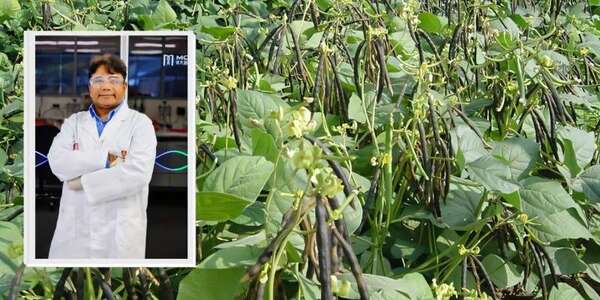
A team of international researchers has developed the first comprehensive graph-based pan-genome for mung bean, uncovering thousands of previously hidden genetic variations that could accelerate the development of higher-yielding, more nutritious and pest-resistant varieties of the crop.
The study, published in the journal Nature Genetics on July 10, describes a new genomic resource that researchers say will significantly enhance breeding efforts for mung bean (Vigna radiata), an important legume widely cultivated across Asia and increasingly grown in Africa due to its short growth cycle, drought tolerance and nutritional benefits.
Mung bean is valued for its high protein content, nitrogen-fixing ability and rich concentrations of minerals and bioactive compounds, making it an important crop for improving food and nutritional security in developing countries.
However, breeding progress has been constrained by limited genomic resources and an incomplete understanding of the crop’s genetic diversity.
To address these challenges, the researchers assembled a graph-based pan-genome using 11 genetically diverse mung bean accessions collected from around the world.
Unlike traditional reference genomes that rely on a single representative sequence, the new approach captures a broader spectrum of genetic diversity within the species.
The team identified 75,268 gene families, of which about 51% were classified as core genes present in all accessions, while the remainder were either dispensable or unique to specific lines.
The researchers also discovered 66,862 nonredundant structural variants—large-scale changes in DNA sequences that can influence important plant traits.
By integrating these structural variations with single nucleotide polymorphisms and conducting genome-wide association studies across five different environments, the researchers identified candidate genes linked to 20 key agronomic traits.
The findings provide new insights into the genetic mechanisms that have shaped mung bean domestication and improvement over time.
Among the most significant discoveries were two structural variations associated with desirable crop characteristics. The researchers found that a 68-base-pair insertion in the promoter region of the gene VrTIFY6B regulates flavonoid content, compounds known for their antioxidant properties and nutritional benefits.
They also identified a 136-base-pair deletion in the promoter of the gene VrPGIP1 that enhances resistance to bruchids, insect pests that cause substantial post-harvest losses in stored legumes.
The study’s authors said these functional variants could be directly applied in breeding programmes through marker-assisted selection, genomic selection and genome-editing technologies, enabling breeders to develop improved varieties more efficiently.
The newly developed genomic resources are expected to support efforts to produce mung bean varieties with improved nutritional quality, enhanced pest resistance and better adaptation to changing climatic conditions.
Researchers believe the findings could play an important role in strengthening global food security, particularly in regions where legumes are a critical source of affordable protein and nutrition.
As demand grows for resilient and nutrient-dense crops capable of thriving under increasingly challenging environmental conditions, the new pan-genome offers breeders an advanced toolkit for unlocking the untapped genetic potential of mung bean and accelerating the crop’s improvement worldwide.