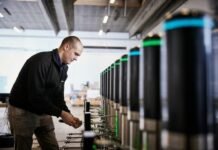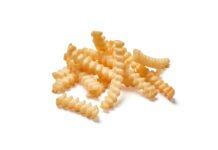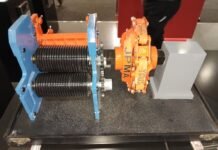


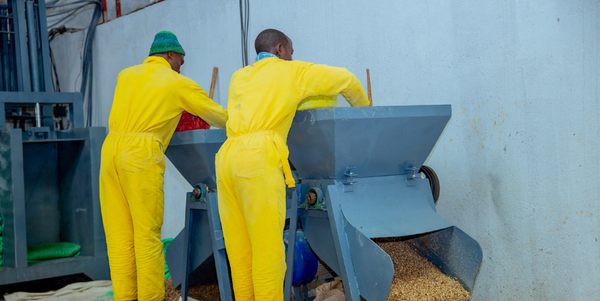
At the factory, freshly processed cassava peels have been transformed into High-Quality Cassava Peels (HQCP). Photo courtesy of IITA.
A Rwandan entrepreneur is turning cassava peels, once regarded as waste, into an affordable ingredient for livestock feed, creating new business opportunities while helping tackle environmental pollution.
According to a report by the International Institute of Tropical Agriculture (IITA), Christian Bizumuremyi, Founder and Managing Director of Kabizu Business Group Ltd, has built a business around converting cassava-processing residues into High-Quality Cassava Peels (HQCP).
The innovation was developed with technical support from IITA Rwanda through the Rural-Urban Nexus (RUNRES) project, which helped the company improve its processing systems and establish a facility capable of producing HQCP that meets market requirements.
“Our biggest challenge was convincing people that cassava peels are not waste but a valuable resource. We also faced limited processing technology, financial constraints, and the challenge of meeting strict quality standards. Many people could not imagine that cassava waste could become a high-quality commercial product,” Christian told IITA.
For Christian, the business opportunity lies in solving two problems at the same time. Cassava processing generates large quantities of peels that are often discarded, while livestock producers face rising costs of conventional animal feed ingredients.
Through processing, the peels can be converted into a feed ingredient that provides fermentable carbohydrates and creates additional value from cassava production.
“The project has completely changed my perspective as an entrepreneur. It has given me the confidence to invest in innovation and sustainability. I have learned that a business can generate profit while creating positive environmental and social impact,” Christian said.
However, turning cassava peels into a commercially viable feed ingredient requires careful processing. According to IITA Research Associate Emmanuel Rukundo, raw cassava peels contain anti-nutritional compounds and can have high moisture levels, making them unsuitable for direct use as animal feed.
“Cassava peels are rich in fermentable carbohydrates, but in their raw form, they carry anti-nutritional compounds and moisture levels that make them unsafe and unstable as feed. The processing protocols we introduced through RUNRES address both issues — reducing cyanogenic compounds to safe levels while stabilizing the product for storage and transport,” Rukundo explained.
He said the experience of Kabizu Business Group demonstrates the importance of collaboration between farmers, processors and researchers in developing reliable agricultural products.
“It’s not enough to have an idea. You need consistent quality control, proper drying and grating systems, and a feed product that livestock producers can trust batch after batch. That’s where the technical partnership made the difference,” he said.
The enterprise has created employment opportunities while providing cassava farmers with another potential source of income from processing residues that would otherwise be discarded. It has also positioned Kabizu Business Group as an emerging player in Rwanda’s agro-processing sector.
For Christian, the transformation goes beyond the success of his company.
“The most inspiring part has been seeing researchers, farmers, development partners, and private companies working together to solve a common problem. Watching cassava peels that once polluted the environment become a nutritious ingredient for animal feed is proof that innovation and partnerships can transform communities,” he said.
Christian now plans to expand HQCP production to supply feed manufacturers in Rwanda and neighbouring countries. Kabizu Business Group also intends to develop additional value-added products from cassava residues as it works towards a zero-waste processing system.
The entrepreneur’s experience demonstrates how innovation can turn an agricultural waste stream into a commercial opportunity, while supporting farmers, creating jobs, reducing environmental pollution and contributing to a more circular agricultural economy in Rwanda.