


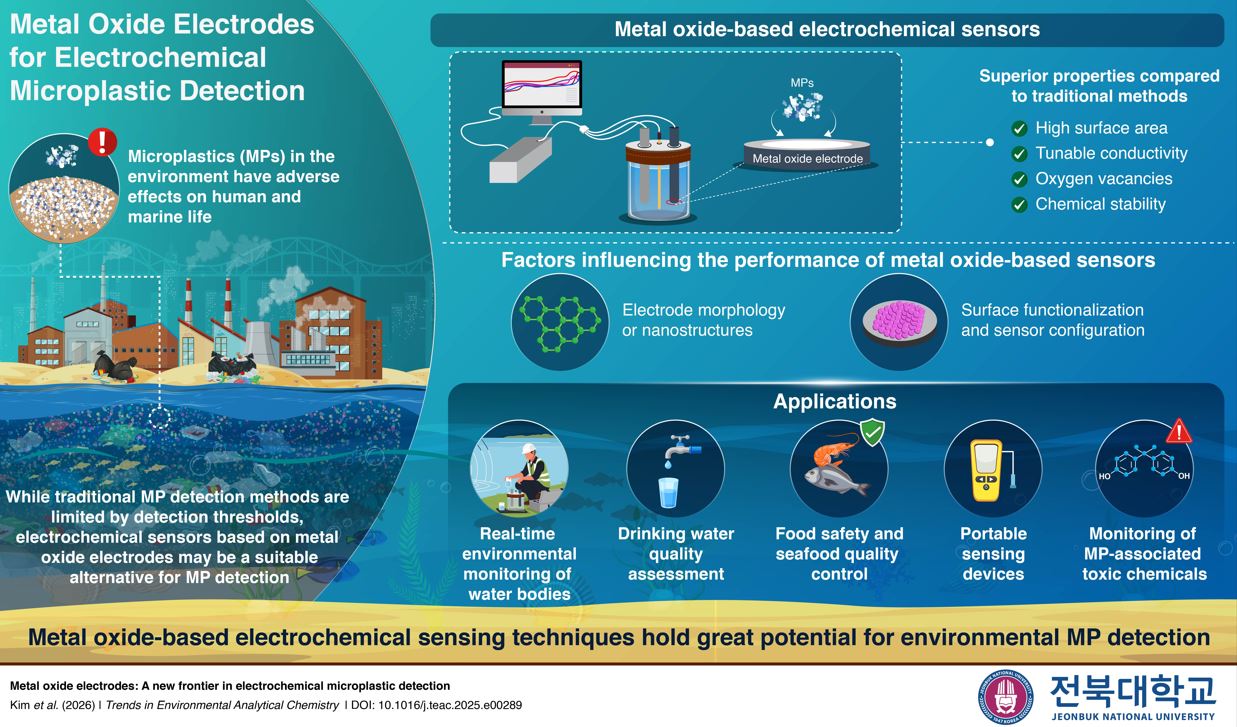
The widespread presence of microplastics (MPs) in water bodies around the world has emerged as a pressing environmental and public health concern. From oceans and rivers to lakes and drinking water supplies, these tiny plastic particles are infiltrating ecosystems, threatening marine organisms and potentially entering the human food chain.
Now, researchers have identified a promising alternative to traditional detection methods—electrochemical sensors based on metal oxide electrodes—offering faster, more sensitive, and cost-effective monitoring solutions for aquatic ecosystems.
Microplastic pollution is particularly alarming in aquatic environments, where plastics degrade into microscopic fragments that are easily ingested by fish, shellfish, and other marine organisms. As these contaminants accumulate, they pose risks not only to marine biodiversity but also to human health through seafood consumption and water use.
Despite the urgency of the problem, conventional detection methods such as Fourier transform infrared spectroscopy (FTIR) and Raman spectroscopy remain time-consuming, expensive, and reliant on sophisticated laboratory equipment. These limitations restrict their use in continuous or real-time environmental monitoring.
In response to these challenges, a research team led by Professor Sadia Ameen from the Department of Bio-Convergence Science at Jeonbuk National University has systematically reviewed the emerging shift from traditional spectroscopic analysis to rapid electrochemical sensing techniques.
Their study, made available online on December 2, 2025, and later published in Volume 49 of Trends in Environmental Analytical Chemistry on March 1, 2026, highlights how metal oxide-based electrochemical sensors are transforming the landscape of microplastic detection.
“Our study provides mechanistic insights that are often missing, with a detailed explanation of how MPs interact with metal oxide electrode surfaces, including impedance changes and interaction-induced current transients,” explains Prof. Ameen.
Metal oxides
At the core of this innovation are metal oxide nanostructures such as zinc oxide (ZnO), titanium dioxide (TiO₂), and hydrophobic cerium dioxide (CeO₂). These materials possess high surface area, tunable electrical conductivity, and remarkable chemical stability.
Such properties enable direct and highly sensitive detection of trace microplastics—even in complex environments like wastewater or marine ecosystems. Unlike conventional methods that require sample collection and laboratory processing, these sensors can potentially deliver on-site and real-time results.
The performance of metal oxide-based sensors can be significantly enhanced through careful control of morphology and surface chemistry. Nanostructured forms such as nanorods, nanowires, and porous architectures create “hotspots” that amplify electrochemical signals.
These structural features increase the interaction between microplastic particles and the electrode surface, boosting detection sensitivity far beyond that of simple spherical particles.
Material engineering
Material engineering strategies further strengthen detection capabilities. For example, hydrophobic CeO₂ nanoparticles can selectively attract hydrophobic plastic particles like polyethylene and polypropylene.
This selective affinity allows the sensors to distinguish microplastics from other environmental interferents, ensuring accurate measurements even in polluted or chemically complex water samples.
Beyond laboratory validation, the practical implications of these sensors are significant. Metal oxide-based electrochemical devices are portable, affordable, and require minimal maintenance, making them ideal for deployment in rivers, lakes, and oceans.
Their rapid response times enable continuous environmental surveillance, addressing one of the key limitations of existing spectroscopic approaches.
The technology also shows promise in safeguarding public health. Electrochemical sensing platforms can be used for routine screening of drinking water supplies to ensure compliance with safety standards, particularly for detecting trace-level microplastics that may bypass conventional water treatment processes.
Additionally, these sensors can be applied to seafood and processed food testing, supporting regulatory inspections and food safety assessments.
Because of their compact design and low operational requirements, metal oxide-based sensors are well suited for integration into handheld or wearable devices. Field researchers and environmental inspectors conducting in situ analyses could benefit from real-time data collection without the need for centralized laboratory facilities.
Moreover, these sensors may assist in assessing the combined risks of chemical and plastic exposure by detecting hazardous pollutants that adhere to microplastic surfaces.
Looking ahead
Looking ahead, Prof. Ameen envisions the integration of these sensors with Internet of Things (IoT) networks and artificial intelligence technologies. Such advancements could enable automated monitoring systems capable of transmitting real-time environmental data, analyzing pollution trends, and supporting early warning systems.
“Metal oxide-based sensors will soon be integrated with the Internet of Things and artificial intelligence technologies. Over the next few years, the widespread adoption of this novel next-generation technology is expected to pave the way for improved public health protection, enhanced food safety and consumer confidence, acceleration of technological innovation and green industry growth, extensive interdisciplinary education and research, as well as global environmental resilience and climate adaptation,” concludes Prof. Ameen.
As microplastic contamination continues to challenge environmental sustainability worldwide, these next-generation electrochemical sensors represent a pivotal step toward more effective monitoring and protection of aquatic ecosystems.