

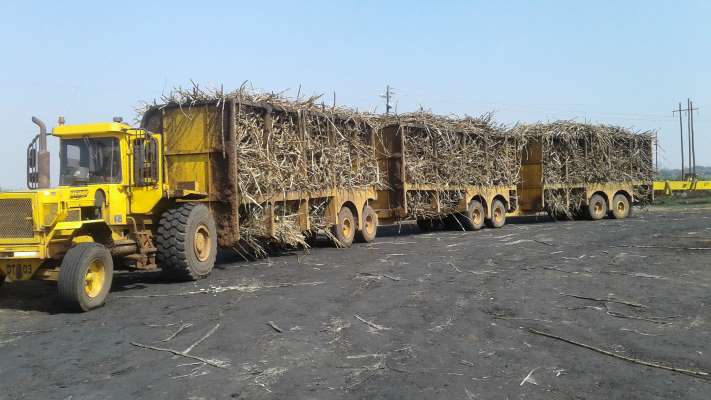
Agricultural machinery operates in some of the harshest working environments – dust, mud, heavy loads and unpredictable weather all place enormous strain on equipment. When machinery fails during critical planting or harvesting periods, the resulting downtime can quickly translate into lost productivity and increased costs.
Condition monitoring specialist WearCheck helps farmers maintain fleet reliability through scientific analysis of used lubricating oil from engines, gearboxes, differentials and other components. Oil analysis provides early warning of wear, contamination and lubrication problems, allowing maintenance teams to act before small issues develop into costly failures.
According to Shesby Chabaya, WearCheck Zimbabwe operations head, regular oil analysis programmes are particularly valuable in agriculture, where seasonal pressures often force machines to operate in demanding conditions.
‘Farmers must achieve high production targets, often during short and unpredictable weather windows,’ he explains. ‘This means equipment is frequently exposed to challenging operating conditions, especially during wet seasons when machinery may be forced to work in muddy fields.’

Detecting early warning signs
Oil analysis reports often reveal early indicators of operational stress. For example, high PQ (particle quantifier) readings or elevated wear metals detected through microscopic particle examination (MPE) and inductively coupled plasma (ICP) testing may indicate abnormal wear in drivetrain components.
These findings frequently correlate with field reports of tractors or other machinery becoming stuck in muddy conditions. When operators repeatedly attempt to drive vehicles out of these situations, drivetrain components such as differentials and final drives can experience severe stress and accelerated wear.
By identifying these warning signs early, maintenance teams can investigate the root cause of the problem and implement corrective measures timeously.
The impact of wet-weather operations
Wet-weather operations pose significant challenges for agricultural fleets. When tractors operate in slippery conditions, excessive wheel spin places extreme loads on drivetrain components. This can result in chipped gears, broken planetary gear carriers, damaged thrust washers or even failed half-shafts.
Oil analysis data from agricultural fleets shows that drivetrain failures occur far more frequently during – and immediately after – wet seasons. In one case study, 71% of differential failures occurred during the wet season, versus 29% during drier periods.
As wear particles accumulate in the oil, the rate of component deterioration increases. These particles act as abrasives, accelerating further wear and potentially leading to catastrophic failures.
Using root-cause analysis
To identify the underlying causes of repeated failures, WearCheck technicians often apply root-cause analysis techniques such as the “5-Why” method, where “why” is asked repeatedly to uncover the cause of the problem.
In one example involving frequent differential failures, the investigation revealed the following sequence:
- High wear particles were present in the oil.
- These were caused by abnormal component wear.
- The wear resulted from damaged drivetrain components.
- Damage occurred when tractors became stuck and operators attempted to free them by spinning the axles.
- The root cause was wet-weather operating conditions.
Understanding this chain of events allows maintenance teams to implement practical solutions to prevent recurrence.
Practical solutions
Several strategies have proven effective in reducing drivetrain failures and improving fleet reliability.
Operator training is key – operators should request assistance when equipment becomes stuck rather than repeatedly spinning the wheels. Even brief periods of excessive wheel spin can damage drivetrain components.
Maintenance planning is also important – keeping critical spare parts available allows for prompt repairs.
Regular oil sampling and trend analysis remain central to effective condition monitoring. By analysing oil samples throughout the operating season, engineers can identify developing problems, investigate their causes and implement corrective actions before major failures occur.
Sometimes, draining contaminated oil may limit further abrasive wear and extend component life. However, this must be balanced with environmental considerations and the oil-change cost.
Planned maintenance versus catastrophic failure
A significant benefit of oil analysis is the ability to plan maintenance interventions rather than reacting to unexpected breakdowns.
Replacing components during scheduled maintenance is far less costly than dealing with catastrophic failures, which often lead to extended downtime and lost production. By using oil analysis data to monitor equipment health, maintenance teams can make informed decisions about when to repair or replace components.
These proactive maintenance strategies have helped agricultural fleets maintain equipment availability above 95%, ensuring machinery remains operational when it is needed most.
Continuous improvement through oil analysis
WearCheck’s oil analysis programmes operate as continuous improvement tools. Each oil sample provides valuable information about machine health, operating conditions and maintenance practices.
‘With every sample we learn something new,’ says Chabaya. ‘The aim is always to identify the root cause of problems and apply engineering solutions that improve reliability and efficiency.’
After 50 years of keeping machinery running smoothly, WearCheck knows that on the farm – as in the lab – healthy oil helps keep the wheels of agriculture turning. Please visit www.wearcheck.co.za, call head office on +27 31 700-5460, or email marketing@wearcheck.co.za.