

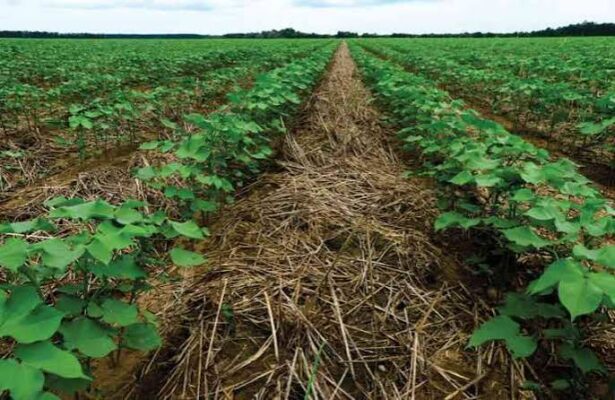
Regenerative agriculture—rebuilding the soil’s organic matter to improve soil health and reduce water and chemical inputs—is gaining ground among farmers around the world. Even global companies like McCain, the giant potato grower and processor, have adopted aspects of it to maintain output and adapt to extreme weather.
This type of agriculture is also practiced by family farmers in the Kisumu region of Kenya. Common cover crops in Africa–“green manure”–include glyricidia sepum, piliostigma reticulatum, calliandra, canavalia insiformi, and different types of legumes.
The main benefits include:
- Increased soil fertility. Cover crops improve overall soil health usually within a year or two, and increasingly over time. Organisms such as earthworms and other insects can improve soil quality and increase nutrient availability by quickly decomposing organic matter and plant residues. This increases fertility, which improves yield per unit of land.
- Reduced input costs. Cover crops are a very inexpensive source of fertilizer. Periodically ploughed into fields as “green manure,” they increase carbon. This costs farmers virtually nothing.
- Pest and weed management. Cover crops tend to reduce infestations by insects, diseases, nematodes and weeds. This reduces the need for relatively expensive and often dangerous chemical pesticides.
- Soil erosion control. Cover crops provide protection against soil erosion as surface runoff is slowed by the cover, allowing improved moisture through increased infiltration.
- Human Health. Green manure cover crops are grown organically, which eliminates the health risks associated with chemical fertilizers.
The use of “green manure” has proven effective in helping raise yields, reduce costs and increase profits and incomes in Kisumu. There are also early positive results with farmers in the Gnagna Province of Burkina Faso and the Timissa Commune of Tominian Cercle in Mali. These are part of a larger effort to help ensure “food sovereignty” in Africa—using sustainable, non-industrial techniques that do not rely on foreign investment and food exports. For many family farmers and development organizations, food sovereignty has replaced food security as the principle that guides innovation and investment to raise small hold farmer productivity and output and add move up the value chain.
World Neighbors, an international development organization based in Oklahoma City, has teamed with local partners on these projects.