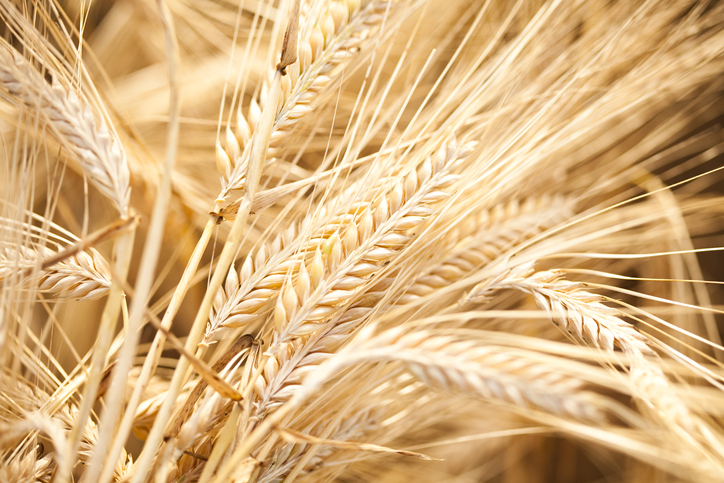
An international team of scientists has identified a gene with the potential to improve global food security by helping cereal crops better withstand some of the unpredictable challenges posed by climate change.
The discovery, centered on barley genetics, offers new avenues to breed more resilient crops, reducing losses and stabilizing food supplies as weather patterns become increasingly erratic.
Published in the prestigious journal Science on Nov. 6, the study focused on the genetic mechanisms that regulate seed dormancy — a plant’s internal “timer” that determines when a seed breaks its dormant state and begins to grow.
The researchers zeroed in on a gene known as MKK3, which they found plays a pivotal role in controlling this process.
Seed dormancy is a double-edged sword in agriculture: if seeds break dormancy too early, they can sprout on the mother plant before harvest, resulting in pre-harvest sprouting (PHS), which diminishes grain quality and leads to significant financial losses.
On the other hand, overly prolonged dormancy can delay planting schedules, disrupting farming cycles.
“By analyzing more than 1,000 barley samples from around the world, the team found that different regions have naturally selected diverse versions of this gene to survive local weather patterns,” the Global Times reported.
A Genetic Key to Climate Resilience
The MKK3 gene complex regulates how long seeds remain dormant and how quickly they germinate, a trait shaped by both ancient farming practices and environmental pressures.
According to the study’s co-author, Christoph Dockter of the Carlsberg Research Laboratory, variations in the number and activity of MKK3 copies can influence dormancy length — acting like an internal alarm clock that determines when a seed “wakes up.”
The research shows that barley varieties grown in humid monsoon regions of East Asia evolved “quieter” versions of MKK3 to stay dormant longer and protect against premature sprouting.
Conversely, barley cultivated by ancient farmers in Northern Europe featured shorter dormancy traits to ensure quick, even germination for high-quality brewing grains.
The study also highlighted a unique variety grown on the Qinghai-Tibet Plateau known as qingke, which exhibits some of the most active MKK3 variants globally.
These help seeds germinate vigorously despite the region’s harsh climate and short growing seasons.
Broader Implications for Agriculture
Experts say the significance of this discovery extends beyond barley. A Seed World review of the research explained that understanding how MKK3 variants work could help breeder communities develop strategies to improve not only barley but also other essential cereals, including wheat and rice.
“Our research demonstrates how different versions of MKK3 have evolved over thousands of years and have been selected by farmers and end-users to control a delicate balance between seed dormancy, sprouting risk and the rapid, even germination demanded by the malting and brewing sectors,” said Dr. Joanne Russell of the James Hutton Institute, a member of the research team.
“Given that many of our observations will likely apply to other major cereal crops like wheat and rice, our new understanding of MKK3 could have a major impact on cereal breeding. This is critical for food security in a changing climate,” she added.
Addressing Climate-Driven Food Security Risks
Climate change is amplifying risks for farmers worldwide — from unpredictable rain patterns to heatwaves and early frosts — which can trigger PHS and other yield-reducing phenomena.
With global populations rising and arable land under strain, innovations such as gene-informed breeding are becoming essential tools in the fight to safeguard food systems.
By revealing how specific gene variants have been shaped over centuries by both human selection and environmental pressures, this breakthrough provides a roadmap for designing crops that can better cope with future climate volatility.
As lead researcher Wang Yucheng of the Chinese Academy of Sciences’ Institute of Tibetan Plateau Research remarked, some ancient genetic traits that were lost or diminished through modern breeding may now prove invaluable in equipping crops for a rapidly changing world.
The findings underscore the central role of genomic science in addressing food security challenges — offering hope that through targeted genetic research and collaborative breeding efforts, agriculture can adapt to ensure stable and sustainable supplies for decades to come.