

The African Union High-Level Panel on Emerging Technologies (APET) notes that the quest for a promising and transformative frontier in African agriculture could be enhanced by the adoption and integration of robotics in agriculture through modern farming practices such as mechanization. Robotics-based mechanization holds significant promise, especially in the realm of harvesting, a critical component of Africa’s economy and its pursuit of food security.
As a policy imperative, APET recommends that AU Member States expedite the adoption of modern agricultural practices and techniques. This should include the integration of robotics into weeding and harvesting processes, to advance the continent’s quest for food security. For instance, many farms across the continent continue to rely on traditional manual weeding and harvesting methods. Manual weeding and harvesting entail the labor-intensive process of manually removing leaves and branches from plants, sometimes employing cutting tools, and carefully plucking fruit from the plants by hand.
The introduction of robotic systems in the crop fields enables highly repeatable systematic actions, such as selective mechanical weeding (which reduces the proliferation of superweeds) and health monitoring of crops and soil. Thus, by embracing modern farming techniques, such as robotic harvesting, African farmers can revolutionize these practices and significantly contribute to enhancing food security in the region. By embracing robotics-based mechanization, African countries have the potential of addressing critical issues of poor harvesting practices and food wastage, bolster agricultural efficiency, and ultimately contribute to ensuring a sustainable and abundant food supply for its growing population.
PET observes that the adoption of robotics technology and especially robotics-based mechanization in African agriculture further offers a promising solution to mitigate challenges associated with, severe rainfall, drought, microbial contamination, and physical damage that contribute to a staggering 1.3 billion tons of food wastage globally. This is because robots are equipped with advanced sensors and algorithms that can accurately assess crop ripeness, execute precision harvesting, and navigate challenging weather conditions. This not only reduces food losses but also enhances overall crop yields, thereby improving food security and livelihoods for farmers. According to MarketsandMarkets The global market for agricultural robots is estimated to be valued at USD 17.73 billion in 2025. It is projected to reach USD 56.26 billion by 2030, at a CAGR of 26.0% during the forecast period.
The adoption of artificial intelligence (AI) in agricultural robots is accelerating the shift toward data-driven and efficient farming operations. AI enables robots to perform complex tasks such as seeding, crop monitoring, weeding, and harvesting with precision and minimal human intervention. By leveraging machine learning and computer vision, these systems optimize resource utilization, improve yield prediction, and reduce operational costs. The integration of AI with autonomous tractors and drones enhances decision-making and scalability across large farms.
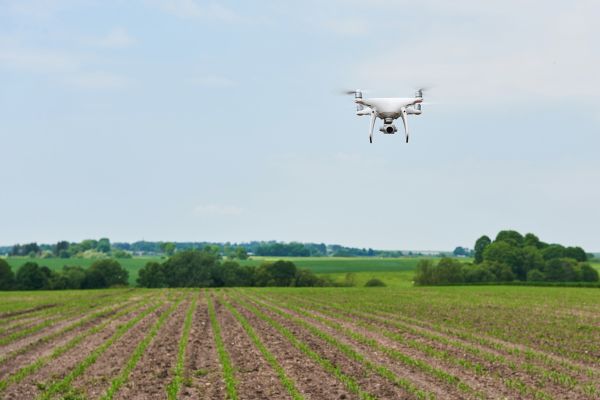
As technology costs decline, AI-driven agricultural robots are becoming a strategic enabler for sustainable, productive, and resilient agri-business operations. The unmanned aerial vehicle (UAV) segment leads the agricultural robots market in terms of market share due to its versatility and efficiency in modern farming. UAVs, also known as drones, are widely used for crop monitoring, field mapping, precision spraying, and soil analysis. Equipped with high-resolution cameras, multispectral sensors, and AI-enabled analytics, they provide real-time insights into crop health, pest infestations, and irrigation needs. Their ability to cover large areas quickly and cost-effectively reduces labor requirements while enhancing productivity. The growing demand for precision agriculture, data-driven decision-making, and sustainable farming practices is driving the rapid adoption of UAVs across global agricultural operations.
The field farming application segment in the agricultural robot’s market is projected to grow at a significant rate during the forecast period, driven by increasing adoption of automation and precision agriculture practices. Robots and autonomous machinery are increasingly deployed for activities such as seeding, planting, weeding, irrigation, and harvesting across large-scale farms. These technologies improve operational efficiency, reduce labor dependency, and optimize resource utilization, including water, fertilizers, and pesticides. Advances in AI, machine learning, and IoT-enabled sensors further enhance accuracy and decision-making. The growing demand for higher crop yields and sustainable farming practices is expected to drive robust growth in this segment globally.