

As South African farmers prepare for 2026, the year ahead presents both challenges and opportunities. As a critical contributor to the national economy and food security, the sector faces growing pressures from climate change, resource constraints, financial volatility and global competition. Farmers are expected to produce more with less, protect their crops against pests and diseases and remain competitive in international markets.
Climate change poses one of the greatest threats to South African agriculture. Prolonged droughts, erratic rainfall and heat stress increasingly affect yields, while soil degradation, nutrient depletion and erosion add to the complexity. At the same time, farmers must manage pests, diseases and evolving weeds that threaten productivity and increase the risk of crop losses.
Financial pressures compound these challenges. Rising input costs for seeds, fertilisers and crop protection squeeze profit margins, and limited access to credit makes it difficult for many farmers to invest in high-performance technologies. Market volatility adds another layer of uncertainty, making yield stability and cost efficiency more critical than ever.
For Corteva Agriscience, these challenges are an opportunity to continuously drive innovation and support the South African farmer with practical, science-driven solutions and sustainable practices that offer a path to growth. Corteva Agriscience sees 2026 as a year in which it will continue its commitment to protect the sustainability and profitability of South African farmers and to ensure South African agriculture remains competitive on the global stage.
Combatting Challenges with Innovation
Corteva’s approach to the challenges faced by the South African farmer is to combine cutting-edge science with practical solutions tailored to local conditions. The company’s investments in climate-resilient seeds and precision breeding, supported by local research and development facilities, focus on developing varieties that withstand drought, heat and other environmental stresses. These high-yielding, locally adapted hybrids give farmers the tools to maintain productivity and profitability even under challenging conditions.
Seed treatments and crop protection products are another cornerstone of Corteva’s support. Its Centre for Seed Applied Technologies in Rosslyn develops and tests seed-applied biologicals and chemical treatments that protect seedlings from day one. Combined with integrated insecticides, fungicides, herbicides and nitrogen stabilisers, these solutions help farmers safeguard yields, optimise input use and reduce environmental impact. By improving efficiency and reducing losses, they also directly contribute to profitability.
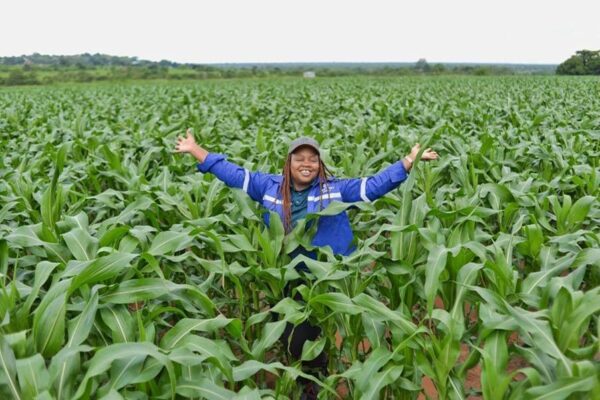
Through training and programmes such as SoilSistas, which supports women-led farming, Corteva empowers farmers with knowledge and skills to adopt sustainable practices, improve business outcomes and participate in inclusive agricultural growth.
Digital tools and data-driven agriculture further enhance this support. By providing decision-making platforms, crop modelling and precision guidance, farmers can optimise inputs, monitor performance and manage risk. This integration of technology ensures that South African farmers are not only efficient and productive but also positioned to meet the quality and sustainability standards demanded by global markets.
Driving Global Competitiveness
By addressing these challenges head-on, Corteva helps South African farmers not only to feed the nation but to compete internationally. High-quality seeds, effective crop protection and sustainable practices allow producers to meet strict export standards, maintain consistent yields and access premium markets. Partnerships with research institutions, universities and government agencies strengthen the local agricultural ecosystem, ensuring that innovation is relevant and widely accessible.
Looking ahead, the future of South African agriculture will be shaped by innovation, sustainability, and inclusivity. With continued investment, collaboration and adoption of advanced technologies, South African agriculture can remain resilient, profitable and a vital contributor to the country’s economy for generations to come.