



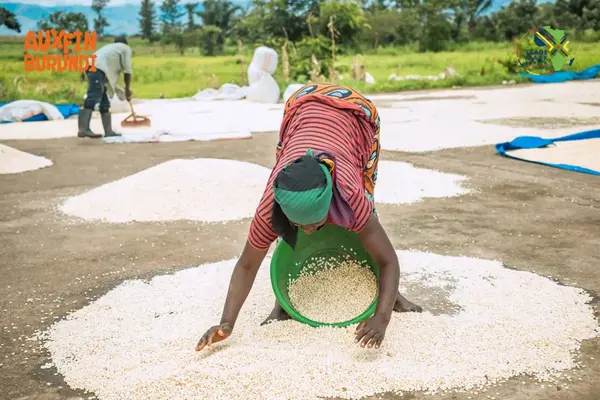
Burundi has launched a BIF300 billion ($100.5 million) credit facility through CRDB Bank Burundi to finance investment in agriculture, livestock, agro-processing and other productive activities, in a move aimed at raising farm productivity and strengthening the country’s agricultural value chains.
The facility, announced by the government in August, will provide eligible investors with loans at an annual interest rate of 5%.
Financing can be used to purchase agricultural machinery, livestock equipment and other productive assets required to expand production and processing capacity.
According to government figures cited by Feed Business Middle East & Africa, agriculture accounts for 39.6% of Burundi’s gross domestic product, 84% of employment and about 95% of the country’s food supply.
The sector is also an important source of raw materials for the country’s food-processing industry.
The government says the facility is intended to address limited access to affordable finance, which has constrained investment and productivity in the agriculture-dependent economy.
It is also expected to encourage domestic processing, create jobs, reduce food imports and strengthen exports.
The Ministry of Environment, Agriculture and Livestock will oversee access to state-owned land earmarked for productive projects, while CRDB Bank Burundi will handle financing applications.
The government has clarified that access to land and credit are separate procedures.
The initiative comes as Burundi seeks to accelerate implementation of its Vision 2040-2060, which identifies agriculture as a major driver of wealth creation and economic development.
The government plans to increase agriculture’s share of public spending to 10%, from 9.4% in 2022.
The African Development Bank expects Burundi’s economy to grow by 4.3% in 2026 and 4.6% in 2027, with agriculture among the sectors expected to support expansion.
However, access to finance remains a challenge. The bank’s 2026 country report shows that domestic credit averaged 30.4% of GDP between 2020 and 2024, below the African average of 34.6%.
The new facility could therefore provide capital for longer-term investments that go beyond seasonal farm inputs, including machinery, irrigation, livestock facilities, storage and processing equipment.
Such investments could help connect farmers with processors and markets while increasing the value generated within Burundi.
However, analysts caution that the size of the lending facility alone will not guarantee agricultural transformation.
Its impact will depend on eligibility requirements, repayment terms, collateral, project quality, infrastructure and borrowers’ ability to generate sufficient cash flow.
Agriculture and livestock businesses remain exposed to weather, disease, market volatility, input costs and infrastructure constraints.
The programme nevertheless represents an important attempt to deepen commercial financing of Burundi’s productive economy.
If financed businesses expand successfully and maintain strong repayment records, it could encourage banks and development-finance institutions to increase agricultural lending.
For Burundi, the ultimate test will be whether the BIF300 billion is converted into productive assets that increase output, strengthen agro-processing, generate employment and reduce dependence on imported food.




[…] Source link […]
[…] Source link […]
Comments are closed.